How to Structure and Write a Research Paper
TL;DR
Write a research paper by organizing it into introduction, methods, results, and discussion sections, then placing the appropriate information in each one. Draft the methods first, followed by results, discussion, and introduction, while prioritizing coherence, organization, relevance, clarity, and the specific formatting and style requirements of the target journal.
Transcript
so let me begin by introducing myself and my our service so our company is called sa review and we do edit essays but we also mostly edit research papers so you research papers dissertations manuscripts journal cover letters anything that you might need for universities for submission or for research or journals etc and before we go on I'm gonna te... Read More
Key Insights
- A research paper is a means of sharing knowledge gained from a study with researchers and, for some journals, the broader public. It should also demonstrate how the study relates to established knowledge and addresses the current state of its field.
- Coherence is the inclusion of necessary information in every section without repeatedly using the same information or phrases. Repetition can make a manuscript look unprofessional, so each section should contribute distinct material while remaining connected to the paper's overall argument.
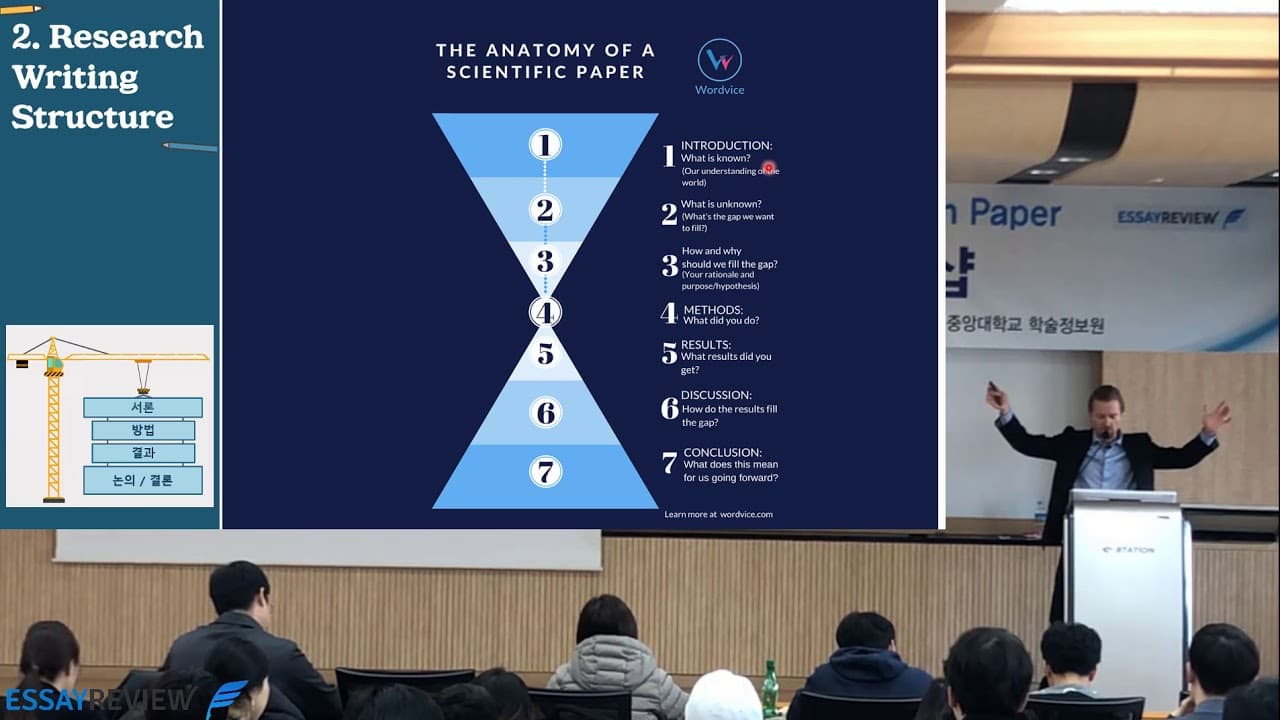
- Organization is commonly based on the IMRaD structure: introduction, methods, results, and discussion. Effective organization requires authors to place each type of content in its appropriate section instead of mixing background, procedures, findings, and interpretation together.
- Relevance is the selection of material that fits the paper's length and purpose. Authors should emphasize the most important methods and results rather than attempting to include every possible procedure or finding in a manuscript with limited space.
- Clarity is achieved through readable grammar, phrasing, style, and economical wording. Editors can improve grammar and communication, but authors remain responsible for creating a sound manuscript structure and ensuring that the research information appears in the correct places.
- The introduction is the section that defines the research problem, supplies background, identifies gaps in existing knowledge, and explains how the study fits into known information. It generally contains many citations to primary literature and leads readers toward the study's purpose or hypothesis.
- The results section is limited to the important findings produced by the study's methods. It reports what was found without explaining why those findings matter, because interpretation, implications, limitations, and possible future research belong in the discussion section.
- The recommended drafting order is methods, results, discussion, and introduction, even though readers encounter the introduction first. Writing the introduction last helps the author introduce all essential elements of the completed paper without promising material that the later sections do not deliver.
Install to Summarize YouTube Videos and Get Transcripts
Explore YouTube Video Summarizer or Get YouTube Transcript Extractor
Questions & Answers
Q: How should a research paper be structured?
A research paper should generally be structured around four main sections: introduction, methods, results, and discussion. The introduction establishes the problem and background, the methods explain how the study was conducted, the results report the important findings, and the discussion interprets those findings. Some papers also include a concluding paragraph after the discussion.
Q: What belongs in a research paper introduction?
A research paper introduction should discuss the research problem, provide relevant background, identify what is already known, and reveal gaps in the existing literature. It should explain how the study fits into current knowledge and lead toward a concise statement of the study's purpose or hypothesis. This is also where authors commonly cite substantial primary literature.
Q: What should the methods section explain?
The methods section should tell readers how the study was performed. It identifies the materials used, the methods of experimentation, and the methods of analysis that produced the findings. Its purpose is procedural rather than interpretive. Authors should focus on the most important and relevant methods, especially when the manuscript has strict length limits.
Q: What is the difference between results and discussion?
The results section presents the important findings of the study without discussing their significance. The discussion section explains what those findings mean, why they are important, and what implications they have for other research. The discussion can also address limitations, define where the findings may not apply, and propose possible directions for future research.
Q: What order should research paper sections be written in?
The recommended writing order is methods first, followed by results, discussion, and finally the introduction. Although the introduction appears first in the finished manuscript, drafting it last helps ensure that it accurately introduces the paper's main content. This sequence also reduces the risk of omitting essential material or introducing ideas that the later sections never address.
Q: What factors determine the quality of research writing?
Four major factors determine research writing quality: coherence, organization, relevance, and clarity. Coherence requires complete information without needless repetition. Organization places content within the proper IMRaD section. Relevance keeps the selected methods and findings aligned with the manuscript's purpose and length. Clarity depends on readable grammar, phrasing, style, and concise wording.
Q: How can authors adapt a paper to a target journal?
Authors should carefully review the target journal's formatting and style instructions, especially its information for authors. They should also read as many published articles from that journal as possible to understand how accepted manuscripts are structured and written. The same principle applies to conference submissions, where researchers should examine the conference and examples from other participating authors.
Q: What should researchers decide before drafting a paper?
Before drafting, researchers should know their hypothesis, define what the study sought to find, and identify the main research questions that the results must answer. They should also decide which audience or journal they are addressing. Preparing figures and tables before writing the sections helps establish the core data that the manuscript needs to communicate.
Summary & Key Takeaways
-
Effective research writing shares the knowledge gained from a study and shows how the work fits into current science. Its quality depends on coherence, organization, relevance, and clarity. Authors should include necessary information, avoid repetition, select important material, use readable language, and follow the formatting and style rules of their target journal.
-
Most research papers use the IMRaD structure: introduction, methods, results, and discussion. The introduction moves from the broad topic toward literature gaps and the study hypothesis. The compact methods and results sections present procedures and findings. The discussion broadens the focus again by interpreting significance, implications, limitations, and possible future research.
-
A practical drafting sequence begins with methods, then proceeds through results and discussion before finishing with the introduction. This order helps authors ensure that the introduction accurately prepares readers for the paper's main content. Before drafting, researchers should define their hypothesis, research questions, intended audience, and target journal, then prepare core figures and tables.
Read in Other Languages (beta)
Share This Summary 📚
Summarize YouTube Videos and Get Video Transcripts with 1-Click
Try YouTube Summary with ChatGPT & Claude or YouTube Transcript Generator
Explore More Summaries from Wordvice: Expert Editing & AI Writing 📚
Summarize YouTube Videos and Get Video Transcripts with 1-Click
Try YouTube Summary with ChatGPT & Claude or YouTube Transcript Generator