5 Things Highly Productive People Do Every Sunday That Most Others Don’t
TL;DR
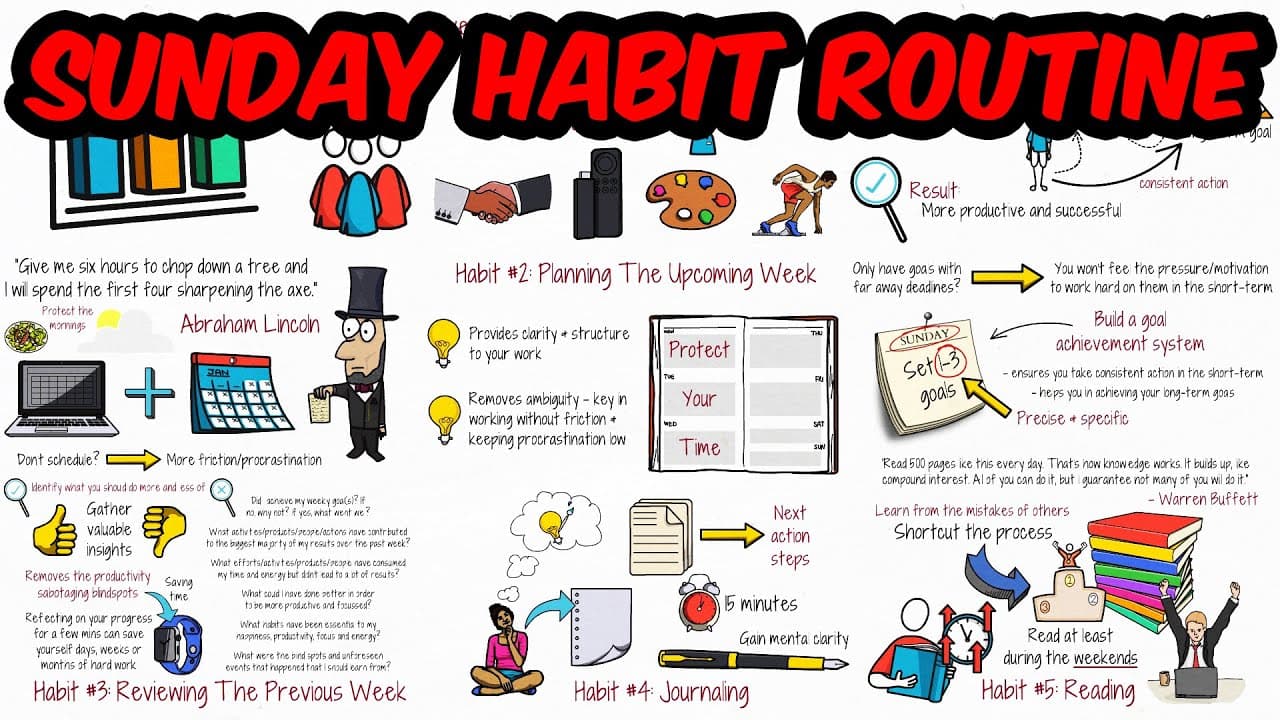
Highly productive people use Sunday to set weekly goals, plan their schedules, review recent performance, journal and read. The complete ritual takes about 30 to 60 minutes, while setting just 1–3 precise weekly goals creates near-term checkpoints for larger ambitions. Each practice reduces a different obstacle, from ambiguity to mental chatter, so read on for a practical explanation of how the five habits work together.
Transcript
Highly productive people do things differently than most people. They have specific habits, routines and systems in place that enable them to be highly effective and efficient. In fact, they even spend their Sundays differently compared to most people. After studying hundreds of high-performers across many fields (whether business, entertai... Read More
Key Insights
- Weekly goals bridge time horizons: Long-term goals alone can leave deadlines too far away to generate immediate pressure. Breaking them into quarterly, monthly, weekly and daily goals creates multiple checkpoints along the path. The weekly layer is especially useful on Sunday because it converts distant ambitions into actions that must be completed during the next several days.
- Precision makes progress visible: The recommendation is not merely to write down broad intentions, but to define 1–3 precise and specific weekly goals. Specificity allows a person to measure progress clearly and recognize when a target has actually been achieved. That clarity strengthens the goal-achievement system because each week can end with an observable result rather than a vague impression of effort.
- Scheduling protects important work: A weekly goal is more likely to be completed when time for it is reserved before competing demands appear. Planning identifies both what must be done and when it will happen. This removes ambiguity, lowers working friction and prevents lower-priority tasks from quietly occupying the time intended for meaningful projects.
- Two calendars reinforce focus: The speaker schedules each week in Google Calendar and in a physical calendar. Seeing the plan through both formats creates repeated contact with the schedule during the day. That repeated visibility helps preserve focus and clarity, especially when distractions or lower-priority tasks might otherwise redirect attention.
- Mornings receive deliberate protection: The bonus scheduling rule is to reserve mornings for the most important tasks and perform that work without distractions. The speaker calls this approach “eating your veggies first.” Completing essential work early prevents procrastination on major projects, supports consistent progress and makes the remainder of the day feel easier.
- Unplanned weeks create friction: The speaker notices a clear contrast when days and weeks are not scheduled. More time goes toward lower-priority tasks, work feels more difficult and procrastination increases. A defined plan reverses those conditions by supplying structure, clarifying the next action and reducing the need to decide repeatedly what deserves attention.
- Reflection targets actual causes: The weekly review does more than record whether a goal succeeded or failed. It asks why the outcome occurred and identifies the activities, products, people and actions responsible for most results. This causal focus helps preserve effective inputs instead of relying only on the surface-level fact that a goal was or was not achieved.
- Low-return effort becomes visible: One reflection question examines which efforts, activities, products or people consumed time and energy without producing many results, or any results at all. Naming these drains exposes hidden inefficiencies. The value lies in redirecting future attention away from costly, low-return commitments and toward the contributors that demonstrated meaningful results.
- Blind spots become lessons: Stepping back each Sunday helps identify unforeseen events and productivity-sabotaging blind spots that may be difficult to notice during active work. The speaker says a few minutes of reflection can save days, weeks or even months of hard work. The review protects future time, energy and frustration by turning recent problems into usable lessons.
- Helpful habits deserve tracking: The review explicitly asks which habits were essential to happiness, productivity, focus and energy. This expands reflection beyond completed tasks and considers the conditions supporting good performance. Once these useful habits are recognized, they can be repeated intentionally rather than left to chance during the following week.
- Writing releases mental capacity: Worries held in the mind can create internal chatter that obstructs focus and productivity. Moving those concerns onto paper helps calm the chatter and frees mental energy and headspace. Journaling is therefore presented as a practical clearing process that supports clearer thought, stronger problem-solving and the generation of creative ideas.
- Ideas need structured next steps: The speaker writes down ideas to determine the next actions and develop them with greater structure. This separates capturing an idea from immediately trying to solve everything mentally. Reading complements that process by bringing in other people’s experiences, which the existing page describes as a shortcut along the path toward achieving goals.
Install to Summarize YouTube Videos and Get Transcripts
Explore YouTube Video Summarizer or Get YouTube Transcript Extractor
Questions & Answers
Q: What do highly productive people do every Sunday?
They follow five practices: setting weekly goals, planning the upcoming week, reviewing the previous week, journaling and reading. The ritual is designed to support peak productivity during the following week. It takes about 30 to 60 minutes, leaving the rest of Sunday available for relaxing and other enjoyable activities. Each practice handles a different need, including direction, protected time, feedback, mental clarity and learning from others’ experiences.
Q: How should you set weekly goals on Sunday?
Choose 1–3 weekly goals that move you significantly closer to your monthly, quarterly and yearly goals. Write each goal precisely and specifically so progress can be measured and completion can be clearly defined. This creates short-term checkpoints between daily action and larger one-year or three-year ambitions. The nearer deadline also supplies pressure and motivation that goals set far in the future may not create.
Q: Why should you plan the upcoming week?
Planning tells you exactly what to work on and when to work on it. That clarity removes ambiguity, reduces friction and helps keep procrastination low. Scheduling important work beforehand also protects its time from lower-priority tasks, increasing the likelihood that weekly goals will be completed. The speaker uses both Google Calendar and a physical calendar so the plan remains visible multiple times throughout the day.
Q: What should be scheduled first each week?
The speaker recommends protecting mornings for distraction-free work on the most important tasks. This rule is called “eating your veggies first” because essential work is handled before less important demands take over. Doing so prevents procrastination on major projects and supports consistent progress. Once the highest-priority work is complete, the rest of the day can feel easier.
Q: How do you review the previous week?
Start by asking whether the weekly goals were achieved and why each result occurred. Identify the activities, products, people and actions that produced most of the week’s results, then identify those that consumed time and energy without producing much. Consider what could have been done better, which habits supported happiness, productivity, focus and energy, and what blind spots or unforeseen events appeared. These answers clarify what to repeat, reduce or change during the next week.
Q: Why can weekly reflection improve productivity?
Reflection creates distance from active work, making patterns and productivity-sabotaging blind spots easier to see. The speaker says that even a few minutes spent examining progress and achievements can save days, weeks or months of hard work. The review shows which priorities deliver results and which activities merely consume time and energy. Acting on those findings reduces future frustration and directs effort toward more effective choices.
Q: How does journaling help with focus and productivity?
Journaling moves worries, thoughts and ideas out of the mind and onto paper. This helps calm internal chatter that can interfere with focus and productive work. With more mental energy and headspace available, it becomes easier to think clearly, solve problems and generate creative ideas. Writing ideas down also makes it possible to organize them and determine concrete next action steps.
Q: How do the five Sunday habits work together?
Goal setting decides what the coming week should accomplish, while planning reserves time for the required work. Reviewing the previous week provides evidence about what produced results and what wasted time or energy. Journaling clears mental chatter and gives ideas enough structure to reveal their next actions, while reading provides lessons from other people’s experiences. Combined into a 30 to 60 minute ritual, the habits prepare direction, execution, correction, clarity and continued learning before the week begins.
Summary & Key Takeaways
-
Building weekly goal checkpoints: The Sunday ritual begins by translating one-year or three-year goals into quarterly, monthly, weekly and daily targets. The speaker recommends choosing 1–3 precise weekly goals that move monthly, quarterly and yearly goals forward. Short deadlines create pressure and motivation that distant deadlines often fail to provide. Specific wording also makes progress measurable and defines exactly when each goal has been achieved, creating a system for consistent short-term action.
-
Planning work before Monday: Highly productive people next assign their important tasks to specific times during the upcoming week. This advance planning provides clarity and structure, removes ambiguity and reduces the friction that can encourage procrastination. The speaker records the schedule in both Google Calendar and a physical calendar, creating multiple reminders throughout each day. Protecting time beforehand also makes weekly goals more achievable because lower-priority work is less able to displace the tasks that matter most.
-
Learning from recent performance: The third habit is a short review of the previous week, focused on achievements, failures and the forces behind both. The reflection asks whether weekly goals were achieved, which activities, products, people or actions produced most results, and which ones consumed time without producing much. It also examines helpful habits, blind spots and unforeseen events. This process reveals what to do more or less of and gradually removes patterns that sabotage productivity.
-
Clearing thoughts through journaling: The fourth practice moves worries, thoughts and ideas from the mind onto paper. According to the speaker, internal chatter can interfere with focus and productivity, while writing it down helps calm that chatter and frees mental energy. Journaling then creates room for clearer thinking, problem-solving and new creative ideas. Writing ideas out also helps impose structure and identify their next action steps, turning loosely held thoughts into material that can be evaluated and developed.
-
Learning faster through reading: The final Sunday habit is reading, which the existing page describes as a way to learn from other people’s experiences and shorten the route toward personal goals. Together, the five practices address direction, scheduling, feedback, mental clarity and learning. The speaker presents them as a compact Sunday ritual rather than an all-day commitment. Because all five can take about 30 to 60 minutes, the remainder of Sunday can still be used for relaxation and other enjoyable activities.
Read in Other Languages (beta)
Share This Summary 📚
Summarize YouTube Videos and Get Video Transcripts with 1-Click
Try YouTube Summary with ChatGPT & Claude or YouTube Transcript Generator
Explore More Summaries from The Art of Improvement 📚


Summarize YouTube Videos and Get Video Transcripts with 1-Click
Try YouTube Summary with ChatGPT & Claude or YouTube Transcript Generator