How to Synthesize Trimethylamine and Control Its Odor
TL;DR
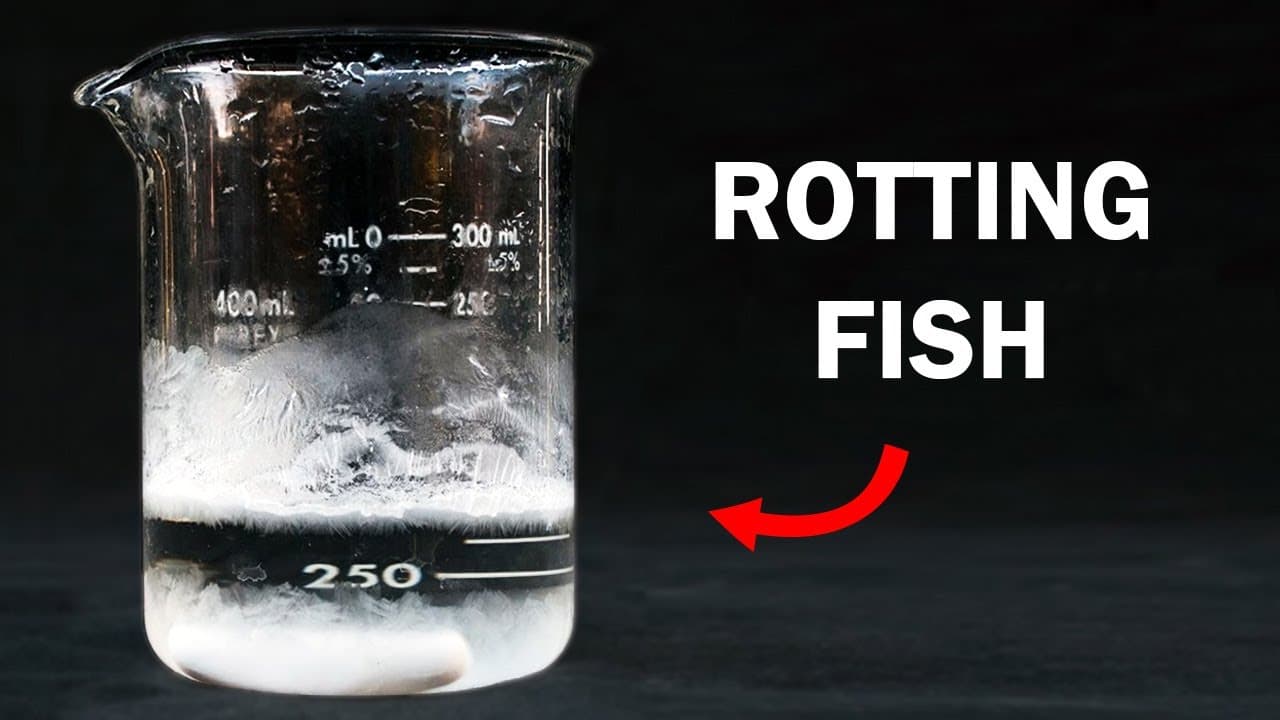
To synthesize trimethylamine, combine paraformaldehyde and ammonium chloride, then carefully control the heating to initiate the reaction. After the reaction, purify the product through filtration and drying to obtain trimethylamine, which has a strong fish odor that may linger in the workspace for weeks.
Transcript
today I'll be making some trimethylamine the stench of trimethylamine is often associated with the decomposition of plants and animals and especially that of fish it can contribute to the smell of bad breath and to some bacterial infections like bacterial vaginosis there's a medical disorder known as trimethylaminuria or more commonly as fish odor ... Read More
Key Insights
- 🦡 Trimethylamine is associated with unpleasant odors, such as bad breath and bacterial infections.
- ❓ The synthesis of trimethylamine involves reacting paraformaldehyde and ammonium chloride.
- 🎮 The reaction is exothermic and requires careful temperature control to prevent overheating.
- ❓ Purification steps, including filtration and drying, are necessary to obtain pure trimethylamine.
- 🎮 The yield of trimethylamine in this video was 89%, consistent with reported yields.
- 💪 The process of synthesizing trimethylamine resulted in a strong odor lingering in the workplace for several weeks.
- 😒 Further experimentation and exploration of the uses of trimethylamine can be done.
Install to Summarize YouTube Videos and Get Transcripts
Explore YouTube Video Summarizer or Get YouTube Transcript Extractor
Questions & Answers
Q: What is trimethylamine and why is its odor unpleasant?
Trimethylamine is a compound commonly associated with the decomposition of animals and plants. It has a strong fishy odor that can be off-putting to many people.
Q: How is trimethylamine synthesized in this video?
The video demonstrates the synthesis of trimethylamine by reacting paraformaldehyde and ammonium chloride together. The reaction produces trimethylamine hydrochloride, which is then converted into trimethylamine.
Q: What are the challenges faced during the synthesis of trimethylamine?
One of the challenges is ensuring proper mixing of the reactants to initiate the reaction. Another challenge is controlling the temperature during the reaction, as excessive heat can lead to an out-of-control reaction.
Q: What are the purification steps involved in obtaining pure trimethylamine?
After the synthesis, the trimethylamine hydrochloride is processed through a series of steps, including heating, filtration, and drying, to remove impurities and obtain the pure trimethylamine product.
Summary & Key Takeaways
-
Trimethylamine is associated with the decomposition of plants and animals, producing a foul odor.
-
Trimethylamine is used in herbicides, dyes, and other products, but its specific use in this video is for demonstration purposes.
-
The synthesis of trimethylamine involves the reaction of paraformaldehyde and ammonium chloride, followed by purification steps to obtain the final product.
Read in Other Languages (beta)
Share This Summary 📚
Summarize YouTube Videos and Get Video Transcripts with 1-Click
Try YouTube Summary with ChatGPT & Claude or YouTube Transcript Generator
Explore More Summaries from NileRed 📚

Summarize YouTube Videos and Get Video Transcripts with 1-Click
Try YouTube Summary with ChatGPT & Claude or YouTube Transcript Generator