Map Reduce explained with example | System Design
TL;DR
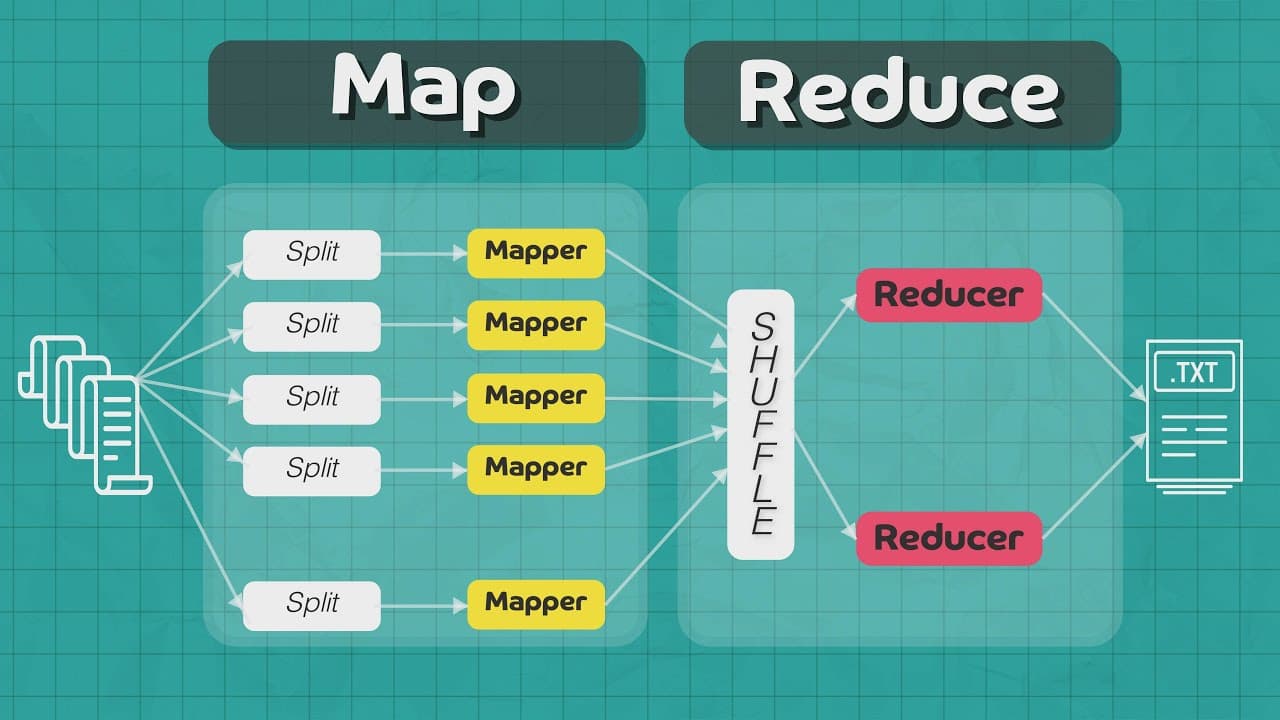
The MapReduce programming model allows for efficient processing of large data sets across multiple machines in a distributed system.
Transcript
math videos program work in two phases namely map and reduce map tasks deal with splitting and mapping of data while radius tasks Shuffle and reduce the data so the map function will transform the data into key value Pairs and these key value appears live here in the intermediary step of the mapreduce Java process and then these key value pairs are... Read More
Key Insights
- 🍵 MapReduce was developed by Google engineers to handle the processing of massive amounts of data across distributed systems.
- 🤩 The map function transforms data into key-value pairs, which are then shuffled and reorganized in the intermediary step.
- 🍁 Machine failures or network partitions are handled by re-performing map or reduce operations.
- 🪡 Engineers using MapReduce only need to focus on input and output data, simplifying the overall data processing task.
- 📼 MapReduce is commonly used for tasks such as word counting and analyzing large data sets, like YouTube video metadata.
- 🍁 The map and reduce operations in MapReduce are parallelized and performed in a distributed system setting.
- 🤩 The key-value structure in the intermediate step is important for efficient reduction and analysis of data.
Install to Summarize YouTube Videos and Get Transcripts
Explore YouTube Video Summarizer or Get YouTube Transcript Extractor
Questions & Answers
Q: What is the purpose of the MapReduce programming model?
The purpose of MapReduce is to process large data sets efficiently and quickly across multiple machines in a distributed system. It allows for parallel processing and handling of failures in a fault-tolerant manner.
Q: How does the MapReduce model handle machine failures or network partitions?
When failures occur, the MapReduce model re-performs the map or reduce operations. The central controller coordinates the re-performing of operations, ensuring that the output remains unchanged regardless of how many times the function is repeated.
Q: What is the significance of the key-value structure in the map and reduce steps?
The key-value structure is crucial in the map and reduce steps because it allows for the grouping and organization of data. Keys with common values can be reduced to a single meaningful value, making data processing more efficient.
Q: How does MapReduce simplify the processing of large data sets for engineers?
Engineers only need to focus on the input and output data in each step of the MapReduce process. They don't have to handle the complexities of processing large data sets in a distributed system, as they can utilize library implementations like Hadoop.
Key Insights:
- MapReduce was developed by Google engineers to handle the processing of massive amounts of data across distributed systems.
- The map function transforms data into key-value pairs, which are then shuffled and reorganized in the intermediary step.
- Machine failures or network partitions are handled by re-performing map or reduce operations.
- Engineers using MapReduce only need to focus on input and output data, simplifying the overall data processing task.
- MapReduce is commonly used for tasks such as word counting and analyzing large data sets, like YouTube video metadata.
- The map and reduce operations in MapReduce are parallelized and performed in a distributed system setting.
- The key-value structure in the intermediate step is important for efficient reduction and analysis of data.
- Engineers can use library implementations like Hadoop to utilize the MapReduce model in their projects.
Summary & Key Takeaways
-
MapReduce works in two phases: map tasks split and map the data, while reduce tasks shuffle and reduce the data.
-
It was developed by Google engineers to handle the processing of massive amounts of data across hundreds or thousands of machines.
-
The key value structure of the data is crucial for meaningful reduction in the final output.
Read in Other Languages (beta)
Share This Summary 📚
Summarize YouTube Videos and Get Video Transcripts with 1-Click
Try YouTube Summary with ChatGPT & Claude or YouTube Transcript Generator
Explore More Summaries from ByteMonk 📚




Summarize YouTube Videos and Get Video Transcripts with 1-Click
Try YouTube Summary with ChatGPT & Claude or YouTube Transcript Generator