What Factors Are Driving Recent Oil Price Increases?
TL;DR
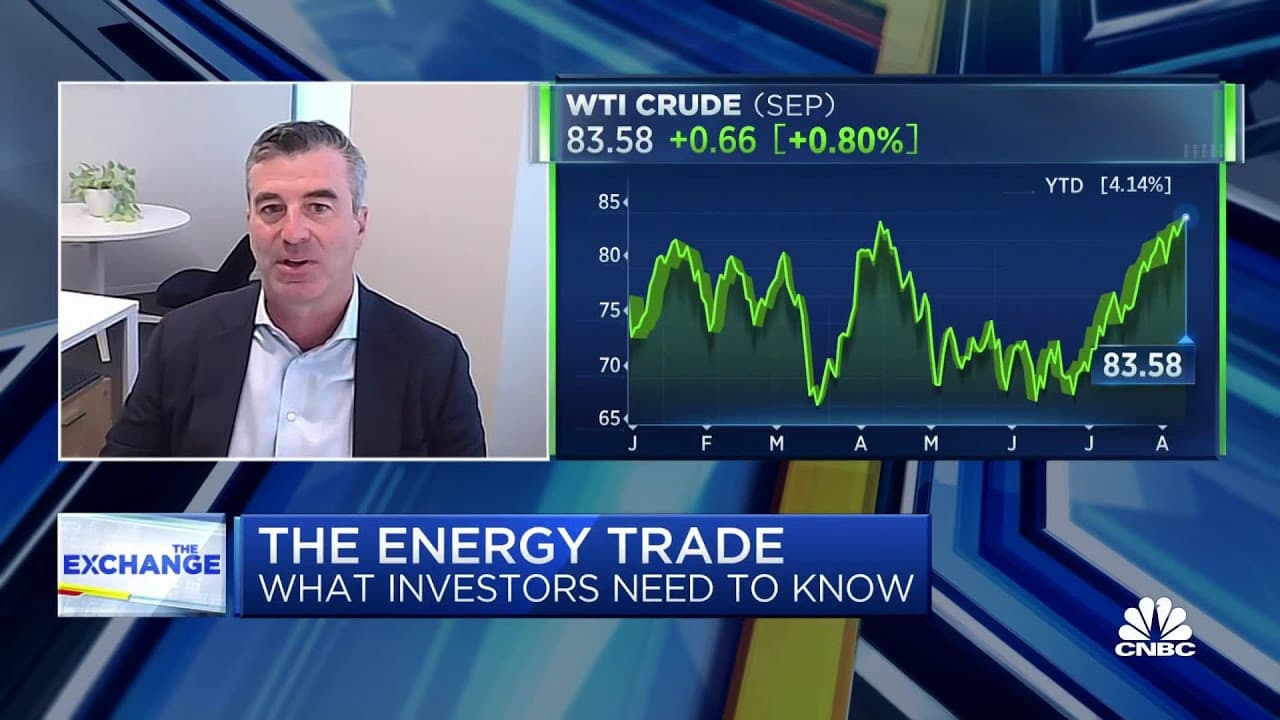
Recent oil price increases are driven by strong demand, particularly despite economic headwinds and the impact of EVs. Supply discipline from OPEC and U.S. producers also plays a crucial role, maintaining a balance in the market. While there's uncertainty about long-term supply, current demand is at an all-time high, suggesting a potentially bullish outlook for oil prices.
Transcript
WHO KNOWS? >> IT'S GOING TO BE A PAIN IF IT STAYS THIS WAY MY NEXT GUEST HAS BEEN WARNING FOR MONTHS OF HIGHER OIL PRICES AND HE OWNS SEVERAL NAMES. LET'S BRING IN STAN MAJOR. GOOD TO SEE YOU AGAIN, STAN. WELCOME BACK >> THANKS, KELLY >> WHY DO YOU THINK OIL IS FINALLY RESPONDING >> YOU KNOW, I THINK IT'S A COMBINATION OF A COUPLE OF THINGS WHEN ... Read More
Key Insights
- 🇺🇸 Oil prices are rising due to a combination of strong demand and supply discipline from OPEC and the United States.
- ✋ Despite concerns about weak demand, the overall demand for oil is at an all-time high.
- 💗 The global oil market is currently balanced, but there is uncertainty about future supply to meet growing demand.
- 🥶 Energy companies are generating significant free cash flow, allowing them to buy back stock and create value for shareholders.
Install to Summarize YouTube Videos and Get Transcripts
Explore YouTube Video Summarizer or Get YouTube Transcript Extractor
Questions & Answers
Q: Why are oil prices finally responding?
Oil prices are responding due to strong demand and supply discipline from OPEC and the United States. Despite concerns about work-from-home trends, a weak economy, and the impact of EVs on demand, the current demand is very strong, which is driving prices up. Additionally, supply discipline from OPEC and the United States is contributing to the price increase.
Q: How can oil demand be high while China is experiencing deflation?
The high oil demand is in spite of the deflationary environment in China. Although there have been dips in diesel demand from trucking, the overall demand is at an all-time high. As populations grow and become wealthier, the demand for energy, which comes from hydrocarbon sources, continues to increase.
Q: How tight is the global oil market?
Currently, the global oil market is estimated to be around a million to two million barrels a day. However, in the long run, the world economy is expected to require more than 100 million barrels a day. Ensuring adequate supply in the long term poses a challenge, especially considering the decline in production from some countries.
Q: Can I invest in energy companies despite declining production in some areas?
Investing in energy companies can still be lucrative even with declining production. These companies generate significant free cash flow, even at lower oil prices. With this cash, they are able to buy back stock, providing value to shareholders. Therefore, owning energy stocks or an energy ETF can still be profitable.
Key Insights:
- Oil prices are rising due to a combination of strong demand and supply discipline from OPEC and the United States.
- Despite concerns about weak demand, the overall demand for oil is at an all-time high.
- The global oil market is currently balanced, but there is uncertainty about future supply to meet growing demand.
- Energy companies are generating significant free cash flow, allowing them to buy back stock and create value for shareholders.
- The market is experiencing a mix of expensive and undervalued stocks, posing both risks and opportunities for investors.
Summary & Key Takeaways
-
Oil prices are responding to a combination of factors, including strong demand and supply discipline from OPEC and the United States.
-
The conflicting signals of high oil demand and deflation in China suggest that the demand is high despite the challenges.
-
The global oil market is currently balanced, but the long-term supply outlook is uncertain, potentially leading to higher structural oil prices.
Read in Other Languages (beta)
Share This Summary 📚
Summarize YouTube Videos and Get Video Transcripts with 1-Click
Try YouTube Summary with ChatGPT & Claude or YouTube Transcript Generator
Explore More Summaries from CNBC Television 📚




Summarize YouTube Videos and Get Video Transcripts with 1-Click
Try YouTube Summary with ChatGPT & Claude or YouTube Transcript Generator