How to Stay Strong and Mobile After Age 40
TL;DR
Active aging depends on treating decline as something influenced by daily choices, not as an unavoidable consequence of time. Consistent movement, muscle and bone building, hormonal awareness, mental resilience, and supportive relationships can help preserve physical and cognitive function, while sedentary living and self-neglect encourage a gradual loss of capability.
Transcript
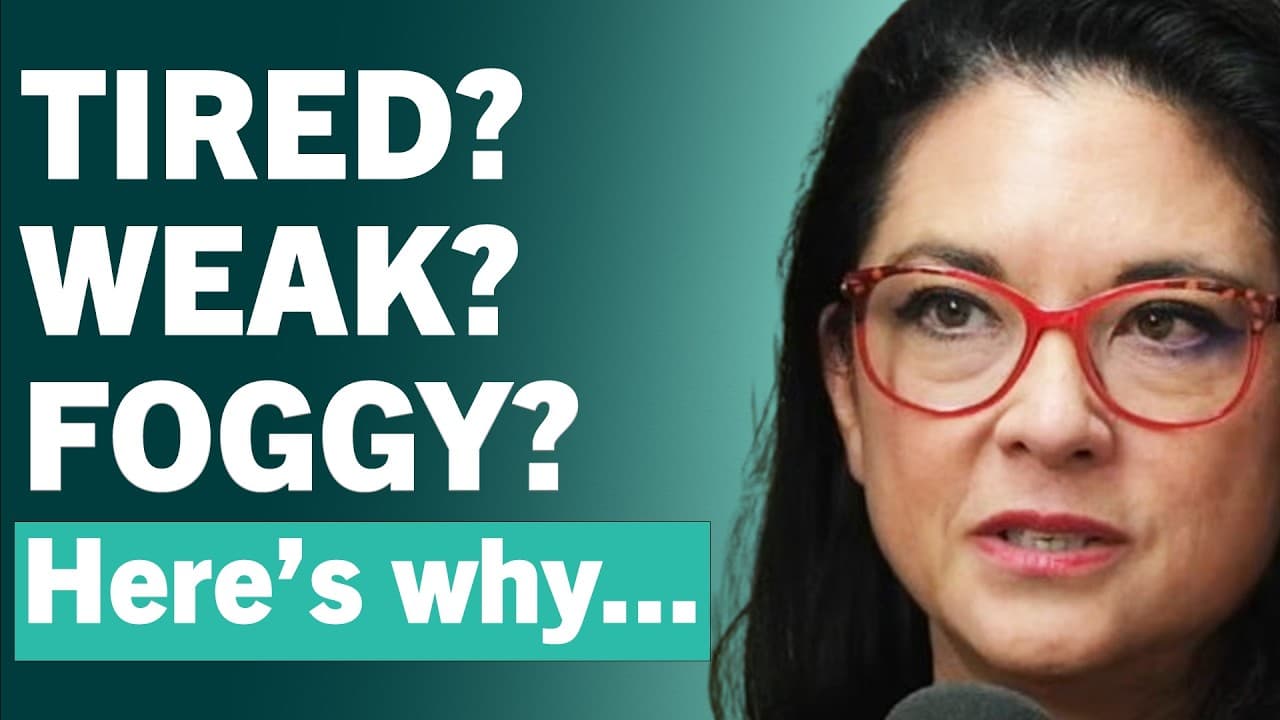
When you look around across society, what are some of the common things people are doing that are perhaps resulting in them neglecting their bodies and therefore increasing the speed at which they age? I think there are a couple factors that may be surprising and then several that are obviously not. But I think the first reason people begin to decl... Read More
Key Insights
- Aging is a natural passage of time, but physical decline is not presented as entirely inevitable. Believing that every ache or limitation is simply part of getting older can cause people to abandon meaningful activities gradually and accept preventable losses in function.
- Self-neglect can accelerate decline when people invest their energy in everyone except themselves. This pattern is highlighted particularly for women, who may continually care for others without directing enough attention toward their own movement, nourishment, hormonal health, and physical resilience.
- Population studies may describe sedentary aging rather than the full potential of healthy aging. The Health ABC study followed a population-based cohort of 70-year-olds, while more than 70 percent of the referenced population reportedly invested no daily energy in mobility or health habits.
- Consistent activity after 40 is associated in the presented research with retaining muscle mass, bone density, and brain function. The PRIMA research group studied active adults, including successful age-group athletes who were committed to training but were not professional competitors, over 15 years.
- Mindset mobilization is the first recommended foundation for active aging. People are encouraged to stop worshiping youth, reject resignation, and view later life as a period requiring intentional effort rather than interpreting every physical challenge as proof that meaningful capability is over.
- Mental and physical resilience are complementary requirements for aging well. Mental resilience helps a person remain engaged when aging becomes difficult, while physical resilience begins with understanding current capacity and applying science-backed methods to improve strength, mobility, and durability.
- Supportive relationships can influence long-term health behavior. Forming a group of at least five people who support vibrant aging is recommended because persistent encouragement can sustain healthy choices, while close companions who dismiss those efforts may discourage continued participation.
- Hormonal aging differs between men and women in the discussion. Men experience a slow, linear testosterone decline, while women experience a sharp estrogen decline during perimenopause, creating potentially tumultuous changes that families and partners can navigate better through awareness and understanding.
Install to Summarize YouTube Videos and Get Transcripts
Explore YouTube Video Summarizer or Get YouTube Transcript Extractor
Questions & Answers
Q: How can people stay strong and mobile after age 40?
People can support strength and mobility after 40 by rejecting the assumption that decline is unavoidable, consistently investing in movement, and intentionally building physical resilience. The discussion also emphasizes muscle, bone, nutrition, hormonal health, and supportive relationships. Progress begins by understanding current physical capacity, then remaining engaged with science-backed health practices instead of surrendering activities whenever discomfort or difficulty appears.
Q: Why does believing that decline is inevitable affect aging?
Believing that decline is inevitable changes behavior because people may interpret the first ache, pain, or limitation as proof that they are simply getting old. They can then give up activities one at a time until their lives and capabilities look completely different. The alternative is to recognize aging as natural while understanding that responses to time, movement, nourishment, and resilience still matter.
Q: What daily habits may accelerate physical decline after 40?
Sedentary living, failing to invest daily energy in mobility, neglecting muscle development, overlooking nutrition, ignoring hormonal health, and deprioritizing mobility are identified as contributors to decline. Self-neglect also matters, especially when someone directs all available energy toward other people. These patterns can operate gradually, making lost capacity appear like unavoidable aging even when daily behavior has contributed to the change.
Q: What did research on active adults over 40 find?
Research conducted through the Performance and Research Initiative for Masters Athletes examined consistently active people over 40, including accomplished age-group athletes who were not professionals. Across 15 years, the researchers found that muscle mass, bone density, and brain function could be retained. These results differed from findings commonly associated with broader populations, where sedentary living and limited health investment are widespread.
Q: Why can population studies give a limited picture of aging?
Population studies can provide a limited picture when their participants largely reflect sedentary society. The cited Health ABC study followed a cohort of 70-year-olds from the general population for a decade. Because more than 70 percent of the referenced population did not invest daily energy in mobility or health habits, observed decline may partly represent inactive aging rather than the full potential of active aging.
Q: How do hormonal changes differ between men and women?
The discussion describes testosterone in men as declining slowly and linearly across decades, sometimes becoming low enough in the 50s or early 60s to coincide with exhaustion, feeling unlike oneself, or tendon problems. Women experience cyclical estrogen patterns before a plateau, followed by a sharp estrogen decline during perimenopause. That sharper transition can produce major, unwanted changes in midlife.
Q: Why is early bone and muscle development important?
Bone, muscle, and brain tissues reach their described peaks by about age 30, making youth and early adulthood important periods for building a strong physical base. The conversation specifically considers how a 12-year-old can place force and pressure through the bones. Building solid foundations earlier may better prepare women for the later period when estrogen declines sharply.
Q: How can relationships support healthier aging?
Relationships can reinforce or undermine health behavior because people are described as products of the five individuals with whom they spend the most time. A group of at least five companions committed to vibrant aging can provide encouragement and shared direction. By contrast, close contacts who question or dismiss efforts to become healthier may weaken motivation and make sustained action more difficult.
Summary & Key Takeaways
-
Many people accelerate physical decline by assuming aches, limitations, and lost abilities are inevitable consequences of age. That belief encourages them to surrender activities one at a time. A more constructive approach recognizes aging as natural while treating mobility, strength, nutrition, hormonal health, and daily behavior as factors that can be intentionally managed.
-
Research on consistently active adults over 40 produced different findings from observations of the general population, where sedentary behavior is common. Over 15 years, active participants demonstrated that muscle mass, bone density, and brain function can be retained. These findings challenge conclusions about aging drawn primarily from people who rarely prioritize mobility or health.
-
Healthy aging requires mindset mobilization, mental resilience, physical resilience, and supportive relationships. Women also face a sharp estrogen decline during perimenopause, unlike the slower testosterone decline described for men. Building muscle and bone earlier, understanding hormonal changes, and surrounding yourself with health-supportive people can improve preparation for later life stages.
Read in Other Languages (beta)
Share This Summary 📚
Summarize YouTube Videos and Get Video Transcripts with 1-Click
Try YouTube Summary with ChatGPT & Claude or YouTube Transcript Generator
Explore More Summaries from Dr Rangan Chatterjee 📚




Summarize YouTube Videos and Get Video Transcripts with 1-Click
Try YouTube Summary with ChatGPT & Claude or YouTube Transcript Generator