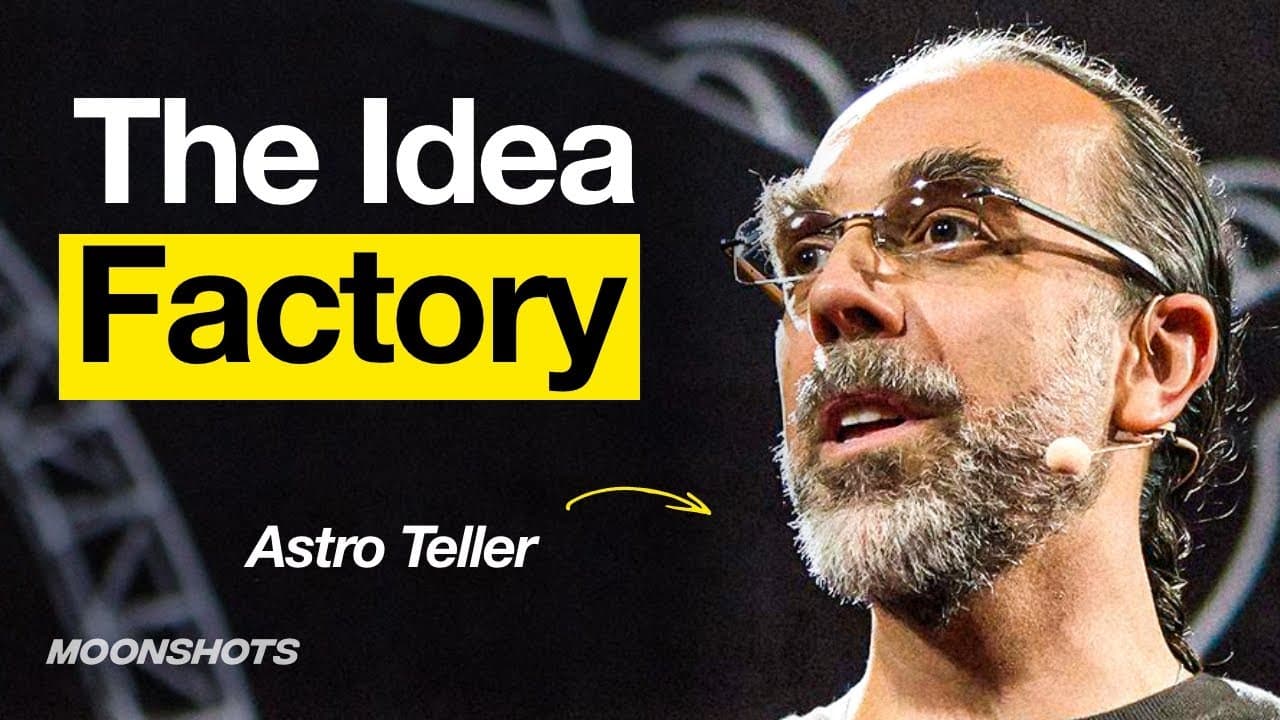
How Does Astro Teller Allocate Resources to Audacious Ideas? | AMA, EP #24 Moonshots and Mindsets
TL;DR
Moonshot teams should receive limited resources for experiments that can produce evidence within months and certainly under a year. Astro Teller describes how X separates evidence from superficial progress, uses premortems to expose risks, and celebrates well-timed shutdowns that return time and money to the organization. Read on for practical guidance drawn from Wing, Foghorn, and roughly 2,000 discontinued ideas.
Transcript
we're not interested in something where we're not going to find out for 5 or 10 years if we're on the right path we're obsessed with tight learning loops so tell us a story about how this would change the world sounds like you have that and then for a small amount of money and a small number of months certainly under a year how are we going to find... Read More
Key Insights
- Tight learning loops are central to X's resource allocation model. A proposed moonshot should identify a small, relatively inexpensive experiment that can produce meaningful evidence within months and certainly under a year, rather than requiring five or ten years before its direction can be judged.
- A premortem is a structured exercise for identifying risks before they become problems. Team members imagine that a future launch has failed catastrophically, independently write down the causes they believe were foreseeable, and then organize and discuss those potential failure modes while preventive action remains possible.
- Wing's premortem occurred about two months before its first public launch. The team imagined the launch had become a gut-wrenching failure, generated possible explanations under time pressure, and then spent the remaining two months addressing the problems uncovered through that exercise.
- X has killed roughly 2,000 ideas and keeps a graveyard because changing technology can make an abandoned concept relevant again. A shutdown therefore records evidence and preserves knowledge rather than declaring that an idea must remain permanently unusable.
- Foghorn converted seawater into methanol using green energy, but X could not justify continuing when its optimistic projected cost remained above $15 per gallon of gasoline equivalent. The team published both the science and the business reasoning so others could build on the work.
- OKRs are described as a poor fit for moonshots because accepting 70 or 80 percent completion conflicts with both essential commitments and genuine exploration. Nonnegotiable deliverables must be completed, while audacious experiments may reveal that the original objective or direction was wrong.
- Public failure celebrations make project termination an accepted organizational practice. At biweekly all-hands meetings, teams can describe the original idea, the experiments performed, and the reasons for stopping, demonstrating that a well-executed project can succeed by ending at the right time.
- Project-linked equity can conflict with intellectual honesty during early moonshot exploration. X avoids giving teams equity in exploratory options until substantial risk has been removed, because asking people to kill a project becomes difficult when their personal financial interests depend on preserving it.
Install to Summarize YouTube Videos and Get Transcripts
Explore YouTube Video Summarizer or Get YouTube Transcript Extractor
Questions & Answers
Q: How should a company allocate resources to moonshot ideas?
Start with a small amount of money and a short experiment designed to show whether the idea is on the right track. X expects meaningful evidence within months and certainly under a year, then bases continued investment on that evidence rather than apparent progress.
Q: What is a premortem, and how does it help a moonshot team?
A premortem asks team members to imagine that a future launch has failed catastrophically and independently identify the foreseeable causes. Organizing and discussing those possible failure modes helps an excited team overcome blind spots while preventive action is still possible.
Q: How did Wing use a premortem before its first public launch?
About two months before Wing's first public launch, Astro Teller asked the team to imagine it was one month after an extraordinarily bad failure and spend two minutes writing down why it happened. The group organized and discussed the risks for several hours, then spent the remaining two months addressing them.
Q: Why does X celebrate projects that are shut down?
X treats a well-timed shutdown as a successful experiment when the evidence no longer supports further investment. At biweekly all-hands meetings, teams can explain the idea, the experiments they conducted, and why they stopped, recognizing the time and money returned to the organization.
Q: Can X revive a moonshot after shutting it down?
Yes. X keeps a graveyard of roughly 2,000 discontinued ideas because changing technology can remove an earlier obstacle, as cheaper green hydrogen could for Foghorn.
Q: Why did X shut down the Foghorn project?
Foghorn used green energy to turn seawater into methanol that could go into a gas tank. X stopped it because even optimistic projections could not bring its cost below $15 per gallon of gasoline equivalent, then published the scientific work and business reasoning so others could build on it.
Q: Why are conventional OKRs a poor fit for moonshots?
Accepting 70 or 80 percent completion does not fit work that combines essential commitments with genuine exploration. Nonnegotiable deliverables must be completed, while audacious learning goals may legitimately show that the original objective or direction was wrong.
Q: Why can project-linked equity undermine early moonshot exploration?
Equity tied to an exploratory project can make an objective shutdown difficult because team members benefit financially from keeping it alive. X delays such equity until substantial risk has been removed so early teams can remain intellectually honest about whether a project should continue.
Summary & Key Takeaways
-
X evaluates moonshots through tight learning loops rather than distant promises. Teams must describe how an idea could change the world, then design a relatively inexpensive experiment that can produce evidence within months and certainly under a year. The objective is evidence that the direction is sound, not superficial signs of progress.
-
Premortems help excited teams overcome blind spots by imagining that a future launch failed catastrophically and identifying why. Before Wing's first public launch, this exercise generated risks that guided two months of preventive work. The technique creates intellectual distance from optimism and turns possible failure modes into concrete preparation while action remains possible.
-
X treats a well-timed project shutdown as a successful experiment. Teams explain what attracted them to an idea, which experiments they conducted, and why they stopped. Publicly celebrating these decisions returns time and money to the organization, preserves useful knowledge, and allows abandoned concepts such as Foghorn to be reconsidered when enabling technology changes.
Read in Other Languages (beta)
Share This Summary 📚
Summarize YouTube Videos and Get Video Transcripts with 1-Click
Try YouTube Summary with ChatGPT & Claude or YouTube Transcript Generator
Explore More Summaries from Peter H. Diamandis 📚




Summarize YouTube Videos and Get Video Transcripts with 1-Click
Try YouTube Summary with ChatGPT & Claude or YouTube Transcript Generator