How Does Quiet Care Build Trust at Barrow Creek?
TL;DR
Graham earns Evelyn’s trust by noticing her needs and quietly helping without demanding recognition. After her humming first draws him to the ranch kitchen, notes, flowers, repaired fixtures, firewood, honey, and carefully dried boots turn an unlikely attraction into a steady bond, even as class differences and cruel gossip cause Evelyn to withdraw.
Transcript
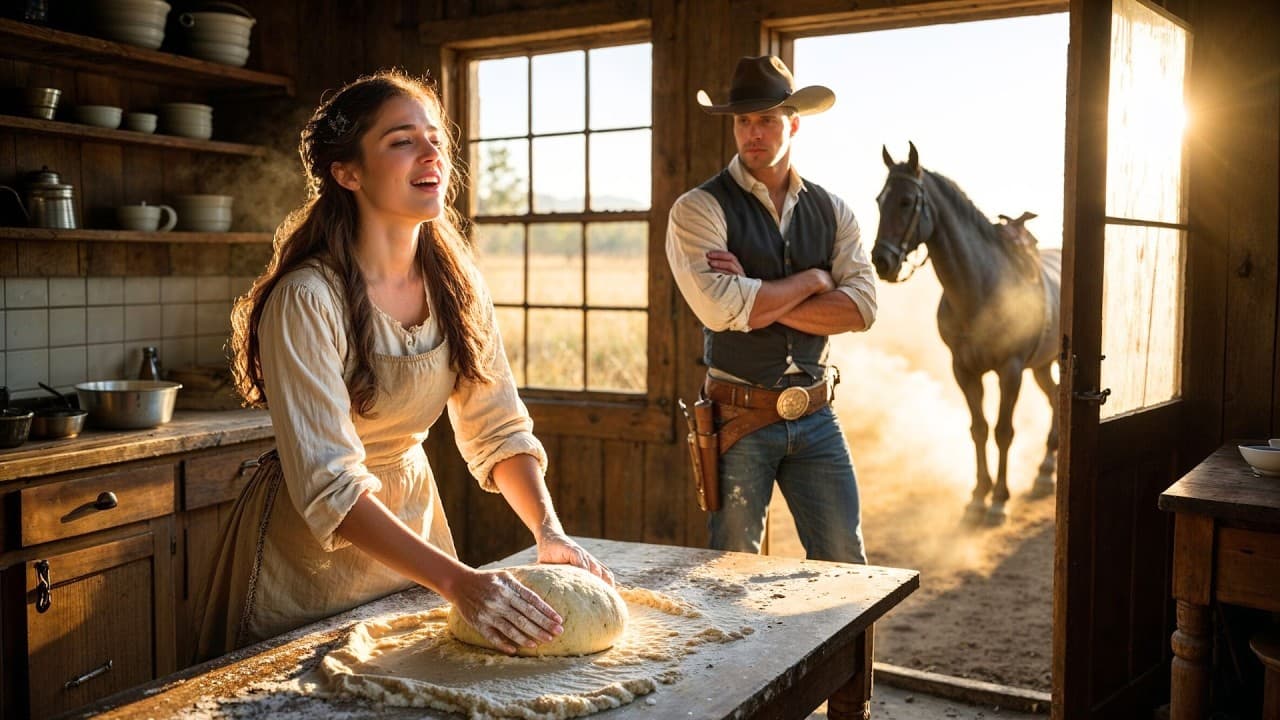
She was cooking alone in the kitchen until the cowboy crossed by and stopped when he heard her humming. Montana territory, late autumn, 1886. The highlands of Barrow Creek lay blanketed in dry gold, and the dying reds of early frost. Wind combed through the grass like invisible fingers, and chimney smoke twisted above rooftops like ghosts reluctant... Read More
Key Insights
- Evelyn’s singing is an inherited connection to her mother and to the dreams she lost after leaving school at 12. Her old folk songs give emotional life to repetitive kitchen labor and reveal a private identity that other ranch workers fail to recognize.
- Graham’s initial attraction is rooted in listening rather than appearance or social display. He hears longing in Evelyn’s untrained voice, approaches the kitchen without looking inside, and leaves a brief unsigned message that acknowledges the beauty she creates within an overlooked working space.
- The kitchen is both Evelyn’s workplace and the setting where her inner life becomes visible. Graham’s statement that she keeps something alive there recognizes that her cooking and singing preserve memory, warmth, and human feeling amid the ranch’s demanding routines.
- Graham’s care is expressed through practical service rather than formal courtship. Firewood, a repaired hinge, restored seating, roof work, honey, and dry boots show that he watches closely, identifies ordinary burdens, and helps without asking Evelyn to praise or reward him.
- Evelyn’s growing confidence appears in the way her singing changes after the first note. She still sings privately, but her voice no longer trembles and begins to expect a listener, suggesting that being genuinely noticed allows her to reclaim a part of herself.
- Class divisions shape how the ranch community interprets the relationship. Other workers reduce Graham’s attention to wealth, biscuits, and temporary amusement, while Evelyn fears their prediction that he will become bored and leave her to resume her lonely routine.
- Gossip causes Evelyn to retreat from the connection she had begun accepting. She stops humming, avoids the stable area, and closes herself off during breaks, making the kitchen feel colder and demonstrating how ridicule can silence a person’s fragile sense of hope.
- The cleaned boots become the clearest sign of dependable care because the gesture answers a need Evelyn never voiced. Their warmth, careful relacing, and restored shape convince her that Graham’s attention may be steadier than flirtation, leaving her with an unspoken question about their future.
Install to Summarize YouTube Videos and Get Transcripts
Explore YouTube Video Summarizer or Get YouTube Transcript Extractor
Questions & Answers
Q: Why does Graham stop outside Evelyn’s kitchen?
Graham stops because he hears Evelyn singing through the half-open window while she prepares biscuits. Her voice is light, untrained, and filled with longing, which affects him enough to dismount and listen quietly. He does not enter or look through the window. After the song ends, he leaves a folded parchment note saying that he did not know kitchens could sing.
Q: What does Evelyn’s humming reveal about her character?
Evelyn’s humming reveals a private emotional life that is largely hidden during her work. The melodies came from her mother and include old songs shaped by grief, comfort, and longing. Although poverty ended her schooling at 12 and narrowed her dreams, singing lets her preserve family memory and create beauty while performing demanding kitchen tasks alone.
Q: How does Graham show affection without formal courtship?
Graham shows affection by observing Evelyn’s daily needs and quietly completing useful tasks. He brings firewood, fixes a broken pantry hinge, sands and renails a rain-damaged bench, repairs porch shingles, and leaves honey on a shelf. He also cleans and dries her wet boots. These actions require attention and effort, yet he rarely asks for acknowledgment.
Q: Why does Evelyn stop singing in the kitchen?
Evelyn stops singing because the ranch staff begins gossiping about Graham’s attention. Workers mock the idea of a wealthy man bringing wood and honey to a cook, and they predict that he will lose interest and leave her behind. Their comments embarrass Evelyn and revive her insecurity, so she withdraws, avoids places where she might see him, and silences herself.
Q: What is the significance of Graham’s first note?
Graham’s first note matters because it recognizes something beyond Evelyn’s labor. Other people primarily see a cook who produces biscuits and meals, but his seven-word message notices how her voice transforms the kitchen. Evelyn hides the parchment in her recipe ledger because its words make her feel that someone has perceived the inner part of her that survives through music.
Q: Why are the cleaned and dried boots important to Evelyn?
The boots are important because Graham’s apparent gesture meets an immediate need without seeking thanks or recognition. Evelyn had expected to wear soaked leather in cold weather, but she finds the boots cleaned, dried, reshaped with cloth, carefully relaced, and warmed by the hearth. Their condition shows that someone noticed her discomfort and cared enough to resolve it thoughtfully.
Q: How does social class affect Evelyn and Graham’s relationship?
Social class makes the relationship appear improbable and exposes Evelyn to ridicule. Graham is the heir to one of the territory’s wealthiest landowners, while Evelyn comes from a poor farming family and works as a cook. Ranch workers interpret his kindness through that imbalance, assuming he is merely amused and will eventually abandon her, which makes Evelyn doubt his intentions.
Q: What themes shape the Barrow Creek romance?
The romance is shaped by survival, memory, class inequality, quiet attention, and resilience. Evelyn’s songs preserve her connection to her mother, while her kitchen work reflects the harsh demands of frontier life. Graham’s practical acts challenge the idea that affection requires grand declarations. The workers’ gossip creates conflict, but the warm boots begin restoring Evelyn’s willingness to trust.
Summary & Key Takeaways
-
In late autumn of 1886, Evelyn Ward works in a secondary kitchen at the wealthy Barrow Creek Ranch. While preparing biscuits, she sings an inherited folk melody. Graham Thatcher, the estate’s wealthy heir, hears her from outside, stops to listen, and leaves an unsigned note praising the singing kitchen.
-
Graham continues visiting quietly, first leaving a mountain daisy and then speaking directly to Evelyn. He tells her that she does more than cook because she keeps something alive inside the kitchen. His affection appears through useful actions, including delivering firewood, repairing a cabinet hinge, restoring a bench, and fixing shingles.
-
Ranch workers mock Evelyn for receiving attention from a rich man and predict that Graham will abandon her. Hurt and embarrassed, she stops singing and avoids him. Her feelings begin changing again after she discovers that someone has cleaned, dried, reshaped, and carefully relaced her soaked boots beside the warm hearth.
Read in Other Languages (beta)
Share This Summary 📚
Summarize YouTube Videos and Get Video Transcripts with 1-Click
Try YouTube Summary with ChatGPT & Claude or YouTube Transcript Generator
Explore More Summaries from Wild West Dark History 📚


Summarize YouTube Videos and Get Video Transcripts with 1-Click
Try YouTube Summary with ChatGPT & Claude or YouTube Transcript Generator