Why Haven't We Eradicated Polio?
TL;DR
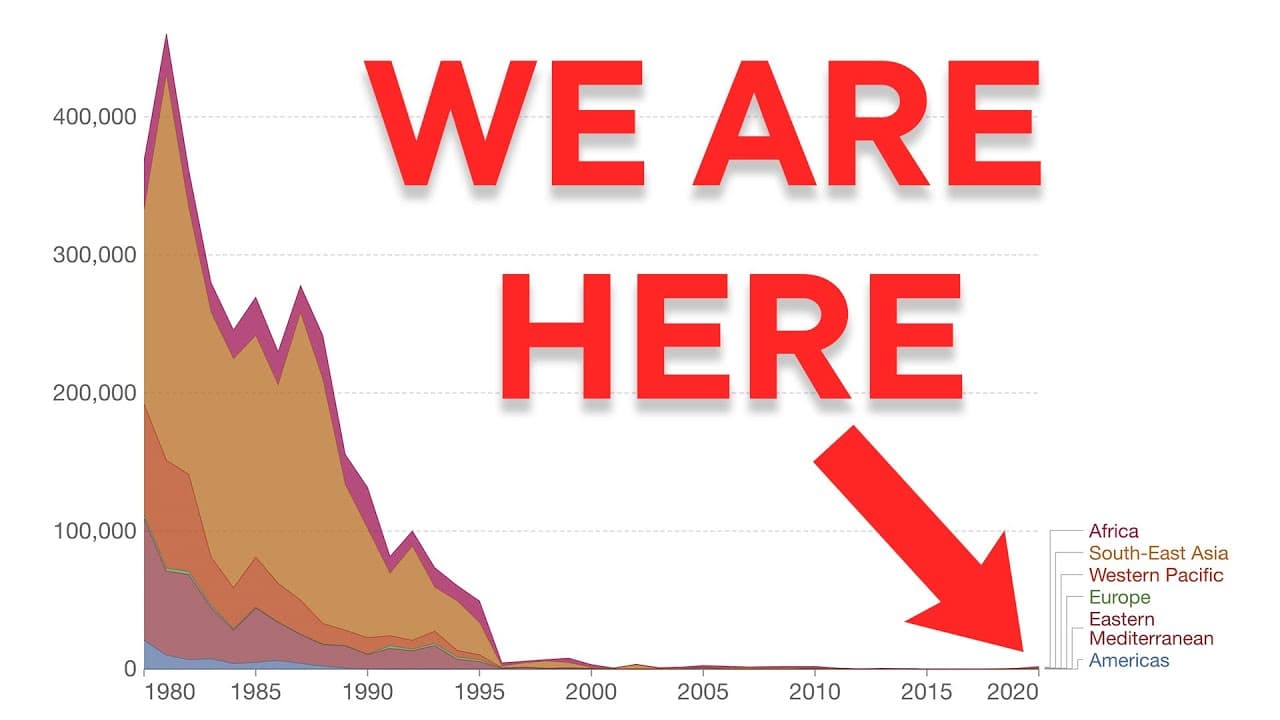
Polio, a virus that causes paralysis, is almost eradicated thanks to vaccines, but challenges remain due to the oral vaccine's risk of mutations.
Transcript
When you hear the word “polio”, your mind might first jump to black and white images of children in iron lungs, or maybe President Franklin Roosevelt sitting in his wheelchair. In other words, it might feel like a thing of the past. Poliomyelitis, the virus that causes the condition we call polio, is on the brink of eradication. And we have vac... Read More
Key Insights
- 💝 Polio has been a disease for thousands of years, but epidemics worsened in the late 19th century due to improved sanitation.
- 👶 Babies exposed to poliovirus during their first few months of life gain protection from antibodies acquired from their mothers.
- 🪸 The oral polio vaccine provides advantages such as temporary passive immunity and cost-effectiveness but carries the risk of vaccine-derived poliovirus.
- 🪸 Complete polio eradication requires global cooperation and the transition from the oral vaccine to the injectable vaccine.
- 🅰️ The injectable vaccine offers protection against all poliovirus strains, while the oral vaccine is limited to type I and type 3 strains.
- 📞 Individuals should consult healthcare professionals regarding polio vaccination, especially if they haven't received it during childhood.
Install to Summarize YouTube Videos and Get Transcripts
Explore YouTube Video Summarizer or Get YouTube Transcript Extractor
Questions & Answers
Q: How did improvements in hygiene contribute to the rise of polio epidemics in the 19th century?
Improved hygiene and sewage systems unintentionally prevented babies from being exposed to poliovirus, resulting in untrained immune systems when they encountered the virus later in life.
Q: Can someone infected with poliovirus show no symptoms but still transmit the virus?
Yes, around 70% of poliovirus infections are asymptomatic, but infected individuals can still spread the virus to others.
Q: What are the differences between the injectable and oral polio vaccines?
The injectable vaccine contains inactivated poliovirus, while the oral vaccine contains weakened poliovirus. The oral vaccine elicits a stronger immune response and provides localized immunity in the intestines.
Q: Why is the oral polio vaccine being phased out despite its advantages?
The oral vaccine carries a risk of vaccine-derived poliovirus, which can mutate and cause paralytic disease. The global plan is to discontinue its use to achieve complete polio eradication.
Summary & Key Takeaways
-
Poliomyelitis, or polio, is an ancient virus that causes paralysis, and its spread increased during the late 19th century due to poor sanitation.
-
The introduction of the first polio vaccine in the 1950s led to a significant decline in polio cases, but complete eradication has not yet been achieved.
-
Two types of vaccines are available: the injectable vaccine, containing inactivated poliovirus, and the oral vaccine, containing weakened poliovirus.
Read in Other Languages (beta)
Share This Summary 📚
Summarize YouTube Videos and Get Video Transcripts with 1-Click
Try YouTube Summary with ChatGPT & Claude or YouTube Transcript Generator
Explore More Summaries from SciShow 📚





Summarize YouTube Videos and Get Video Transcripts with 1-Click
Try YouTube Summary with ChatGPT & Claude or YouTube Transcript Generator