How Giant Creatures Eat Tiny Meals: 5 Fabulous Filter Feeders
TL;DR
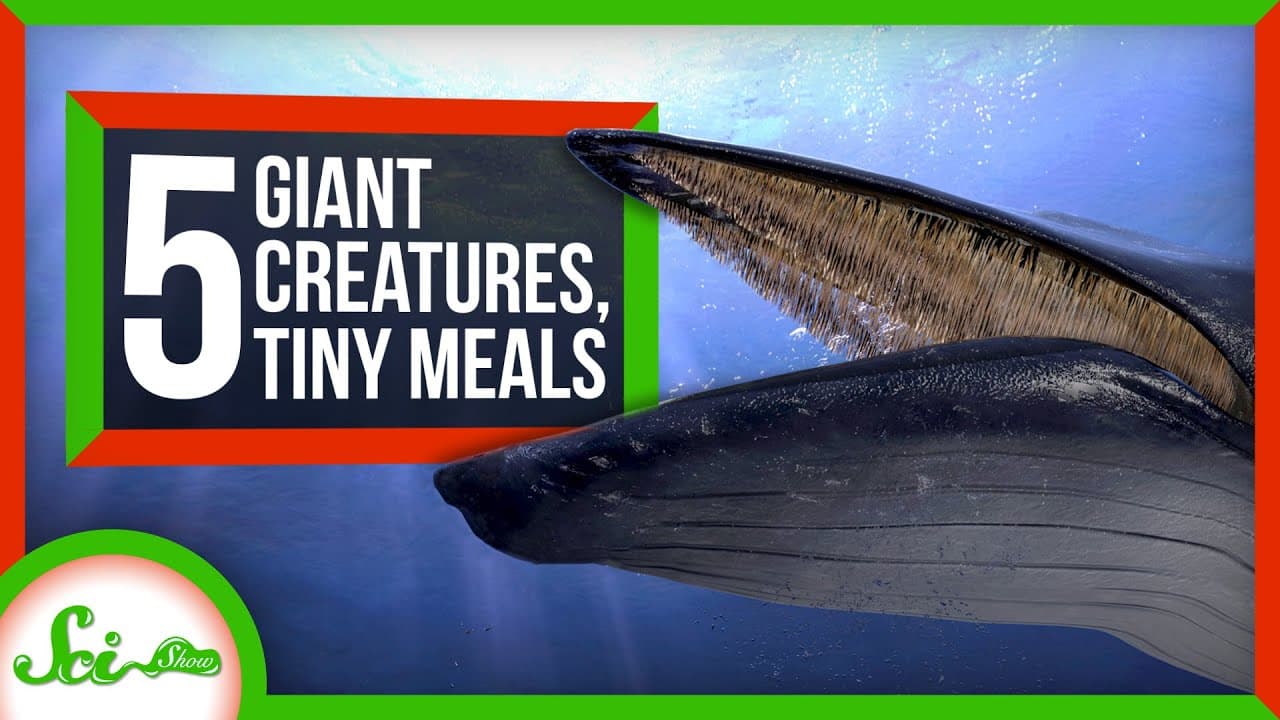
Ocean giants, including blue whales, gray whales, whale sharks, megamouth sharks, and manta rays, have evolved unique feeding strategies to sustain themselves by filtering tiny organisms out of the water.
Transcript
{♫Intro♫} Some of the largest animals in the ocean feed on the tiniest little critters. And if you’ve ever wondered why they don’t just scarf down a big fish and move on with their lives, well, their strategy actually isn’t as impractical as it might seem. That’s because, in an ecosystem, only 10% of the energy from prey gets passed up the food cha... Read More
Key Insights
- 🥘 Filter feeders benefit from consuming tiny organisms lower on the food chain, as only 10% of energy is transferred between trophic levels in an ecosystem.
- 🔵 Blue whales use lunge feeding to sustain their energy needs by swallowing large quantities of krill and water.
- 🇧🇲 Gray whales feed on amphipods by sucking up water and mud from the seafloor and pushing out the mud, leaving the amphipods on their baleen plates.
- 🤱 Whale sharks employ different feeding methods depending on food availability and energy expenditure, including passive and suction feeding, as well as ram feeding.
- 🫤 Megamouth sharks, with their gigantic mouths, likely use reflective tissue on their upper lip to attract prey and then suction it in using their jaws.
- 🫤 Manta rays use their cephalic lobes and unique filtering mechanism to concentrate food particles in their mouths without clogging their plates.
Install to Summarize YouTube Videos and Get Transcripts
Explore YouTube Video Summarizer or Get YouTube Transcript Extractor
Questions & Answers
Q: How do blue whales sustain themselves on krill when they need a significant amount of energy?
Blue whales have evolved lunge feeding, where they build up speed, open their mouths wide, and engulf krill and water. The water is filtered out through the baleen plates, leaving only krill behind.
Q: How do gray whales feed on amphipods when they live in burrows on the seafloor?
Gray whales suction the mud and water above the seafloor with their mouths, pushing out the mud and leaving the amphipods stuck on their baleen plates.
Q: What are the different feeding methods of whale sharks?
Whale sharks have three feeding methods: passive feeding, where they swim with their mouths open; suction feeding, where they vertically hang and suction prey; and ram feeding, where they swim and suction simultaneously.
Q: How do manta rays filter-feed without clogging their plates?
Manta rays have rows of plates that create little whirlpools, pushing food particles up and preventing them from sticking. The particles gather in the ray's mouth as water drains away.
Summary & Key Takeaways
-
Ocean giants such as blue whales, gray whales, whale sharks, megamouth sharks, and manta rays have evolved different feeding strategies to efficiently extract energy from tiny organisms.
-
Blue whales utilize baleen plates to filter and feed on krill, using the technique of lunge feeding to engulf large volumes of water and krill.
-
Gray whales employ suction to feed on amphipods burrowed in the seafloor, while also exhibiting flexibility in hunting other prey such as herring.
Read in Other Languages (beta)
Share This Summary 📚
Summarize YouTube Videos and Get Video Transcripts with 1-Click
Try YouTube Summary with ChatGPT & Claude or YouTube Transcript Generator
Explore More Summaries from SciShow 📚

Summarize YouTube Videos and Get Video Transcripts with 1-Click
Try YouTube Summary with ChatGPT & Claude or YouTube Transcript Generator