How Did the First Americans Arrive in the Americas?
TL;DR
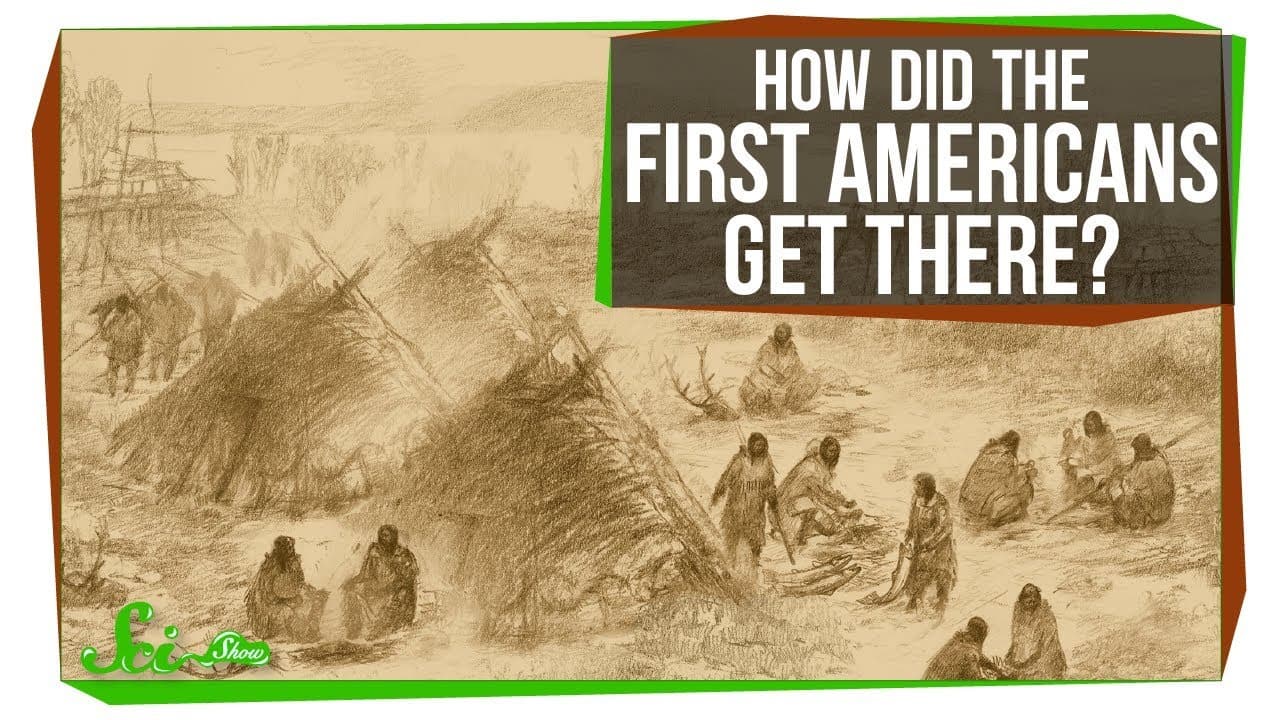
The first Americans likely arrived via the Bering land bridge around 30,000 years ago, according to genome analysis of a 6-week-old baby from Alaska. This baby belonged to a distinct genetic group known as the Ancient Beringians, separate from northern and southern Native American lineages, supporting the Beringian standstill model which explains how ancient populations were isolated before spreading into North and South America.
Transcript
♩♩Intro♩♩ About 11 and a half thousand years ago, people in what’s now central Alaska buried two babies in a hearth. One was was less than 6 weeks old, and the other was a late-term stillbirth. They stayed there until 2013, when archaeologists found their remains. And this week, a group of researchers published a detailed analysis of one of the bab... Read More
Key Insights
- 👎 The genetic analysis of a buried baby's genome supports the Beringian standstill model, indicating that people first settled near the Bering land bridge before moving into the Americas.
- 👥 The baby's genome belongs to a separate genetic group known as the Ancient Beringians, distinct from the northern and southern Native American groups.
- 🇲🇵 The split between the ancestors of the northern and southern Native American groups occurred around 21,000 years ago, with uncertain timing regarding their crossing of the land bridge.
- 🤕 The isolation caused by the ice age limited the movement of early humans, resulting in genetic diversity within the Ancient Beringians.
- 👎 The analysis of mitochondrial DNA from the same burial site confirmed the diversity and genetic distinctiveness of the two buried babies.
- 🫤 The genome analysis helps establish a more comprehensive timeline of migration, with the climate warming around 15,700 years ago, allowing for further eastward expansion.
- 👎 The remains of the buried babies provide valuable insight into the history and origins of indigenous peoples and cultures in the Americas.
Install to Summarize YouTube Videos and Get Transcripts
Explore YouTube Video Summarizer or Get YouTube Transcript Extractor
Questions & Answers
Q: What did the genetic analysis of the 6-week-old baby reveal?
The analysis showed that the baby belongs to a third genetic group called the Ancient Beringians, distinct from the known northern and southern Native American groups.
Q: What does the Beringian standstill model propose?
The Beringian standstill model suggests that people initially settled near the Bering land bridge about 30,000 years ago but were isolated by the ice age before eventually moving into the rest of North and South America.
Q: When did the split between the northern and southern Native American groups occur?
The split happened around 21,000 years ago, with both groups being descendants of the Ancient Beringians.
Q: How does the genetic analysis contribute to understanding the migration to the Americas?
By comparing the baby's genome to other groups, researchers were able to refine the Beringian standstill model and establish a more precise timeline of migration.
Summary & Key Takeaways
-
Researchers analyzed the genome of a 6-week-old baby buried in Alaska and found that it belongs to a third genetic group called the Ancient Beringians, separate from the known northern and southern Native American groups.
-
The findings support the Beringian standstill model, which suggests that people first settled near the Bering land bridge around 30,000 years ago before moving into the rest of North and South America.
-
The genome analysis helps establish a timeline of migration, with the split between the ancestors of the northern and southern Native American groups occurring around 21,000 years ago.
Read in Other Languages (beta)
Share This Summary 📚
Summarize YouTube Videos and Get Video Transcripts with 1-Click
Try YouTube Summary with ChatGPT & Claude or YouTube Transcript Generator
Explore More Summaries from SciShow 📚

Summarize YouTube Videos and Get Video Transcripts with 1-Click
Try YouTube Summary with ChatGPT & Claude or YouTube Transcript Generator