How Antarctica Froze Over
TL;DR
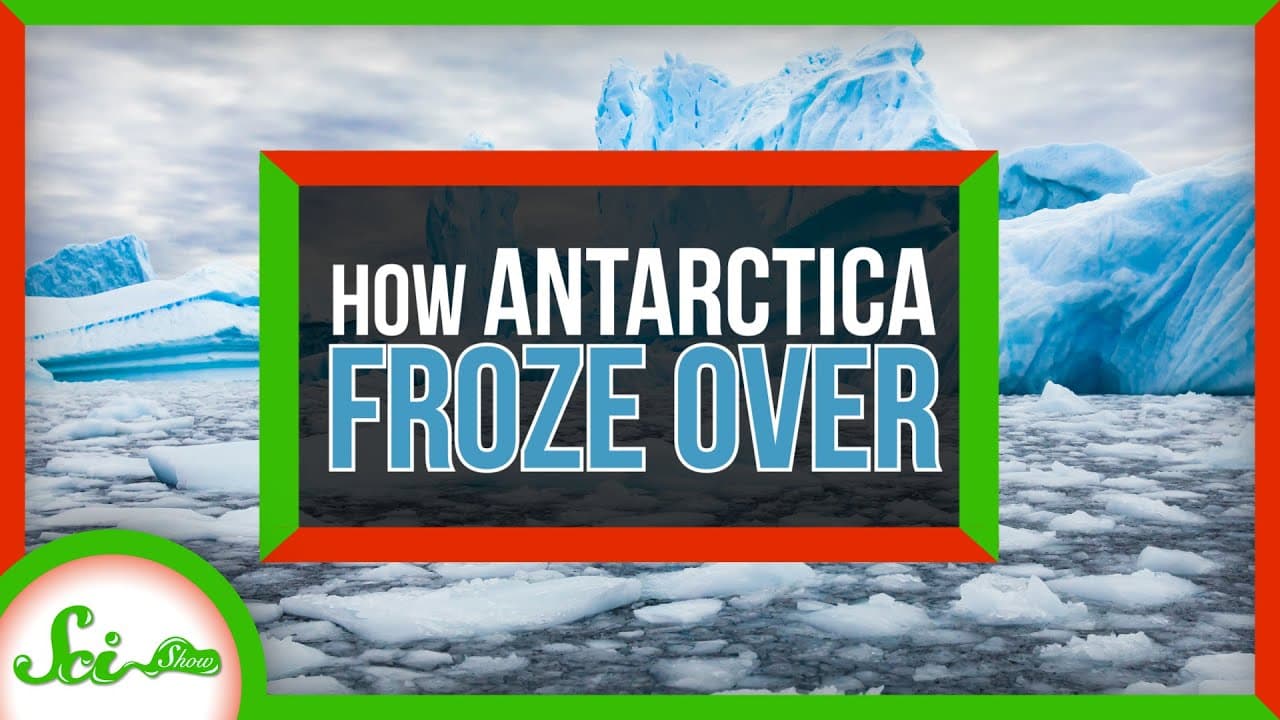
Antarctica was once home to lush forests and dinosaurs due to its position in a greenhouse world. As the continent moved south and cut off from other landmasses, it began to freeze over, forming the icy tundra we know today.
Transcript
Thanks to Brilliant for supporting this episode of SciShow. Go to Brilliant.org/SciShow to learn more. [ intro ] Antarctica is famously frigid. Unlike the North Pole, which is covered in floating sea ice, Antarctica is a true continent. It’s twice the size of Australia, with mountains, valleys, and other landforms -- but it’s almost completely cove... Read More
Key Insights
- 😊 Antarctica was once a lush and green continent populated with coniferous forests and dinosaurs due to its position in a warmer greenhouse world.
- 🥶 The formation of Antarctica's ice sheets began around 34 million years ago, marking the transition from a warmer world to the icehouse conditions of today.
- 🥶 Chemical weathering by exposed rock and plankton, as well as changes in global ocean currents, contributed to the cooling of the planet and the formation of ice in Antarctica.
- 🇦🇶 The Antarctic Circumpolar Current may play a significant role in keeping Antarctica cold, though its exact impact is still under study.
- 💨 Plankton, through their skeletons and fossils, helped lock away carbon and contribute to the cooling of the planet.
- 🐢 Changes in ocean currents, such as the opening of the Drake Passage, affected global climate by slowing down the movement of deep-water carbon, leading to a decline in CO2 levels and lower temperatures.
- 🥶 The positive feedback loop of ice formation, with ice reflecting sunlight and reducing heat, further perpetuated the growth of ice in Antarctica.
Install to Summarize YouTube Videos and Get Transcripts
Explore YouTube Video Summarizer or Get YouTube Transcript Extractor
Questions & Answers
Q: What caused Antarctica to freeze over?
Antarctica froze over due to a combination of factors, including its gradual movement southward, the formation of the Antarctic Circumpolar Current, changes in ocean currents globally, and chemical weathering by exposed rock and plankton.
Q: How did the formation of the Antarctic Circumpolar Current contribute to Antarctica's freezing?
Many scientists believe that the Antarctic Circumpolar Current helps keep Antarctica cold by surrounding it with cold water, preventing warmer water from reaching the continent. However, the role of the current is still an active area of research and not universally accepted.
Q: What role did plankton play in Antarctica's freeze-over?
Plankton, through their shells and fossils, played a crucial role in climate change and the formation of ice in Antarctica. As the Antarctic Circumpolar Current grew stronger, upwelling of cold, nutrient-rich water led to the growth of plankton. Their skeletons, when they die and sink to the ocean floor, become incorporated into limestone, locking away carbon and contributing to the cooling of the planet.
Q: How did changes in ocean currents affect the global climate?
Changes in ocean currents, such as the opening of the Drake Passage between Antarctica and South America, had effects on oceans globally. These changes led to an overall slowdown of deep-water carbon reaching the surface, resulting in a decline in global CO2 levels, lower temperatures, and the formation of ice sheets.
Summary & Key Takeaways
-
Antarctica was once a green and lush continent, home to vast coniferous forests and dinosaurs, due to its position in a greenhouse world.
-
Around 34 million years ago, Antarctica's ice sheets began to form, marking the transition from a warm and wet world to a perpetually frozen icehouse.
-
The formation of the Antarctic Circumpolar Current, changes in ocean currents, and chemical weathering by exposed rock and plankton all played a role in Antarctica's freeze-over.
Read in Other Languages (beta)
Share This Summary 📚
Summarize YouTube Videos and Get Video Transcripts with 1-Click
Try YouTube Summary with ChatGPT & Claude or YouTube Transcript Generator
Explore More Summaries from SciShow 📚


Summarize YouTube Videos and Get Video Transcripts with 1-Click
Try YouTube Summary with ChatGPT & Claude or YouTube Transcript Generator