Jensen Huang on AI Demand, China, and Musk
TL;DR
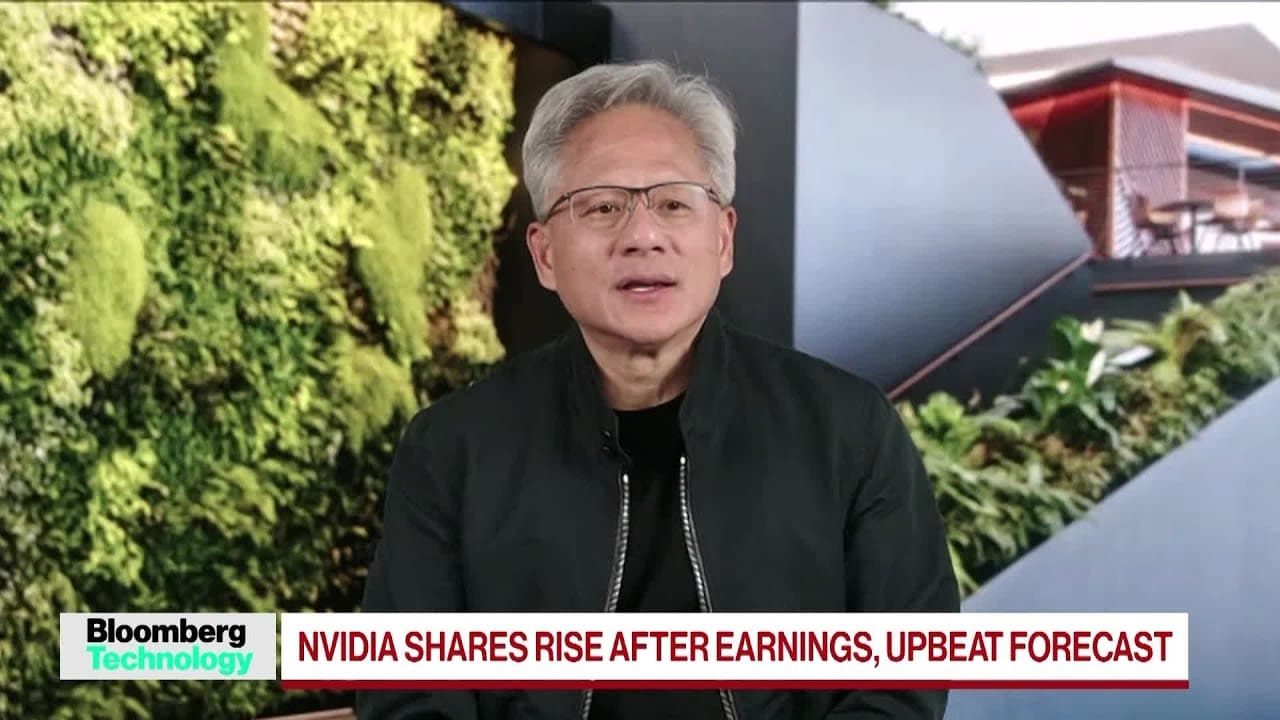
Reasoning inference and the Blackwell ramp are driving demand that Jensen Huang describes as exceptionally strong, helping Nvidia offset lost China-related revenue opportunities. He argues that China remains strategically essential, American companies should be allowed to compete globally, immigration supports US technology leadership, and humanoid robots could become a multitrillion-dollar industry.
Transcript
You went into great detail about what's happening, particularly in China. I just wanted to go over something that I felt wasn't asked, which is fiscal second quarter sales, $45 billion plus or -2%. $8 billion of lost revenue opportunity specifically relating to China and 20. It seems as if you made up somewhere some demand for a different product o... Read More
Key Insights
- Reasoning inference is a major source of Nvidia's current demand because increasingly popular AI services and the applications built on them require substantial inference capacity. Huang characterized this workload as a giant opportunity emerging alongside breakthroughs in reasoning capabilities.
- Blackwell demand is helping compensate for lost China-related opportunities because customers increasingly view the architecture and the GB200 NVL72 system as successful platforms for reasoning AI. Nvidia's growing supply chain is also providing more capacity to meet that demand.
- China is strategically important to Nvidia because Huang described it as the second-largest AI market and home to the world's largest population of AI researchers. He wants Chinese researchers and developers building their work on American technology platforms.
- H20 represents the lowest-performance version Nvidia could create from the Hopper architecture under the applicable restrictions. Huang said further reductions are difficult, while any alternative design must still provide enough value to compete with rapidly improving Chinese products.
- Huawei is a formidable competitor whose technology, according to Nvidia's current understanding, is comparable to H200. Huang also said Huawei's CloudMatrix system can scale to a larger system than Nvidia's latest Grace Blackwell generation.
- Changing export regulations reduce trust in American platforms because Chinese customers cannot confidently rely on continued access. Huang said those customers are therefore acting prudently by developing their software stacks on Huawei technology when American products may become unavailable.
- Immigration is important to the US technology industry because talented immigrants have contributed significantly to American companies. Huang supports rules governing entry while arguing that people capable of meaningful contributions should be able to bring their ideas and intellect to the United States.
- Humanoid robotics could become the next multitrillion-dollar industry because human-shaped robots may be deployed into existing environments relatively easily. Huang believes Tesla's Optimus has a strong chance to reach the volume and technology scale needed to advance the field.
Install to Summarize YouTube Videos and Get Transcripts
Explore YouTube Video Summarizer or Get YouTube Transcript Extractor
Questions & Answers
Q: What is driving Nvidia's current AI chip demand?
Reasoning inference is the central demand driver identified by Jensen Huang. Popular AI services, including Gemini and other generative AI offerings, are performing strongly, as are applications built on top of them. This growth coincides with increased confidence in Blackwell and the GB200 NVL72 architecture, which Nvidia designed as a thinking machine for reasoning AI. Greater supply-chain capacity is helping Nvidia serve that demand.
Q: How is Nvidia offsetting lost revenue opportunities in China?
Nvidia is partly offsetting the China-related shortfall through strong demand for Blackwell systems and increased available supply. The company projected fiscal second-quarter sales of about $45 billion, plus or minus 2%, while identifying approximately $8 billion in lost revenue opportunity related to China and H20. Huang linked the broader outlook to reasoning-inference growth, Blackwell adoption, and successful supply-chain expansion.
Q: Why does Jensen Huang consider China important to Nvidia?
Huang considers China essential because he described it as the second-largest AI market and the home of the world's largest population of AI researchers. He wants researchers and developers worldwide to build on American technology stacks. Although Nvidia can achieve near-term revenue success elsewhere, he argued that the company and the United States cannot ignore China's market size, research community, and competitive significance.
Q: Can Nvidia design a weaker Hopper chip for China?
Huang said H20 is as far down as Nvidia could take the Hopper architecture and that the company does not know how to reduce its capability further. Nvidia is considering what else might be possible, but the restrictions are stringent. Any new offering would still need to provide genuine market value and compete with Chinese technologies that have advanced rapidly in capability and volume.
Q: How competitive is Huawei with Nvidia in AI hardware?
Based on Nvidia's understanding and available ground-level information, Huang said Huawei's technology is probably comparable to H200. He also highlighted Huawei's CloudMatrix system, which he said scales to a larger system than Nvidia's latest Grace Blackwell generation. His broader point was that Huawei is a formidable technology company that continues to advance and actively searches for ways to compete.
Q: How do changing US export rules affect Chinese AI customers?
Changing regulations make it difficult for Chinese customers to trust that Nvidia and other American platforms will remain consistently available. Huang said it is therefore prudent for those customers to develop their technology stacks on Huawei because relying on American technology has become difficult. He warned that when American products are unavailable, Chinese technology will fill the data-center market rather than leaving demand unserved.
Q: What did Jensen Huang say about immigration and US technology?
Huang argued that immigration remains important to American technology leadership, citing his own experience as an immigrant and the contributions many immigrants have made to the industry. He supports having rules and does not suggest that everyone should automatically enter. However, he believes talented people who can contribute should be able to bring their ideas and intellect to the United States.
Q: Why does Jensen Huang see humanoid robots as a major opportunity?
Huang believes humanoid robots may be easier to deploy throughout the existing world because their human form suits environments already designed for people. He identified Tesla's Optimus as a robot with a realistic chance to achieve the high production volume and technology scale needed to advance robotics. On that basis, he described humanoid robotics as a potential next multitrillion-dollar industry.
Summary & Key Takeaways
-
Nvidia projected fiscal second-quarter sales of about $45 billion, plus or minus 2%, despite an estimated $8 billion in lost revenue opportunity related to China and H20. Huang attributed the outlook to rapidly growing reasoning-inference workloads, strong demand for Grace Blackwell and GB200 NVL72 systems, and an expanding supply chain.
-
Huang described China as the second-largest AI market and home to a major population of AI researchers. Export restrictions have made American platforms harder for Chinese customers to trust, encouraging companies to develop around Huawei. He said Huawei is advancing quickly and that any permitted Nvidia product must remain competitive and useful.
-
Huang praised policies intended to encourage US manufacturing and expand American technology platforms internationally. He also defended selective immigration for people capable of making significant contributions. Discussing Elon Musk's companies, he highlighted Nvidia's work with Tesla, Grok, self-driving technology, and Optimus, while identifying humanoid robotics as a major emerging industry.
Read in Other Languages (beta)
Share This Summary 📚
Summarize YouTube Videos and Get Video Transcripts with 1-Click
Try YouTube Summary with ChatGPT & Claude or YouTube Transcript Generator
Explore More Summaries from Bloomberg Television 📚





Summarize YouTube Videos and Get Video Transcripts with 1-Click
Try YouTube Summary with ChatGPT & Claude or YouTube Transcript Generator