What Is Platinum and How Is It Processed for Catalysts?
TL;DR
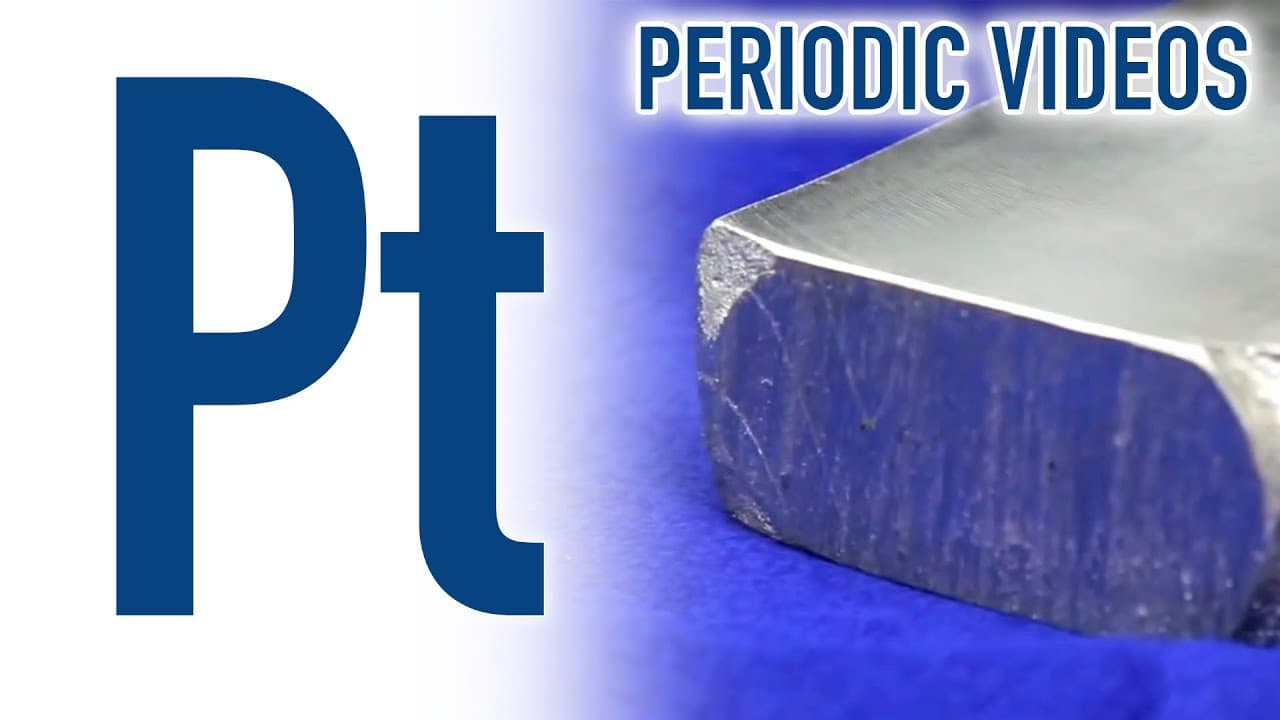
Platinum is a rare metal crucial for creating catalysts used in car engines and fertilizer production. Its rarity stems from its tendency to alloy with iron, making recycling and efficient processing vital. The conversion process transforms platinum ingots into catalyst sheets, which significantly enhance chemical reactions in various industrial applications.
Transcript
people apparently occasionally order wedding dresses from here or even suits if they want to be really bling but you have to have a lot of money to have a wedding dress and it's very heavy so you get a bit tired before the ceremony is over I'm here with more platinum than I've ever seen in my life and there's a lump of platinum here of more than 13... Read More
Key Insights
- ⛔ Platinum's rarity due to its affinity with iron limits its availability on Earth.
- 🦾 Processing platinum involves intricate mechanical and chemical transformations.
- 🖐️ Catalyst sheets woven from platinum wires play a crucial role in numerous industrial processes.
- 😨 Platinum's catalytic properties are essential in applications like car engines and hydrogen fuel cells.
- ❓ The efficient conversion of chemicals in industrial processes is made possible by platinum catalysts.
- 😨 Recapturing platinum from sources like car exhausts may become necessary for future demands.
- 🤘 Gold storage at the Bank of England highlights the significance of precious metal reserves.
Install to Summarize YouTube Videos and Get Transcripts
Explore YouTube Video Summarizer or Get YouTube Transcript Extractor
Questions & Answers
Q: Why is platinum considered a valuable metal?
Platinum is rare on Earth due to its affinity for forming alloys with iron, making it crucial for industrial applications like catalysts in car engines and fertilizer production. Its scarcity and unique properties drive its high value in the market.
Q: How is platinum processed into catalyst sheets?
Platinum ingots are machined into rods, which are then transformed into wires and ultimately woven into catalyst sheets. These sheets, with optimized chemical compositions, facilitate essential chemical reactions efficiently.
Q: Why is platinum crucial in the transition to a hydrogen economy?
Platinum serves as a catalyst in hydrogen fuel cells, playing a vital role in transitioning to a hydrogen economy. As the demand for clean energy sources rises, platinum's catalytic properties become increasingly important for efficient energy conversion.
Q: How do catalyst sheets contribute to industrial processes like fertilizer production?
Catalyst sheets made from platinum facilitate chemical reactions that produce fertilizers. These efficient catalysts play a significant role in ensuring the agricultural industry can meet the global demand for food production.
Summary & Key Takeaways
-
Platinum processing at Johnson Matthey involves transforming ingots into catalyst sheets, crucial for applications like car engines and fertilizer production.
-
The rarity of platinum on Earth due to its tendency to form alloys with iron makes processing and recycling crucial.
-
The process involves turning platinum into catalyst rods, wires, and sheets through mechanical and chemical transformations.
Read in Other Languages (beta)
Share This Summary 📚
Summarize YouTube Videos and Get Video Transcripts with 1-Click
Try YouTube Summary with ChatGPT & Claude or YouTube Transcript Generator
Explore More Summaries from Periodic Videos 📚



Summarize YouTube Videos and Get Video Transcripts with 1-Click
Try YouTube Summary with ChatGPT & Claude or YouTube Transcript Generator