How to Build Trust and Close More Product Sales
TL;DR
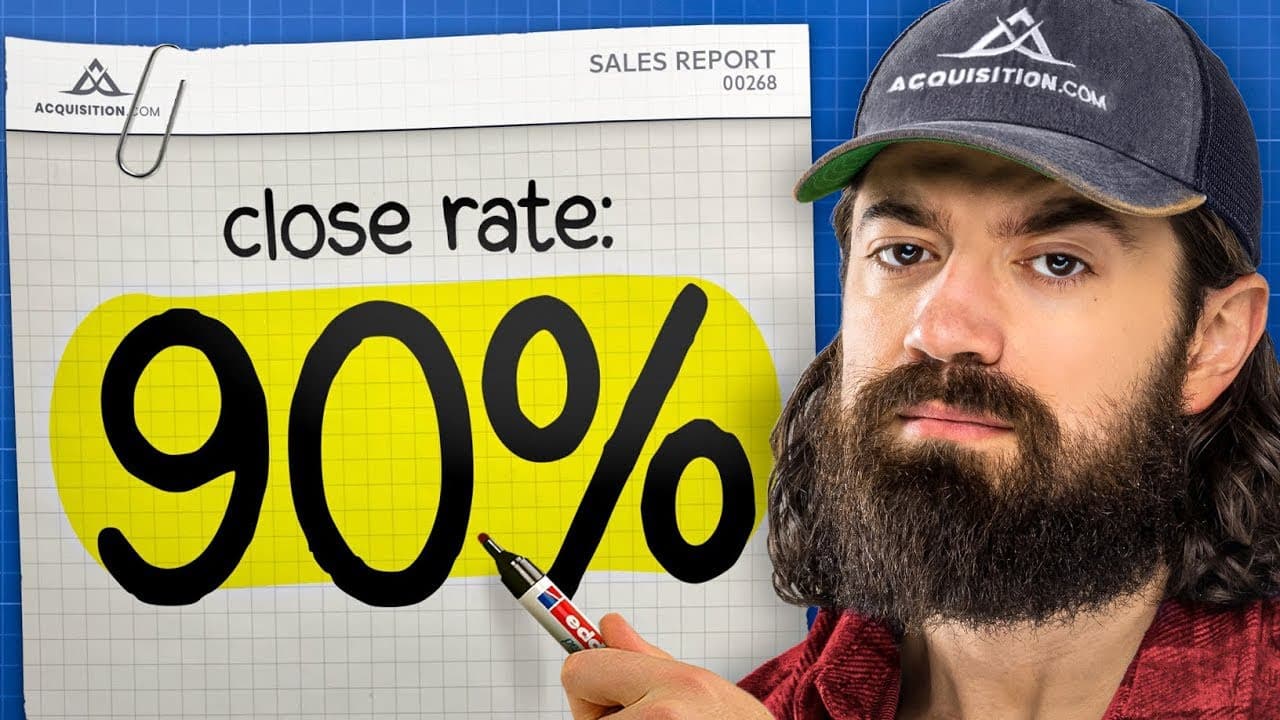
Build trust by openly removing unnecessary items and directing customers to cheaper alternatives for low-margin products, then prescribe the valuable products that genuinely solve their problem. Explain exactly how each purchase fits into the customer’s routine, attach usage to an existing habit, and make the final decision simple with a direct, low-friction close.
Transcript
I want to tell you about the most powerful sales tactic that I have learned I never learned it from a book I actually learned it by accident and it will be included in the 100 million dollar sales book when it comes out and so you heard it here first but it's a concept that you can do as a salesperson to gain trust and I stumbled into this I ended ... Read More
Key Insights
- Trust is created when a salesperson visibly acts against their immediate financial interest, such as removing an unnecessary item or recommending a cheaper source. That concession gives customers a concrete reason to believe the remaining recommendations are designed to help them.
- Ghost products are low-margin or unnecessary items that a salesperson deliberately excludes from the final purchase. They can remain on a recommendation list, or even be carried without being sold, because their primary purpose is to demonstrate judgment and establish trust.
- The strongest recommendations are prescriptions rather than generic pitches. A salesperson should state the expected benefit, specify the amount to use, explain when to use it, and connect those instructions directly to the customer’s daily life.
- Habit pairing works by associating product use with something the customer already does every day, such as brushing their teeth, drinking coffee, smoking a cigarette, or taking a shower. This avoids relying on the customer to create an entirely new routine.
- A low-friction close asks for a simple confirmation after the complete prescription has been explained. In the gym example, asking whether the customer wanted to use the card already on file removed the need to retrieve a wallet or reconsider every item separately.
- Budget objections are handled by ranking recommendations according to importance. The salesperson can remove the lowest-priority item first, explain the reduced benefit or required substitute, and ask whether the revised package works instead of treating every product as equally essential.
- Product removal should preserve the logic of the original recommendation. If an item is taken away, the salesperson should explain how the customer must address the same underlying problem through another behavior, such as adding a large amount of a particular food to the diet.
- Repeated low-ticket transactions are practical sales training because they provide many opportunities to practice trust building, prescriptions, objections, and closing. Experience gained in settings such as car washes, massages, nail services, or hair services can prepare someone to sell higher-priced offers.
Install to Summarize YouTube Videos and Get Transcripts
Explore YouTube Video Summarizer or Get YouTube Transcript Extractor
Questions & Answers
Q: How can a salesperson build trust before asking for a purchase?
A salesperson can build trust by visibly acting in the customer’s interest before presenting the final recommendation. That may mean crossing out an unnecessary product, identifying an item that does not match the customer’s goal, or directing the customer to a cheaper alternative elsewhere. This concession shows that the salesperson is not trying to maximize every possible item in the transaction.
Q: What are ghost products in a sales process?
Ghost products are items used primarily to create trust rather than to generate revenue. The salesperson recommends that customers skip them, removes them as unnecessary, or directs customers to buy them more cheaply elsewhere. The tactic was previously called using sacrificial lambs. Low-margin products are the recommended candidates because giving them up protects the higher-margin portion of the sale.
Q: Why can recommending a competitor or cheaper source increase sales?
Recommending a cheaper source demonstrates that the salesperson is willing to give up some immediate revenue to benefit the customer. In the supplement example, customers became more receptive to the remaining recommendations after being told that certain products could be purchased for less at Costco or another source. The concession made the later prescription appear more credible and customer-focused.
Q: How should a salesperson present products as a prescription?
A salesperson should explain what benefit each product supports, how much the customer should use, when it should be used, and where it should be kept. The instructions should be concrete, such as taking a specified amount in the morning and placing the product beside a toothbrush. This shifts the conversation from choosing isolated products to following an expert-designed plan.
Q: How can product use be attached to an existing habit?
The salesperson should ask what the customer already does every morning or at another relevant usage time. Examples from the transcript include brushing teeth, drinking coffee, smoking a cigarette, taking a shower, or waking up. The product is then placed near that activity and used alongside it, reducing the difficulty of remembering or developing a completely new habit.
Q: How should a salesperson respond when a customer has a limited budget?
The salesperson can ask whether the customer wants the recommendations ordered by importance, separating necessities from items that produce additional benefits faster. The lowest-priority item can be removed first, followed by a question about whether the revised package works. If more must be removed, the salesperson should explain what alternative behavior is required to solve the same problem.
Q: Why should removed products still be described as useful?
A removed product should not suddenly be portrayed as meaningless because that would imply the original recommendation included something that did not matter. Instead, the salesperson should explain that removing it creates another requirement. In the nutrition example, the customer might need to eat much more broccoli to replace what the product was intended to provide, preserving the recommendation’s credibility.
Q: How can someone gain practical experience in sales?
Someone can seek a role inside an established business that handles many low-ticket customer transactions, such as car washes, massages, nail services, hair services, or similar operations. Joining an existing sales process creates repeated opportunities to practice conversations, trust building, prescriptions, objections, and closing. The transcript argues that this volume of practice prepares salespeople for higher-ticket offers later.
Summary & Key Takeaways
-
The central tactic is to sacrifice selected products to establish credibility. A salesperson can remove an unnecessary item or recommend buying a low-margin product more cheaply elsewhere. Acting visibly in the customer’s interest reduces suspicion and makes the remaining recommendations feel like an expert prescription instead of an attempt to maximize the transaction.
-
After earning trust, the salesperson should describe each product’s benefits and provide specific usage instructions. Connecting product use to an established routine, such as brushing teeth or drinking coffee, avoids requiring an entirely new habit. This approach combines selling with coaching because it helps customers follow through and experience the intended benefits.
-
When price becomes an objection, products can be ranked by importance rather than discounted or dismissed as meaningless. The salesperson should explain what behavior or dietary replacement becomes necessary if an item is removed. Repeated practice in businesses with many low-ticket transactions can develop the interpersonal skills needed for more expensive sales later.
Read in Other Languages (beta)
Share This Summary 📚
Summarize YouTube Videos and Get Video Transcripts with 1-Click
Try YouTube Summary with ChatGPT & Claude or YouTube Transcript Generator
Explore More Summaries from Alex Hormozi 📚
Summarize YouTube Videos and Get Video Transcripts with 1-Click
Try YouTube Summary with ChatGPT & Claude or YouTube Transcript Generator