Why Caring What Others Think Kills Your Creativity
TL;DR
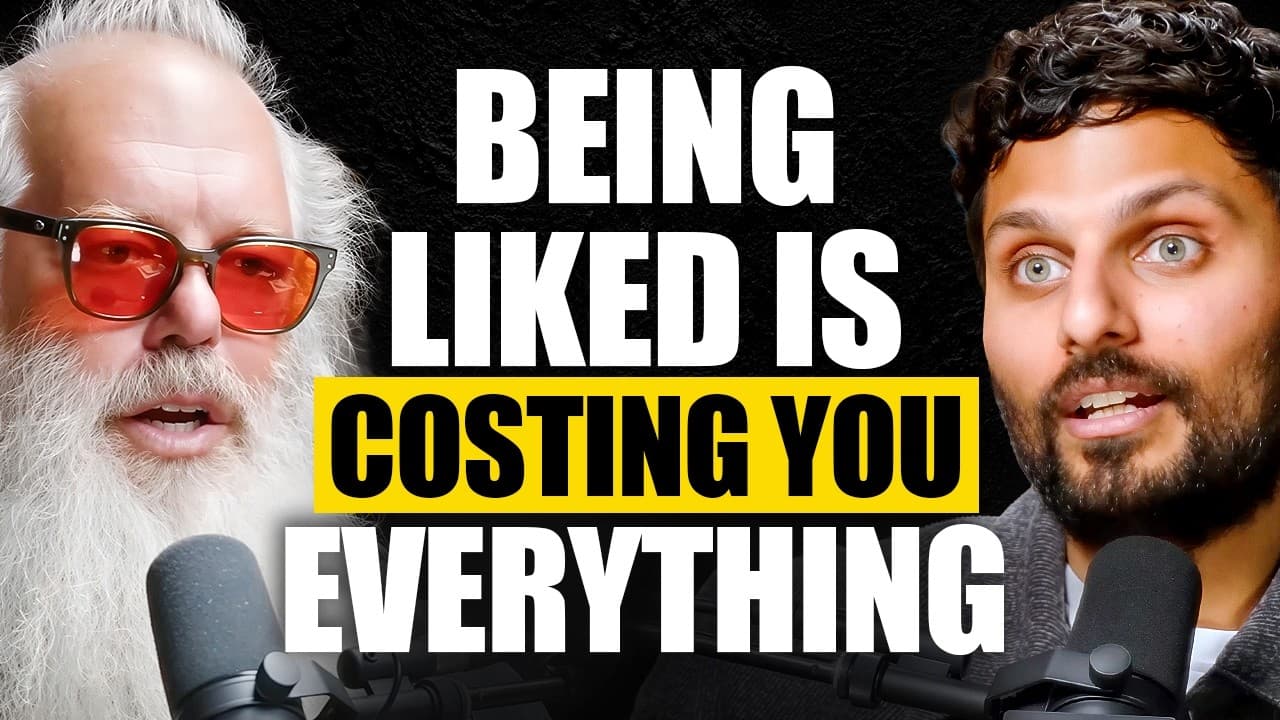
The main barrier to creativity is worrying about what others think, not a lack of talent. Create from your own vision and offer it with devotion, even if it risks disagreement. Great work emerges when you stay true to yourself and welcomes diverse perspectives while serving a higher purpose.
Transcript
What in your opinion has made us so addicted to wanting to become someone that people like and often go against who we truly are. You just said you you like to sense that authenticity and feel how you feel. A lot of people are scared of that. A lot of people would rather mold and become malleable and evolve and become who people want them to be. Wh... Read More
Key Insights
- Creativity is blocked by the fear of other people’s judgments, not by insufficient talent or ideas.
- Authenticity creates the strongest connection because it reflects a personal truth that cannot be easily copied.
- Great work is an act of devotion to the creator’s vision, not a negotiation with audience expectations.
- Different viewpoints enrich creativity; acknowledging diverse perspectives leads to deeper understanding.
- The best ideas often resist conventional publishing or market pressure when they are true to the creator.
- Blocking fears can start by asking how the creator truly sees the world and presenting that view clearly.
- Discomfort or controversy can reveal more about real intent than conforming to popularity.
- Simple daily choices, like creative detours or new approaches, are evidence of ongoing creativity in action.
Install to Summarize YouTube Videos and Get Transcripts
Explore YouTube Video Summarizer or Get YouTube Transcript Extractor
Questions & Answers
Q: A real search query question about the video (e.g. 'How to...', 'What is...', 'Why does...', 'When should...'). Question 1
The biggest block to creativity is worrying about what others think, which leads to masking true preferences and diluting the work. To overcome this, focus on expressing your own perspective clearly and honestly, accepting that not all feedback will align with your vision. This stance keeps your work true and resilient.
Q: Question 2
Creativity improves when you view your work as an offering rather than a product aimed at pleasing a crowd. By treating creation as a devotion to a higher purpose, you reduce the fear of failure and stay committed to delivering something meaningful, even if it challenges conventional tastes.
Q: Question 3
The interview emphasizes that different viewpoints are essential to art because they expand understanding and prevent stagnation. When you engage with opinions you disagree with, you learn how others interpret the world and you refine your own message without abandoning your core truth.
Q: Question 4
A concrete example discussed is telling Johnny Cash to sing a love song to God, which shows how nudging an artist toward their authentic voice can create more powerful, lasting impact than following expected norms. This demonstrates the value of aligning with core vision over market trends.
Q: Question 5
The dialogue notes that even controversial art can originate from a place of love and connection, not hate. Audience response can reveal a meaningful shared emotion, proving that passion and intention behind the work matter more than the initial surface perception.
Q: Question 6
Publishers often project a different book than what the author intends, which can block creative freedom. Delaying deals until the work is completed ensures the final product genuinely reflects the creator’s vision and increases the chance of a receptive audience when the book finally meets readers’ expectations.
Q: Question 7
The conversation discusses the impact of instant feedback on modern creation. The key takeaway is that resisting the urge to mold work for immediate reactions can help preserve originality and lead to work that stands out amid rapid publish and critique cycles.
Q: Question 8
The idea of art as a daily choice is highlighted through examples like detours, recipe tweaks, or new approaches. These small creative decisions accumulate, proving that creativity is not a rare talent but a habit exercised through consistent, personal experimentation.
Summary & Key Takeaways
-
The clip argues authenticity is essential to lasting creativity, and trying to please everyone leads to bland work that lacks personal truth.
-
Rick Rubin explains that treating art as an offering to a higher purpose helps maintain integrity and focus, even when publishers or audiences push for a different direction.
-
The conversation covers real-world examples, like advising Johnny Cash to sing to God and Slayer's audience finding love in a controversial performance, illustrating that conviction can resonate deeply.
Read in Other Languages (beta)
Share This Summary 📚
Summarize YouTube Videos and Get Video Transcripts with 1-Click
Try YouTube Summary with ChatGPT & Claude or YouTube Transcript Generator
Explore More Summaries from Jay Shetty Podcast 📚



Summarize YouTube Videos and Get Video Transcripts with 1-Click
Try YouTube Summary with ChatGPT & Claude or YouTube Transcript Generator