How to Start Learning Machine Learning in 2024?
TL;DR
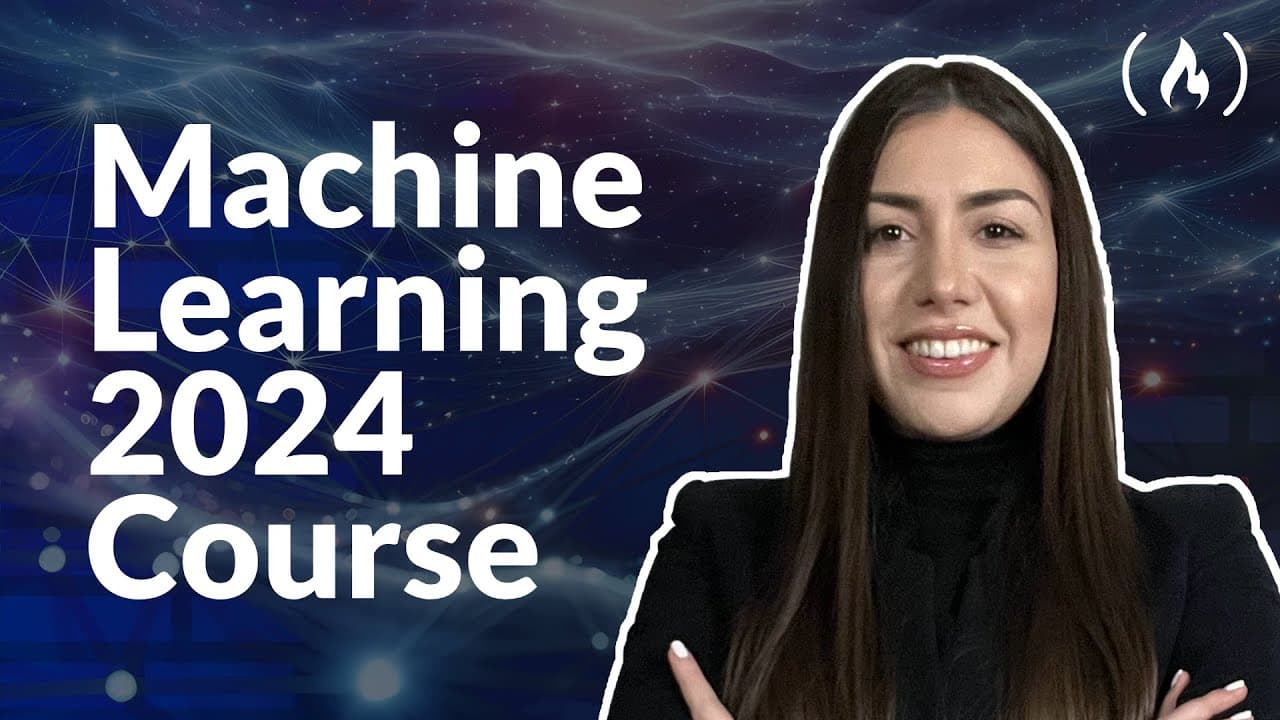
Begin your journey in machine learning by mastering essential skills like Python programming, statistics, and machine learning fundamentals. This course offers practical, hands-on projects, including a comprehensive end-to-end project, while also exploring various career paths in machine learning for 2024.
Transcript
this machine learning course is created for beginners who are learning in 2024 the course begins with a machine learning road map for 2024 emphasizing career paths and beginner-friendly Theory then the course moves on to Hands-On practical applications and a comprehensive end to-end project using python Todd have created this course she is an exper... Read More
Key Insights
- The course is designed for beginners entering the field of machine learning in 2024, providing a roadmap and essential skills.
- It emphasizes both theoretical understanding and practical applications, including a comprehensive end-to-end project.
- Todd, the course creator, aims to demystify machine learning concepts and make them accessible to newcomers.
- The course covers essential skills like Python programming, statistics, and machine learning fundamentals.
- It includes hands-on projects such as linear regression for causal and predictive analysis using real-world data.
- Various machine learning algorithms and techniques, including supervised and unsupervised learning, are explored.
- The course addresses common challenges like overfitting and introduces regularization methods to tackle them.
- Career paths in machine learning are discussed, highlighting roles like machine learning engineer and researcher.
Install to Summarize YouTube Videos and Get Transcripts
Explore YouTube Video Summarizer or Get YouTube Transcript Extractor
Questions & Answers
Q: What is the primary goal of the course?
The primary goal of the course is to provide a comprehensive introduction to machine learning for beginners, focusing on both theoretical foundations and practical applications. It aims to demystify machine learning concepts, making them accessible and actionable for newcomers, and to bridge the gap in existing educational resources.
Q: What skills are emphasized in the course?
The course emphasizes essential skills needed for a career in machine learning, such as Python programming, statistics, and foundational machine learning concepts. It covers the basics of supervised and unsupervised learning, as well as practical skills like data preprocessing, model evaluation, and regularization techniques.
Q: How does the course address the challenge of overfitting?
The course addresses the challenge of overfitting by introducing regularization techniques such as L1 and L2 regularization. It explains how these methods can help reduce model complexity and variance, thereby improving generalization to new data. Practical examples and exercises are included to demonstrate these concepts.
Q: What types of projects are included in the course?
The course includes hands-on projects that apply machine learning techniques to real-world problems. One key project involves using linear regression for causal and predictive analysis, focusing on Californian house prices. The project covers data preprocessing, model training, evaluation, and interpretation of results.
Q: What career paths are discussed in the course?
The course discusses various career paths in machine learning, including roles such as machine learning engineer, researcher, and data scientist. It highlights the skills and qualifications needed for each role, potential industries, and average salary expectations, providing a comprehensive overview of opportunities in the field.
Q: How does the course help with understanding machine learning algorithms?
The course provides detailed explanations of different machine learning algorithms, including supervised and unsupervised learning methods. It covers the theoretical underpinnings of algorithms like linear regression, logistic regression, and clustering techniques, along with practical implementations using Python libraries.
Q: What resources does the course offer for further learning?
The course offers additional resources for further learning, including access to free resources on the Lun Tech website, tutorials, and a GitHub repository with case studies. It encourages learners to explore these materials to deepen their understanding and practice their skills in machine learning and data science.
Q: Who is the target audience for this course?
The target audience for this course is beginners who are interested in learning machine learning in 2024. It is designed for individuals who want to gain a solid foundation in machine learning concepts and practical skills, regardless of their prior experience in data science or programming.
Summary & Key Takeaways
-
The course provides a detailed roadmap for beginners entering machine learning in 2024, focusing on both theory and practice. It covers essential skills such as Python programming, statistics, and foundational machine learning concepts.
-
Hands-on projects are a key component, with practical applications like linear regression for causal and predictive analysis. The course addresses overfitting and introduces regularization methods to improve model performance.
-
Career paths in machine learning are explored, highlighting roles like machine learning engineer and researcher. The course aims to demystify complex concepts and make them accessible to newcomers, bridging gaps in existing educational resources.
Read in Other Languages (beta)
Share This Summary 📚
Summarize YouTube Videos and Get Video Transcripts with 1-Click
Try YouTube Summary with ChatGPT & Claude or YouTube Transcript Generator
Explore More Summaries from freeCodeCamp.org 📚


Summarize YouTube Videos and Get Video Transcripts with 1-Click
Try YouTube Summary with ChatGPT & Claude or YouTube Transcript Generator