What Are Trump's Views on Taxes, Regulations, and Foreign Policy?
TL;DR
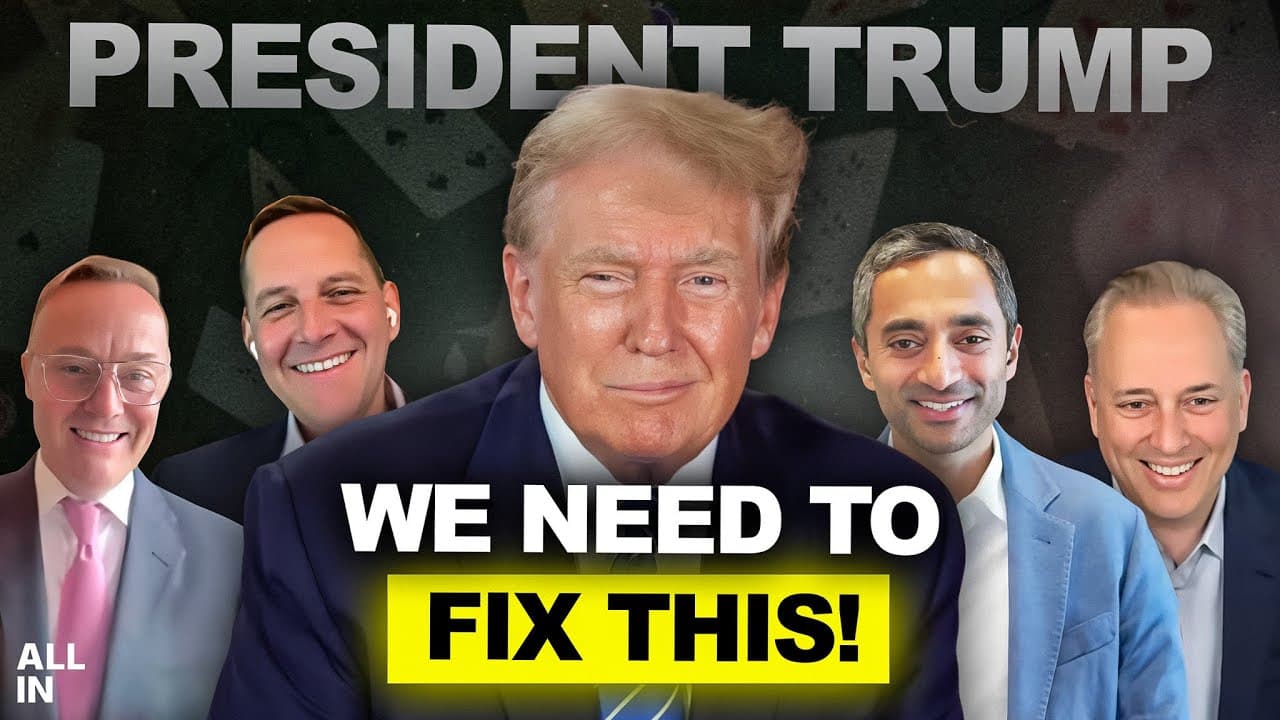
Trump believes that cutting taxes and regulations boosts business productivity and economic growth. He argues that current economic challenges result from high interest rates and insufficient regulatory clarity. On foreign policy, he opposes NATO expansion and emphasizes the importance of preventing Iran from acquiring nuclear capabilities.
Transcript
here we go everybody hello Mr President great time I love that house he has I love David's house what a house that made the biggest impression huh than you sir I heard you have a pretty nice house too yeah I have a we're in a nice house we like it's only worth 18 million right we like I know the judge said 18 million people said Palm Beach has gone... Read More
Key Insights
- 🥺 Trump emphasizes his administration's historical tax cuts and regulatory reductions, arguing they led to growth and job creation.
- ☠️ He believes current economic issues stem from high interest rates and a lack of clear regulatory guidelines.
- 💪 Trump's foreign policy stance includes strong opposition to increasing NATO's footprint in Ukraine and emphasizes preventing Iran's nuclear ambitions as critical.
- 🎓 He advocates for a return to state management of education funding, believing it could streamline spending and improve outcomes.
- 💚 Trump plans to prioritize skilled immigration, suggesting green cards for college graduates to boost the U.S. economy.
- ❓ The conversation revealed Trump's awareness of economic inflation concerns related to tariffs, although he supports their implementation for strategic reasons.
- 🫡 His views on the Middle East highlight a belief that earlier deals would have prevented the ongoing conflict, particularly with respect to Iran's financing of extremist groups.
Install to Summarize YouTube Videos and Get Transcripts
Explore YouTube Video Summarizer or Get YouTube Transcript Extractor
Questions & Answers
Q: What are Trump's views on taxation and regulation's effect on business?
Trump argues that cutting taxes and regulations has historically improved business dynamics. He cites his administration's efforts to reduce corporate tax rates from around 39% to 21%. He mentions that many business leaders believe regulatory cuts were even more impactful than tax reductions, facilitating investment and growth.
Q: How does Trump perceive the current economic challenges under the Biden Administration?
Trump expresses concern about the difficulties businesses face today, citing high interest rates, credit crunches, and the lack of a clear regulatory framework for industries like cryptocurrency. He believes these elements hinder economic progress and contribute to a stagnating job market.
Q: What is Trump's stance on U.S. involvement in Ukraine?
Trump asserts that the U.S. should not send troops to Ukraine and emphasizes that NATO expansion should be addressed to avoid provoking Russia. He believes that under his leadership, the conflict would have been less likely to erupt, criticizing Biden's approach to foreign relations.
Q: How does Trump propose to address federal spending and bureaucracy?
Trump emphasizes a focus on economic growth to alleviate spending issues and proposes reducing bureaucratic waste, especially in sectors like education. He expresses intent to empower states in managing education systems to better utilize funding.
Q: What insights does Trump share regarding immigration and skilled labor?
Trump promises to streamline immigration for skilled workers, proposing that graduates from U.S. colleges automatically receive green cards. He stresses the importance of attracting talented individuals to bolster American productivity and innovation.
Q: How does Trump respond to criticisms about inflation and tariffs?
Trump acknowledges Larry Summers’ concerns about tariffs contributing to inflation but maintains his belief in tariffs as a means to protect American interests and assert economic power. He insists on reciprocal trade policies to address imbalances with other countries.
Q: What are Trump's perspectives on the Israel-Palestine conflict and Iran?
Trump reflects on his administration’s efforts to foster peace deals in the Middle East, highlighting the need to prevent Iran from acquiring nuclear capabilities. He stresses that the landscape has changed since his presidency, complicating negotiations further.
Q: How does Trump view the role of the CIA in political matters?
Trump suggests that the CIA has historically wielded significant power over political discourse and decision-making. He expresses an intent for greater transparency about governmental operations and decisions regarding significant historical events.
Summary & Key Takeaways
-
The conversation covers President Trump's views on taxation, regulations, and their impacts on business productivity amidst current economic challenges.
-
Trump emphasizes his past success in cutting taxes and regulations, arguing these measures led to economic growth and more jobs during his presidency.
-
The discussion shifts to foreign policy, focusing on the potential consequences of NATO expansion, Trump's stance on Iran, and the ongoing Israel-Palestine conflict.
Read in Other Languages (beta)
Share This Summary 📚
Summarize YouTube Videos and Get Video Transcripts with 1-Click
Try YouTube Summary with ChatGPT & Claude or YouTube Transcript Generator
Explore More Summaries from Full Episodes 📚


Summarize YouTube Videos and Get Video Transcripts with 1-Click
Try YouTube Summary with ChatGPT & Claude or YouTube Transcript Generator