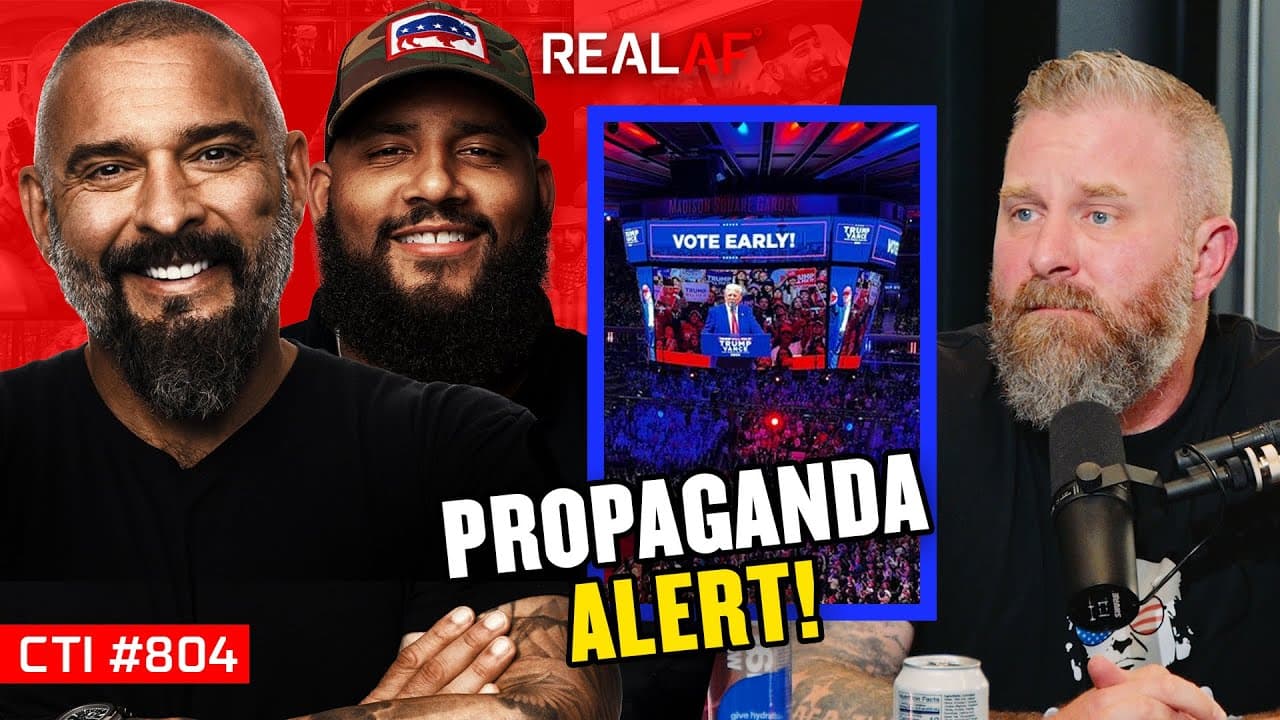
Why Is Trump's Rally Called a 'Nazi' Rally?
TL;DR
Media outlets have controversially labeled Trump's Madison Square Garden rally a 'Nazi' rally due to historical comparisons with a 1939 pro-Nazi event at the same venue. Despite the provocative label, the rally featured a diverse lineup of speakers and attendees. The discourse highlights the polarized media landscape and the ongoing cultural and political tensions surrounding Trump's public appearances.
Transcript
Trump was in Madison Square Garden that was pretty interesting Oh you mean the Nazi rally against that backdrop of History Donald Trump the man who is threatened to use the military against opponents he calls enemies from within you don't give a when the hockey team play there or basketball's played there it's insane and the more they push this bul... Read More
Key Insights
- Media outlets have labeled Trump's rally as a 'Nazi' rally, drawing comparisons to a 1939 pro-Nazi event at Madison Square Garden.
- The rally featured a diverse lineup of speakers, including individuals from various ethnic and religious backgrounds.
- The labeling of the rally reflects the polarized media landscape and ongoing tensions surrounding Trump's public appearances.
- Critics argue that the media's portrayal of the rally is part of a broader narrative to discredit Trump and his supporters.
- The rally included speeches from notable figures such as JD Vance, highlighting the event's political significance.
- Comedian Tony Cliff's performance at the rally faced backlash for jokes deemed offensive, illustrating the contentious nature of political humor.
- The event sparked discussions on the role of media in shaping public perception and the impact of historical analogies.
- The controversy underscores the deep cultural and political divisions in the United States, particularly in the context of the upcoming election.
Install to Summarize YouTube Videos and Get Transcripts
Explore YouTube Video Summarizer or Get YouTube Transcript Extractor
Questions & Answers
Q: Why is Trump's rally being called a 'Nazi' rally?
The rally is being called a 'Nazi' rally by some media outlets due to its location at Madison Square Garden, where a pro-Nazi event occurred in 1939. This historical comparison has been used to criticize the rally and its attendees, despite the presence of a diverse lineup of speakers and participants.
Q: What was the reaction to Tony Cliff's performance at the rally?
Tony Cliff's performance at the rally faced backlash for jokes that some deemed offensive, particularly a joke about Puerto Rico. Critics argue that his humor was inappropriate for the event, illustrating the contentious nature of political comedy in the current polarized climate.
Q: How does the media portrayal of the rally reflect current political tensions?
The media portrayal of the rally as a 'Nazi' event reflects the deep political and cultural divisions in the United States. It highlights the ongoing tensions between Trump's supporters and opponents, with media narratives often being used to discredit political figures and their gatherings.
Q: Who were some notable speakers at Trump's rally?
Notable speakers at Trump's rally included JD Vance, Elon Musk, and Donald Trump Jr., among others. The event featured a diverse lineup, with speakers from various ethnic and religious backgrounds, underscoring the rally's political significance and appeal to a broad audience.
Q: What historical event is being compared to Trump's rally?
Trump's rally is being compared to a 1939 pro-Nazi event held at Madison Square Garden. This historical analogy is being used by some media outlets to criticize the rally, despite the differences in context and the diverse lineup of speakers and attendees present at Trump's event.
Q: What impact does the media labeling have on public perception?
The media labeling of the rally as a 'Nazi' event can significantly influence public perception, reinforcing negative stereotypes and deepening political divides. Such portrayals can shape narratives and contribute to the ongoing polarization in American society, particularly in the lead-up to elections.
Q: Why are historical analogies being used to describe the rally?
Historical analogies, such as comparing the rally to a 1939 pro-Nazi event, are used to frame the rally in a negative light and highlight perceived parallels in ideology or rhetoric. These comparisons are part of broader efforts to critique and delegitimize Trump's political activities and support base.
Q: What does the controversy reveal about American political divisions?
The controversy surrounding the rally's labeling reveals deep-seated political and cultural divisions in the United States. It underscores the challenges of navigating a polarized media landscape and the impact of historical narratives on contemporary political discourse, particularly in the context of contentious elections.
Summary & Key Takeaways
-
Media outlets have controversially labeled Trump's Madison Square Garden rally a 'Nazi' rally, drawing historical comparisons to a 1939 pro-Nazi event at the same venue. Despite the provocative label, the rally featured a diverse lineup of speakers and attendees, including individuals from various ethnic and religious backgrounds.
-
The portrayal of the rally reflects the polarized media landscape and ongoing cultural and political tensions surrounding Trump's public appearances. Critics argue that the media's depiction is part of a broader narrative to discredit Trump and his supporters.
-
Comedian Tony Cliff's performance faced backlash for jokes deemed offensive, highlighting the contentious nature of political humor. The controversy underscores the deep cultural and political divisions in the United States, particularly in the context of the upcoming election.
Read in Other Languages (beta)
Share This Summary 📚
Summarize YouTube Videos and Get Video Transcripts with 1-Click
Try YouTube Summary with ChatGPT & Claude or YouTube Transcript Generator
Explore More Summaries from Andy Frisella 📚
Summarize YouTube Videos and Get Video Transcripts with 1-Click
Try YouTube Summary with ChatGPT & Claude or YouTube Transcript Generator