VHDL code Multiplexer | 2x1| 4x1 | Dataflow | Behavioral model | Digital Systems Design | Lec-44
TL;DR
A comprehensive guide to VHDL coding for multiplexers with data flow and behavioral models.
Transcript
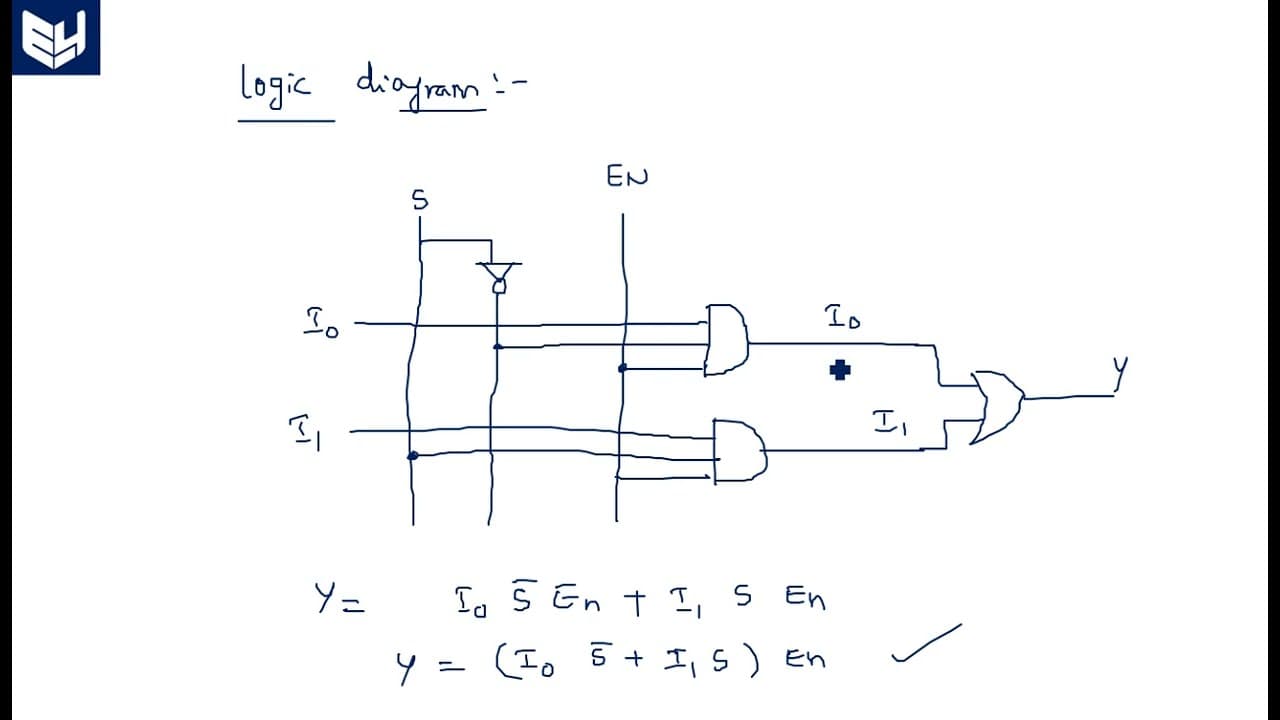
hi everyone in the previous video we have started the explanation of multiplexer and we have seen what is a 4 b multiplexor as an example and we have seen the 2 B multiplexor also along with the internal diagram and we have got the expression for the 2 B multiplexor which is taken as something like I not SAR enable plus i1 s enable that means when ... Read More
Key Insights
- 👻 A multiplexer allows multiple input signals to be routed to a single output, simplifying circuit design.
- 📛 VHDL programming requires strict adherence to naming conventions to prevent compilation errors.
- 👨💻 Implementing a multiplexer involves carefully defining both structural and logical elements within the VHDL code.
- ❓ Conditional statements are critical for effectively representing multiplexer functionality in VHDL.
- 😒 The enable signal is crucial for controlling the active state of a multiplexer, highlighting its intelligent use in designs.
- 👨💻 Data flow models favor concise coding in terms of logical operations, enabling quick understanding of output relationships.
- 👻 Behavioral models offer more dynamic control, allowing designers to incorporate complex logic that can evolve with the design's requirements.
Install to Summarize YouTube Videos and Get Transcripts
Explore YouTube Video Summarizer or Get YouTube Transcript Extractor
Questions & Answers
Q: What is a multiplexer, and why is it important in digital circuits?
A multiplexer, often abbreviated as mux, is a digital switch that selects one of many input signals and forwards the selected input into a single line. It's crucial in digital circuits as it helps in data routing, reducing the number of wires needed, and managing multiple inputs efficiently.
Q: What are the key components of a 2-to-1 multiplexer?
A 2-to-1 multiplexer typically comprises two data inputs, one select line, and one output. The select line decides which of the two data inputs is sent to the output. Additionally, an enable signal can be implemented to control when the multiplexer is active, ensuring output only when enabled.
Q: Why is naming convention important in VHDL, particularly when starting names with numbers?
Naming conventions in VHDL dictate that no identifier, such as an entity or architecture name, should start with a number. Many programming languages, including VHDL, do not support names beginning with digits, leading to potential errors. Starting with a character ensures validity and compatibility within the language's syntax.
Q: How is a data flow model implemented in VHDL for a multiplexer?
In VHDL, a data flow model can be implemented using direct expressions that define the output based on input and selection conditions. This involves writing the logic succinctly in the architecture section and utilizes equations that dictate how outputs relate to inputs, making it straightforward to understand.
Q: What is the role of conditional statements in the behavioral model of a multiplexer?
Conditional statements in the behavioral model allow the designer to describe how the multiplexer behaves in response to different inputs and conditions. The 'case' or 'if' statements enable clear instruction on output assignments based on selection lines and enable signals, resulting in understandable and maintainable code.
Q: How can a user manage the enable signal in the VHDL code for multiplexers?
The enable signal can be incorporated in the VHDL code such that the output only reflects the input when the enable signal is active. This is typically handled in the architecture section under a conditional evidence allowance, ensuring the output defaults to zero when the enable signal is low.
Q: What is the difference between data flow and behavioral models in VHDL for multiplexers?
The data flow model emphasizes the direct relationship between inputs and outputs through logical expressions, while the behavioral model encapsulates the functionality using processes and conditional statements. The behavioral model offers more flexibility and handling of changes over time, making it suitable for complex designs.
Summary & Key Takeaways
-
The content explains the concept of a multiplexer, focusing on a 2-to-1 multiplexer with emphasis on its operation based on selection and enable signals.
-
It provides VHDL code examples for both data flow and behavioral models, highlighting the importance of naming conventions and the use of conditional statements.
-
The tutorial wraps up by detailing how to implement conditional logic in the VHDL code, ensuring readers understand the functionalities of multiplexers effectively.
Read in Other Languages (beta)
Share This Summary 📚
Summarize YouTube Videos and Get Video Transcripts with 1-Click
Try YouTube Summary with ChatGPT & Claude or YouTube Transcript Generator