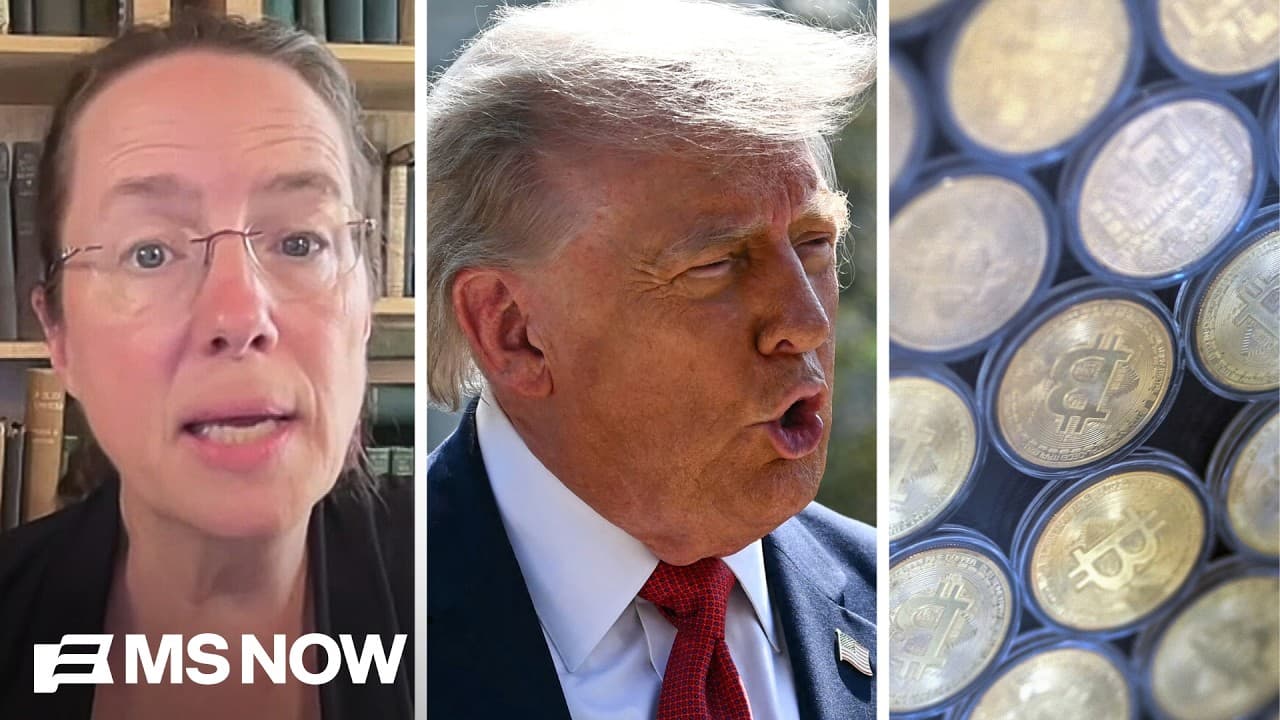
How did Trump's crypto ties raise red flags
TL;DR
The Treasury will no longer enforce or maintain the Corporate Transparency Act registry, erasing data on shell company ownership and increasing visibility for illicit money moves. The discussion links Trump associates and his crypto focus to concerns about corruption, while drawing historical parallels to past reforms that followed major scandals. It emphasizes staying grounded amid rapid information flow and seeking long term structural safeguards.
Transcript
Hello and welcome to this special edition of Morning Joe We hope you are enjoying this last weekend of summer as we bring you some of our top conversations from the past few weeks including one with political historian Heather Cox Richardson among the topics we discussed the billions of dollars President Trump has made in just his first year ... Read More
Key Insights
- Shell company ownership data is being erased by the Treasury after a registry was created to identify owners.
- The Corporate Transparency Act was designed to counter money laundering in the US by requiring ownership disclosures.
- Crypto focus is presented as a newer area where financial and political interests intersect.
- The discussion links large scale government contracts to possible corruption under a powerful administration.
- Historical episodes like Watergate and the 1978 reforms are cited as examples of reform after crises.
- Public attention is described as a 'fire hose' of information that can obscure long term trends and reforms.
- The interview stresses education and citizen action as ways to reclaim democracy during volatile times.
- There is a concern that loosening transparency measures could make illicit financial activity more invisible under current leadership.
Install to Summarize YouTube Videos and Get Transcripts
Explore YouTube Video Summarizer or Get YouTube Transcript Extractor
Questions & Answers
Q: What is the Corporate Transparency Act and why does it matter here?
The Corporate Transparency Act was passed to require companies to identify who owns them, creating a registry intended to curb money laundering through shell companies. In the transcript, the Treasury is described as deciding not to enforce the act and to erase registry data, which would remove visibility into shell ownership and potentially enable illicit money movements again.
Q: How is cryptocurrency linked to Trump in the discussion?
The speaker notes a shift in focus toward cryptocurrency within the administration and mentions that billions of dollars have been attributed to Trump in his first year back in the White House, implying new areas where financial interests and political power may intersect, including concerns about corruption.
Q: What is said about money laundering in the US prior to the act?
The transcript references documents from 2020 showing that more than $2 trillion appeared to be laundered through the United States, highlighting why Congress passed the Corporate Transparency Act in 2021 to increase transparency around shell companies and their owners.
Q: What does the phrase a factory of red flags imply?
The phrase is used to describe the situation where regulatory gaps and financial maneuvering create a persistent backdrop of warning signals about potential corruption related to the Trump circle, suggesting systemic risks rather than isolated incidents.
Q: What historical periods are referenced as lessons for current events?
The interviewors draw parallels to the Nixon era and Watergate, the mid 1970s reforms, and later protections enacted in 1978, to illustrate how major scandals have historically precipitated reforms that strengthen democracy and accountability.
Q: Why is the size of the federal government mentioned as a factor in corruption risk?
The discussion argues that the larger the government and the bigger the contracts, the greater the opportunities for cronyism and corruption, comparing present risks to the Tea Pot Dome era and explaining why scale intensifies systemic vulnerabilities.
Q: What perspective is encouraged for students facing volatile politics?
The speaker emphasizes maintaining perspective by focusing on long term changes that can reclaim democracy, rather than chasing daily sensational headlines, and by considering how past movements helped restore governance and accountability.
Q: What role do public movements play according to the discussion?
The talk suggests that when corruption feels widespread, ground movements of ordinary citizens can help reclaim democracy, echoing the idea that collective action has historically contributed to meaningful political reform.
Summary & Key Takeaways
-
A broad critique connects Trump era finances to cryptocurrency and shell company abuses, highlighting regulatory rollbacks and potential money-laundering risks.
-
Historical context is used to show how past scandals led to reforms that reshaped governance and accountability.
-
The speaker advocates focusing on enduring institutional changes over day to day sensational news.
Read in Other Languages (beta)
Share This Summary 📚
Summarize YouTube Videos and Get Video Transcripts with 1-Click
Try YouTube Summary with ChatGPT & Claude or YouTube Transcript Generator
Explore More Summaries from MS NOW 📚
Summarize YouTube Videos and Get Video Transcripts with 1-Click
Try YouTube Summary with ChatGPT & Claude or YouTube Transcript Generator