How Does Your Body Recover After Quitting Alcohol?
TL;DR
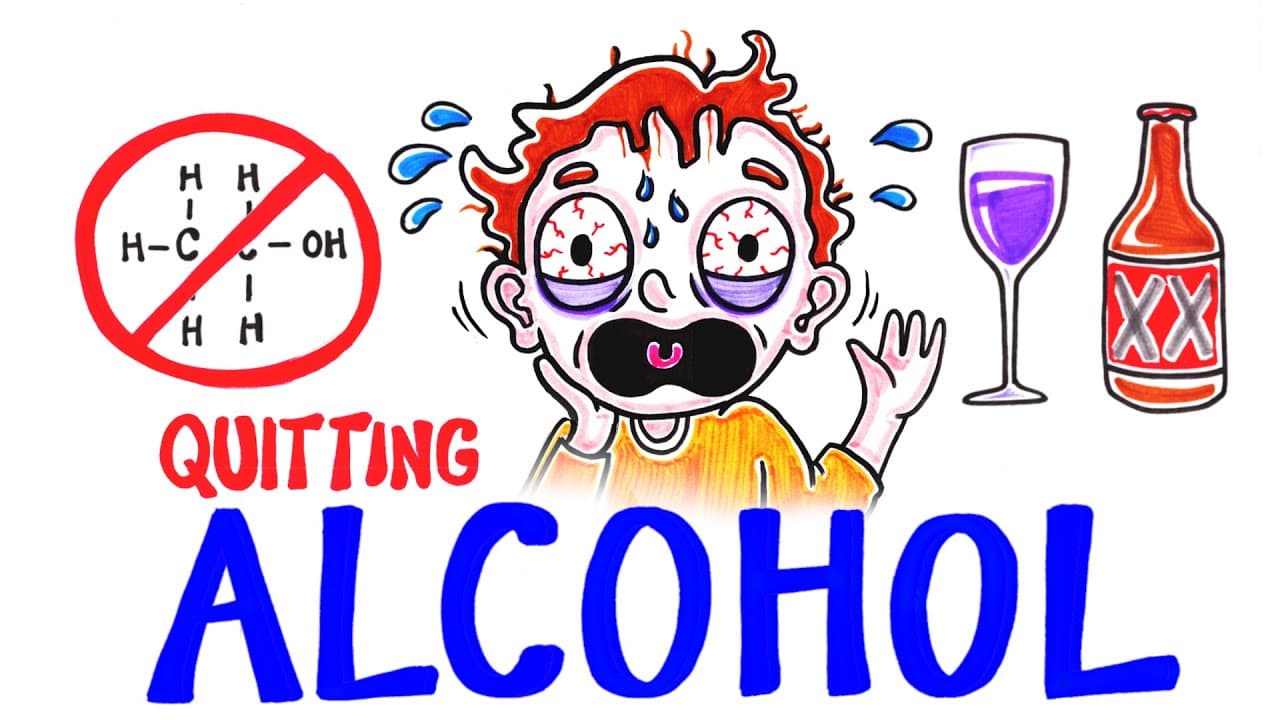
Quitting alcohol can trigger dangerous withdrawal, including seizures, hallucinations, and delirium tremens, so anyone with severe alcohol use disorder should consult a medical professional before stopping. Recovery varies with prior consumption, but dopamine regulation may improve around day four, followed by gut healing, better sleep, healthier skin, and stronger memory, attention, thinking, and problem-solving over the following weeks and months.
Transcript
Drinking alcohol kills 3 million people every year, meaning alcohol is the number one cause of preventable death on this fine Earth. Roughly 29% of Americans have had alcohol use disorders at some point in their lives, and strange things happen when you try to stop drinking. So today, we are going to explain exactly what happens to your brain and b... Read More
Key Insights
- Alcohol withdrawal severity is related to how much alcohol a person consumed before stopping, and the first unusual symptoms may begin within six hours. The research discussed primarily concerns people with moderate to severe alcohol use disorders, rather than everyone who drinks.
- Alcohol use disorder is a spectrum ranging from mild to severe. Being unable to cut back may indicate a mild disorder, continuing despite recurring negative emotions may indicate a moderate disorder, and repeatedly drinking and driving is presented as evidence of a severe disorder.
- Delirium tremens is a potentially fatal withdrawal complication that can involve seizures and hallucinations lasting up to seven days or longer. It may emerge 12 to 24 hours after stopping, and the transcript reports a mortality rate between 1% and 5%.
- Alcohol changes neural signaling by suppressing excitatory neurons influenced by glutamate and enhancing inhibitory neurons influenced by GABA. Removing alcohol ends that added inhibition, which can produce excitatory overload and contribute to shaking, seizures, hallucinations, and delirium tremens.
- Early abstinence is associated with agitation, anxiety, reduced appetite, and difficulty feeling pleasure. Lower baseline serotonin may contribute to feeling worse after 24 to 48 hours, while increased corticotropin-releasing hormone and cortisol can create anxious, focused, and stressful energy after two to three days.
- Dopamine-related recovery begins to become more noticeable around day four. Striatal dopamine transporter binding can remain low, or fall further, during days two and three, making sober pleasure harder to experience before transporter levels start moving back toward baseline.
- Gut recovery can take several weeks because alcohol use disorder disrupts gastrointestinal bacteria and biological processes involving tryptophan and kynurenine. Gut-related depressive symptoms may continue during the first three weeks, while the microbiome may begin leveling out around four to eight weeks.
- Sleep, skin, and cognitive abilities improve on different timelines after alcohol cessation. Sleep disturbances may ease around four weeks, skin problems may begin healing around five weeks, and thinking, problem-solving, memory, and attention may improve after six weeks.
Install to Summarize YouTube Videos and Get Transcripts
Explore YouTube Video Summarizer or Get YouTube Transcript Extractor
Questions & Answers
Q: How soon do alcohol withdrawal symptoms begin after quitting?
Unusual symptoms can begin about six hours after a person stops drinking, although their timing and severity correlate with how much alcohol the person consumed beforehand. More serious problems can develop within 12 to 24 hours. People with moderate or severe alcohol use disorder may face dangerous neurological overexcitation, so withdrawal should not be assumed to be harmless or predictable.
Q: Why can quitting alcohol suddenly be dangerous?
Alcohol suppresses excitatory neurons affected by glutamate and strengthens inhibitory neurons affected by GABA. After repeated exposure has changed how the brain and nervous system function, suddenly removing alcohol also removes its inhibitory effect. The resulting excitatory overload can cause shaking, seizures, hallucinations, and delirium tremens, which can be fatal if it is not recognized and treated.
Q: What is delirium tremens during alcohol withdrawal?
Delirium tremens is a severe alcohol withdrawal complication associated with extreme excitation in the brain. It can produce seizures and hallucinations that may last up to seven days or longer. The transcript reports a mortality rate of 1% to 5%, which is why anyone with severe alcohol use disorder should speak with a medical professional before attempting to stop drinking.
Q: What happens during the first three days without alcohol?
During the first 24 to 48 hours, many people begin feeling agitated as the serotonin surge associated with drinking is no longer occurring and baseline serotonin may be lower. By days two to three, increased corticotropin-releasing hormone can raise cortisol, contributing to anxiety, reduced appetite, and focused but stressful energy. Dopamine-related changes can also make pleasure harder to experience.
Q: When does the brain begin recovering after quitting alcohol?
The most noticeable early positive change described begins around day four. During days two and three, striatal dopamine transporter binding can remain low or become even lower, making it difficult to feel good while sober. Around day four, those transporter levels start moving back toward baseline, marking an important shift toward neurological recovery and improved health.
Q: How long does gut recovery take after stopping alcohol?
Gut problems can continue during the first three weeks because alcohol use disorder disrupts bacteria in the gastrointestinal tract and affects biological processes involving tryptophan and kynurenine. These disturbances may contribute to continuing depressive symptoms. According to the studies discussed in the transcript, the gut microbiome begins to level out around four to eight weeks after alcohol cessation.
Q: How does quitting alcohol affect sleep and skin?
Sleep may improve substantially around four weeks because alcohol, although it can help someone fall asleep faster, disrupts sleep quality, rapid eye movement sleep, and N3 slow-wave sleep. Skin improvements may appear around five weeks as dehydration-related effects begin reversing. Psoriasis and broken blood vessels associated with severe alcohol use disorder may also begin healing around that time.
Q: What cognitive improvements can occur after six weeks without alcohol?
After six weeks, people who stopped drinking showed stronger thinking, problem-solving, memory, and attention than people who continued drinking in the three studies described. Broader recovery may take longer because brain regions involved in sleep overlap with areas where people with alcohol use disorder have decreased gray matter, and gray matter changes can take up to three months.
Summary & Key Takeaways
-
Alcohol suppresses glutamate-related excitation and enhances GABA-related inhibition. When drinking stops, that inhibition disappears and the brain can become dangerously overexcited. Within 12 to 24 hours, some people may experience seizures, hallucinations, or delirium tremens, which has a reported mortality rate of 1% to 5% and requires medical attention.
-
The early recovery period can include agitation, anxiety, poor appetite, stressful energy, and difficulty feeling pleasure. Serotonin levels may be lower after stopping, while corticotropin-releasing hormone can increase cortisol release. Dopamine transporter binding remains low around days two and three, but the largest movement back toward baseline begins around day four.
-
Longer-term improvements unfold gradually. Gut disruption and depressive symptoms may persist for several weeks, with the microbiome beginning to level out around four to eight weeks. Sleep improves around four weeks, skin may improve around five weeks, and thinking, problem-solving, memory, and attention can improve after six weeks without alcohol.
Read in Other Languages (beta)
Share This Summary 📚
Summarize YouTube Videos and Get Video Transcripts with 1-Click
Try YouTube Summary with ChatGPT & Claude or YouTube Transcript Generator
Explore More Summaries from AsapSCIENCE 📚




Summarize YouTube Videos and Get Video Transcripts with 1-Click
Try YouTube Summary with ChatGPT & Claude or YouTube Transcript Generator