What Are the Essential Math Concepts Programmers Need?
TL;DR
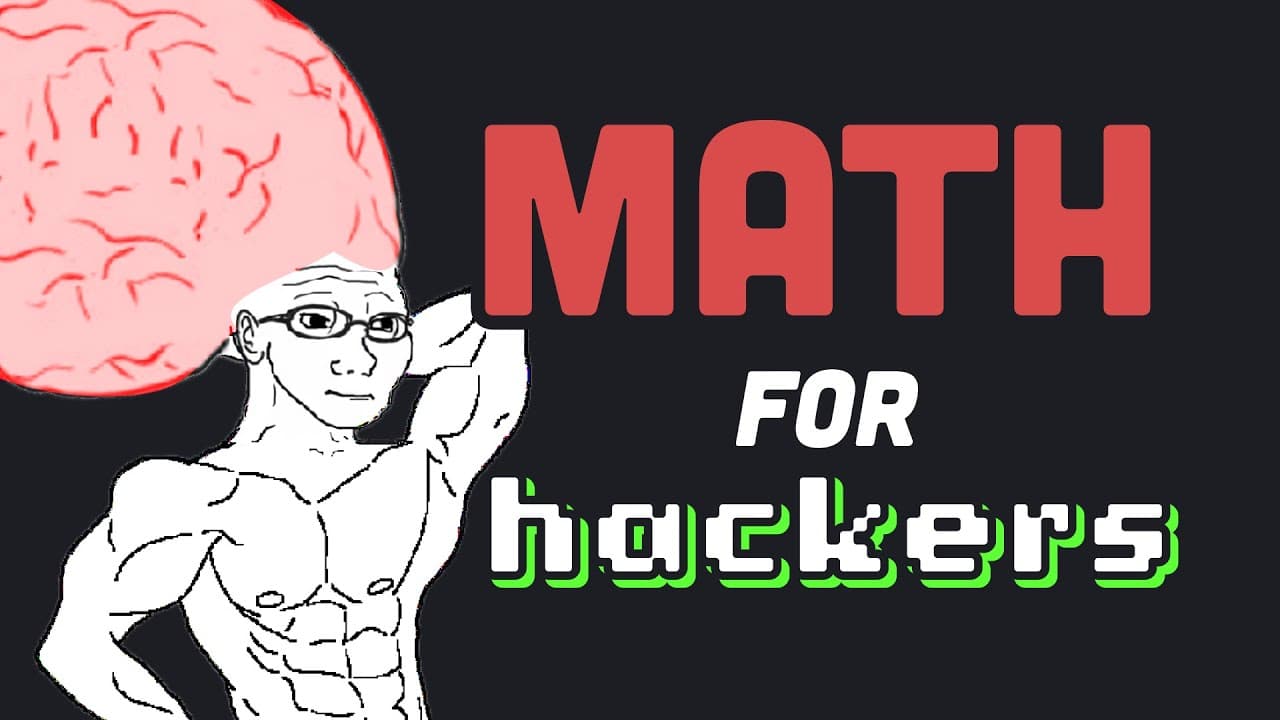
Programmers should master ten key math concepts: Boolean algebra, numeral systems, floating-point numbers, logarithms, set theory, combinatorics, graph theory, complexity theory, statistics, and linear algebra. These concepts enhance problem-solving skills and empower developers to understand and implement complex algorithms and data structures effectively.
Transcript
people often say you don't need to know any math to program a computer and that's truthy however any sufficiently advanced technology is indistinguishable from Magic but magic isn't real math Explains It All developers often avoid learning math because it looks scary but it actually makes complicated magic like computer graphics and neural networks... Read More
Key Insights
- ❓ Math is not a scary subject for programmers; it enables them to understand complex technologies.
- #️⃣ Boolean algebra, numeral systems, floating point numbers, and logarithmic functions are key concepts in programming.
- 😫 Set theory, combinatorics, and graph theory are important for data manipulation and algorithm design.
- 🆘 Understanding complexity theory helps analyze the efficiency of algorithms.
- 🎰 Statistics and linear algebra are crucial for machine learning and data analysis.
Install to Summarize YouTube Videos and Get Transcripts
Explore YouTube Video Summarizer or Get YouTube Transcript Extractor
Questions & Answers
Q: What are the 10 essential math concepts for programmers?
The 10 concepts are Boolean algebra, numeral systems, floating-point numbers, logarithmic functions, set theory, combinatorics, graph theory, complexity theory, statistics, and linear algebra. Together, they support logical decisions, algorithms, data manipulation, efficiency analysis, computer graphics, and neural networks.
Q: How is Boolean algebra used in programming?
Boolean algebra works with binary variables that can be true or false. Programmers combine them with and, or, and not operators to express logic in constructs such as if statements, truth tables, and Venn diagrams.
Q: Why should programmers understand binary, hexadecimal, and base64?
Computers operate with base 2, where each position represents a power of two. Hexadecimal represents binary more concisely because each digit translates into four bits, while base64 lets developers encode binary data such as an image as text.
Q: Why do floating-point calculations produce rounding errors?
Floating-point numbers have limited storage: 32 bits for single precision or 64 bits for double precision. Because some decimal values cannot be represented perfectly in binary floating point, calculations can produce tiny rounding errors.
Q: How are logarithms useful in programming?
Logarithms describe processes such as repeatedly halving a value, which is how algorithms like binary search work. A base 2 logarithm determines the exponent needed to produce a value, making it the inverse of exponentiation.
Q: How does set theory relate to relational databases?
A set is an unordered collection of unique values, and a relational database table can be viewed as a set of unique rows. An inner join corresponds to an intersection, while a full outer join corresponds to a union.
Q: Why are graph theory and complexity theory important for programmers?
Graph theory helps programmers represent relationships between data and understand graph traversal. Complexity theory uses Big O notation to measure an algorithm’s time and memory complexity, helping developers analyze efficiency.
Q: How do statistics and linear algebra support machine learning?
Statistics provides concepts such as mean, median, mode, and standard deviation for understanding data and machine learning. Linear algebra uses scalars, vectors, and matrices for transformations and computations in neural networks and computer graphics.
Summary & Key Takeaways
-
Boolean algebra: Boolean variables and operators (and, or, not) are used in programming to make logical decisions.
-
Numeral systems: Computers use base 2 (binary) to represent numbers, but other bases like hexadecimal (base 16) and base64 are also used.
-
Floating point numbers: Computers use floating point numbers to represent base 10 numbers, but this can lead to rounding errors.
-
Logarithmic functions: Logs and exponentiation are useful in many algorithms and can be used to solve problems like binary search.
-
Set theory: Sets and operations like intersection and union are used in database systems and other areas.
-
Combinatorics: Counting and combining elements using permutations and combinations is important in algorithm design and problem-solving.
-
Graph theory: Understanding graphs and graph traversal is essential in programming, especially when working with relationships between data.
-
Complexity theory: Big O notation helps measure the time and memory complexity of algorithms, aiding in efficiency analysis.
-
Statistics: Mean, median, mode, and standard deviation are important concepts for understanding data and machine learning.
-
Linear algebra: Scalars, vectors, and matrices are used in computer graphics and neural networks for transformations and computations.
Read in Other Languages (beta)
Share This Summary 📚
Summarize YouTube Videos and Get Video Transcripts with 1-Click
Try YouTube Summary with ChatGPT & Claude or YouTube Transcript Generator
Explore More Summaries from Fireship 📚



Summarize YouTube Videos and Get Video Transcripts with 1-Click
Try YouTube Summary with ChatGPT & Claude or YouTube Transcript Generator