How to Accept Limited Time and Live Meaningfully
TL;DR
Accepting that time is finite can relieve the pressure to fit every meaningful goal, obligation, and experience into one life. Choose a few things that genuinely matter, including work, relationships, care, or local contributions, while consciously letting other worthwhile possibilities go. A meaningful life requires limits, not perfect completion.
Transcript
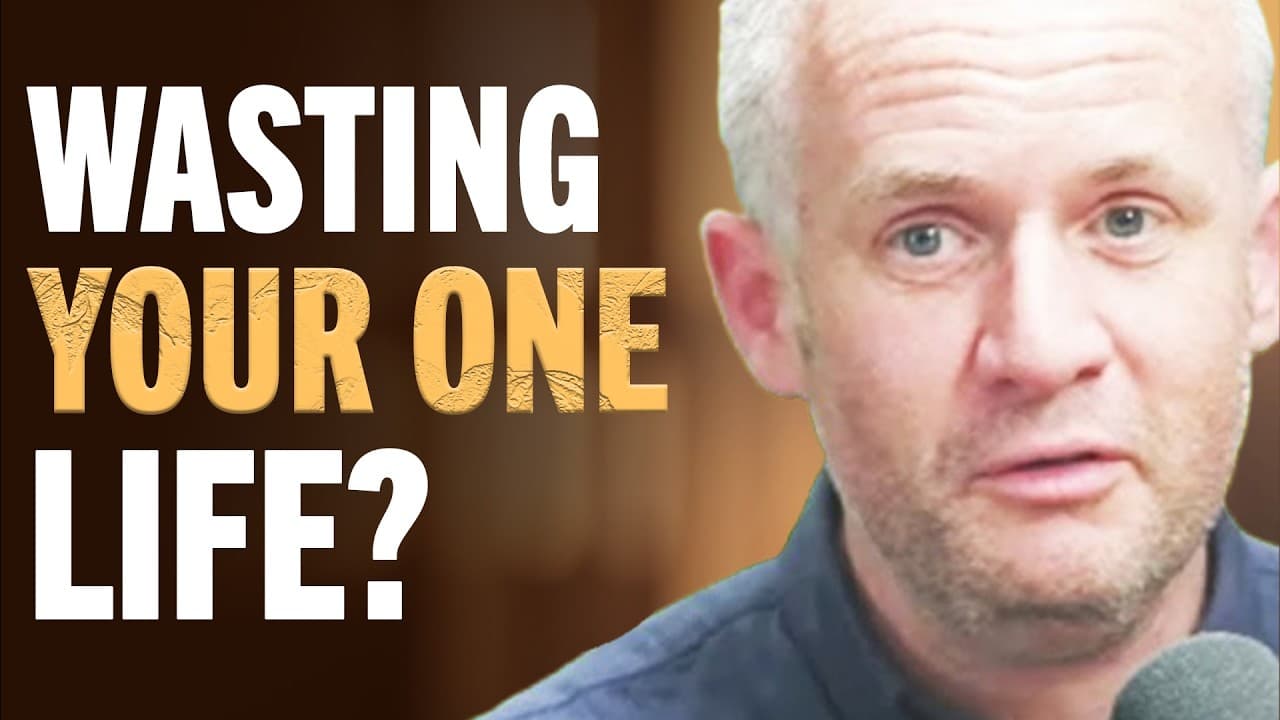
My calculation based upon what you're writing about is that I have around 1,700 to,800 weeks left on planet Earth. But then this morning I also calculated it in terms of holidays. So I thought if I take one really nice holiday a year then I potentially only got 35 or 36 holidays left. What was your hope when you came up with this concept of 4,000 w... Read More
Key Insights
- Human time is finite, and the figure of 4,000 weeks is an illustrative estimate rather than a guaranteed lifespan. Its purpose is to make limitation tangible, while recognizing that any person might receive significantly more time or tragically much less.
- Acceptance of mortality is liberating when it ends the impossible attempt to extract the maximum value from every day. Stress persists when limited time is treated as a reason to work harder at fitting an unlimited number of ambitions into life.
- Meaningful choice requires rejecting some desirable opportunities, not only tedious chores or unsuitable commitments. The number of worthwhile experiences, relationships, causes, and ambitions can exceed the time available, even after obvious distractions have been removed.
- A satisfying life is built by making time for some important things while releasing the expectation of doing everything important. There is no reason to assume that all personally meaningful possibilities will fit perfectly within one finite lifespan.
- Social media increases awareness of missed possibilities by repeatedly presenting destinations, activities, and causes tailored to personal interests. A good experience can therefore feel inadequate simply because another attractive experience is immediately visible online.
- Compassion has practical limits because digital platforms expose people to more suffering than any individual can address. Helping one or two causes can be valuable, but attempting to emotionally or practically encompass every visible need creates an impossible burden.
- Meaningful influence often exists close to home through caring for relatives, improving a neighborhood, doing good work, and nurturing relationships. Global problems remain important, but individuals may have less direct influence at that scale than within everyday life.
- Work has no natural upper limit because emails, requests, ambitions, and obligations can continue accumulating. A working day has a clear limit, so treating every incoming demand as completable creates a permanent mismatch between capacity and expectations.
Install to Summarize YouTube Videos and Get Transcripts
Explore YouTube Video Summarizer or Get YouTube Transcript Extractor
Questions & Answers
Q: Why can accepting that life is finite feel liberating?
Accepting finitude removes the impossible expectation that every ambition, obligation, and worthwhile experience must fit into one life. Initial awareness of limited time can feel frightening, especially if it creates pressure to maximize every day. Deeper acceptance brings relief because it shows that everyone faces the same constraint and that choosing something meaningful and possible is enough.
Q: What does the idea of 4,000 weeks mean?
The figure of 4,000 weeks is a rounded, illustrative way to represent a little less than an average human lifespan. It is not a prediction or guarantee, because any person might live significantly longer or tragically much less. Its central message is simply that the amount of available time is finite rather than limitless.
Q: Why must people say no to things they genuinely want?
People must reject some desirable options because worthwhile possibilities can exceed the time available. Removing chores and unsuitable commitments does not create enough space for every meaningful trip, relationship, cause, ambition, or project. Effective choice therefore means selecting some good things and consciously allowing other good things to remain undone, rather than expecting a perfect fit.
Q: How does social media make limited time feel more painful?
Social media continually exposes people to attractive destinations, activities, causes, and experiences they are not pursuing. Algorithms can identify the possibilities a person is especially likely to want and repeatedly present them. As a result, someone enjoying a valuable experience may still focus on another missed opportunity, making an already good life seem unnecessarily mundane or incomplete.
Q: How should people respond to overwhelming global suffering?
People can acknowledge that global suffering is important while accepting that no individual can address every visible need. They may give money, live more ethically, or help one or two causes. Meaningful action can also involve caring for an elderly relative or improving a neighborhood. These choices are valuable even when they do not solve the largest global problem.
Q: Why can constant news exposure reduce meaningful action?
Constant exposure to wars, climate concerns, and other global problems can make the global scale seem like the only level where meaningful action counts. Yet it may also be the scale where an individual has the least direct influence. Overwhelm can then weaken presence, work, relationships, and parenting, while causing practical contributions closer to home to be undervalued.
Q: How can someone choose what deserves attention?
Someone can begin by accepting that attention cannot cover every important issue, opportunity, or obligation. The goal is not to discover enough efficiency to care about everything, but to select a limited number of meaningful commitments. Caring for family, supporting a cause, improving local surroundings, or doing valuable work can all qualify as purposeful uses of finite attention.
Q: Why does work often feel impossible to finish?
Work feels impossible to finish because incoming emails, requests from a boss, personal ambitions, and other demands have no necessary upper limit. Human capacity within a working day has a clear upper limit. Treating an unlimited stream of work as something that should be completely processed creates an unavoidable mismatch, so completion cannot be the only measure of a worthwhile day.
Summary & Key Takeaways
-
A human life can be pictured as roughly 4,000 weeks, although the figure is illustrative and no one knows their actual lifespan. The important point is that time is finite. Fully accepting that limit replaces the impossible demand to maximize every day with permission to pursue something meaningful and possible.
-
Managing limited time requires saying no to worthwhile possibilities, not merely rejecting chores or unwanted commitments. The world contains more meaningful causes, destinations, ambitions, and obligations than anyone can accommodate. Peace comes from choosing some things that matter and accepting that many other valuable experiences will remain unexplored.
-
The internet intensifies overwhelm by constantly displaying personalized opportunities, suffering, and global problems. Individuals can support major causes through ethical choices or donations, but meaningful action also includes caring for relatives and improving a neighborhood. Attention directed toward a realistic circle of influence can strengthen presence, work, relationships, and parenting.
Read in Other Languages (beta)
Share This Summary 📚
Summarize YouTube Videos and Get Video Transcripts with 1-Click
Try YouTube Summary with ChatGPT & Claude or YouTube Transcript Generator
Explore More Summaries from Dr Rangan Chatterjee 📚


Summarize YouTube Videos and Get Video Transcripts with 1-Click
Try YouTube Summary with ChatGPT & Claude or YouTube Transcript Generator