How to Build a Personal Brand AI Cannot Copy
TL;DR
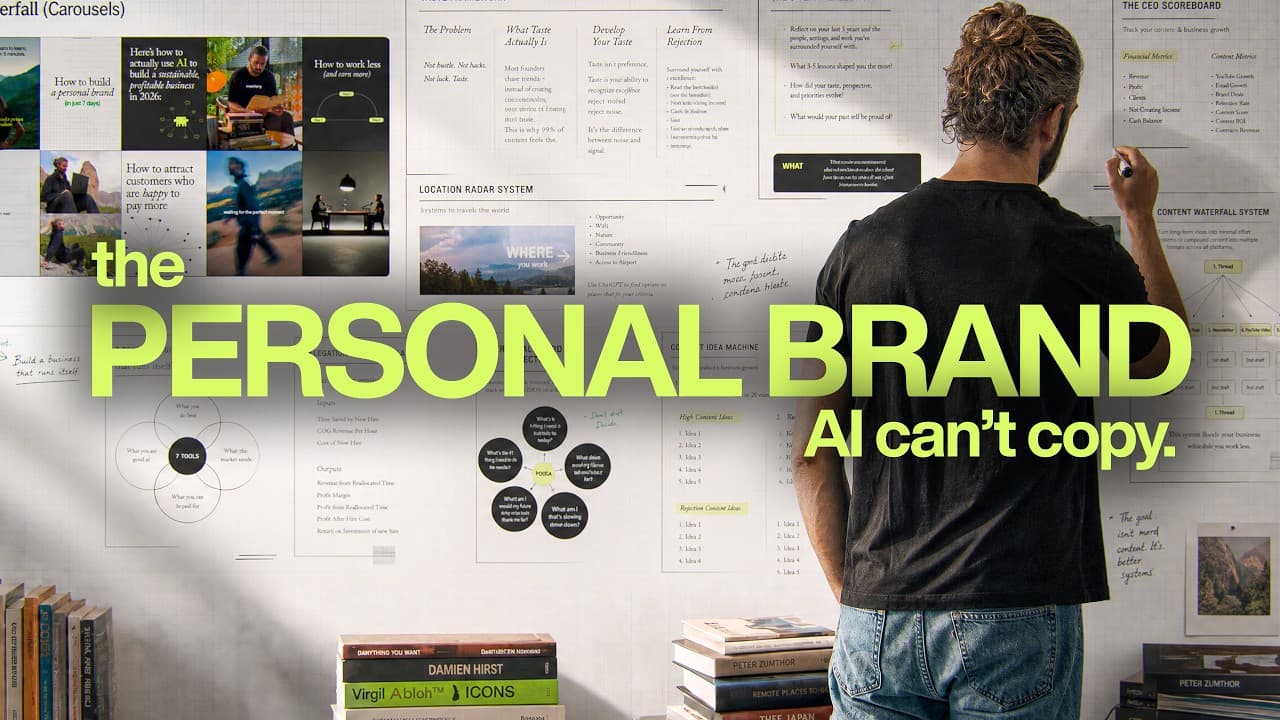
Build a distinctive personal brand by developing aesthetic, idea, voice, structural, and vulnerability DNA instead of obsessing over surface-level production tactics. Curate inspirations, capture ideas while your excitement is fresh, document repeatable reflection systems, and connect useful frameworks with personal stories, struggles, and beliefs that competitors or AI cannot authentically reproduce.
Transcript
But the brutal truth about building a personal brand is that most founders spend all of their time on the layers that don't actually matter. They obsess over strategy, they obsess over color grades and sound and a bunch of stuff that ends up just [music] being some distraction. And then they wonder why their brand sounds and looks just like everyon... Read More
Key Insights
- Aesthetic DNA is the recognizable collection of visual and verbal influences behind a brand. It grows through deliberate curation, not merely by selecting color grades or polishing production, and it can shape newsletters, graphic design, Instagram carousels, motion graphics, headlines, and other published material.
- Strong creators are often strong curators who continually collect work that inspires them. Pinterest functions as the creator's curation engine because its boards and recommendation feature provide an ongoing supply of images, quotations, advertisements, shapes, and stylistic references that can influence future content.
- A coherent aesthetic can combine influences that initially appear unrelated. The creator describes Founder OS through a mixture of Rick Rubin, Patagonia, Japanese design, nostalgia, and nature, illustrating how personal taste can synthesize multiple references into a recognizable creative direction.
- Powerful copy is part of a brand's aesthetic and should receive the same care as visual design. The creator continually saves words, titles, headlines, and advertisements because language influences how ideas feel, and those curated examples later inform the writing used throughout his content.
- Idea DNA is built by capturing thoughts at the moment inspiration appears. The creator keeps a running list in Apple Notes and tries to shorten the interval between idea and publication because the excitement felt during creation can carry through the screen and strengthen audience resonance.
- Reflection systems can become original content because they reveal how a creator actually thinks and works. A weekly template reviews the company, goals, accomplishments, avoided work, lessons, the week's main domino, and reasons for pride, while a monthly personal board meeting tracks personal and business progress.
- Voice DNA is the unique combination of beliefs, experiences, language, and creative tensions that only one person can express. The creator clarifies his voice by reviewing work he is proud of, writing down recurring principles, and defining the unusual mix of people and qualities that inspires him.
- Personal stories make practical advice harder to replicate because they connect systems with lived reality. The creator draws on building Bitmaker, experiencing a government raid, recovering from addictions, spending time in nature, making mistakes, and balancing slower living with the desire to build something valuable.
Install to Summarize YouTube Videos and Get Transcripts
Explore YouTube Video Summarizer or Get YouTube Transcript Extractor
Questions & Answers
Q: How do you build a personal brand AI cannot copy?
Build the brand around five forms of personal DNA: aesthetic, idea, voice, structural, and vulnerability DNA. The supplied material develops the first three most fully. Curate a distinct body of visual and verbal references, capture ideas when enthusiasm is fresh, document the systems you actually use, and combine practical guidance with personal experiences, beliefs, struggles, and tensions that do not belong to anyone else.
Q: What is aesthetic DNA in personal branding?
Aesthetic DNA is the collection of tastes and references that shapes how a brand looks and feels. It can include images, quotations, advertisements, typography, graphic shapes, nature, and design traditions. The creator develops it by curating Pinterest boards and studying sources such as old Porsche and Ogilvy advertisements, Japanese design, Rick Rubin, Patagonia, compelling copy, and nostalgic imagery.
Q: How can Pinterest help create a distinctive brand aesthetic?
Pinterest can serve as a continuously expanding library of creative references. The creator saves quotations, advertising, graphic shapes, design ideas, and images that appeal to him, then uses the platform's recommended ideas to discover related material. Those references influence newsletter illustrations, Instagram carousels, motion graphics, graphic design, headlines, and the broader visual identity of Founder OS.
Q: How should founders capture ideas for content?
Founders can maintain a simple running list that is always easy to access. The creator uses Apple Notes and records an idea immediately after a spark of inspiration appears. He also tries to reduce the time between conception and publication, reasoning that content made while the idea still feels exciting is more likely to communicate that energy and create resonance with viewers.
Q: How can weekly reflection produce useful content ideas?
A weekly reflection turns current work and honest self-assessment into material worth sharing. The creator's template reviews his company, goals, accomplishments, avoided responsibilities, lessons, most important domino, and reasons he is proud of how he showed up. After completing the process on his iPad, he recorded himself explaining the system, transforming a genuine operating practice into practical content.
Q: What makes a creator's voice difficult to replicate?
A difficult-to-replicate voice combines distinctive beliefs, personal history, recurring language, practical systems, and tensions the creator genuinely lives through. The creator identifies his strongest voice by reviewing work he feels proud of and documenting core ideas. He then connects proven systems with stories about entrepreneurship, setbacks, addiction, nature, mistakes, ambition, and the effort to build without losing himself.
Q: How do personal stories strengthen a personal brand?
Personal stories give general advice an origin, context, and emotional texture that another creator or AI cannot claim as its own. Examples in the transcript include building Bitmaker, having that business raided by the government, recovering from multiple addictions, documenting goals through personal board meetings, and sharing raw thoughts from the Italian Dolomites and Lofoten, Norway.
Q: What should founders prioritize instead of surface-level content tactics?
Founders should prioritize the deeper sources of distinction behind their content rather than spending all their attention on strategy, color grading, sound, and similar production details. The framework identifies aesthetic, idea, voice, structural, and vulnerability DNA as the meaningful layers. In practice, that means developing taste, capturing original thinking, articulating recognizable beliefs, sharing real systems, and connecting useful lessons to lived experience.
Summary & Key Takeaways
-
Aesthetic DNA develops through sustained curation of images, words, advertisements, shapes, and design styles that genuinely attract you. The creator uses Pinterest boards containing sources such as old Porsche and Ogilvy advertisements, Japanese design, nature imagery, compelling headlines, and quotations, then translates those influences into newsletters, carousels, graphics, and video motion.
-
Idea DNA begins with noticing and recording genuine sparks of inspiration. A running list in Apple Notes reduces the distance between having an idea and publishing it, helping preserve the original excitement. Weekly reflections and personal board meetings also turn current goals, accomplishments, avoided tasks, lessons, and priorities into useful content grounded in lived experience.
-
Voice DNA emerges from combining personal experiences, distinctive beliefs, practical systems, and unresolved tensions. The creator studies work he feels proudest of, documents recurring ideas, and shares both proven methods and present struggles. The complete framework also names structural DNA and vulnerability DNA as layers that contribute to a brand AI cannot replicate.
Read in Other Languages (beta)
Share This Summary 📚
Summarize YouTube Videos and Get Video Transcripts with 1-Click
Try YouTube Summary with ChatGPT & Claude or YouTube Transcript Generator
Explore More Summaries from Matt Gray 📚
Summarize YouTube Videos and Get Video Transcripts with 1-Click
Try YouTube Summary with ChatGPT & Claude or YouTube Transcript Generator