How CoreWeave Plans to Manage Data-Center Delays
TL;DR
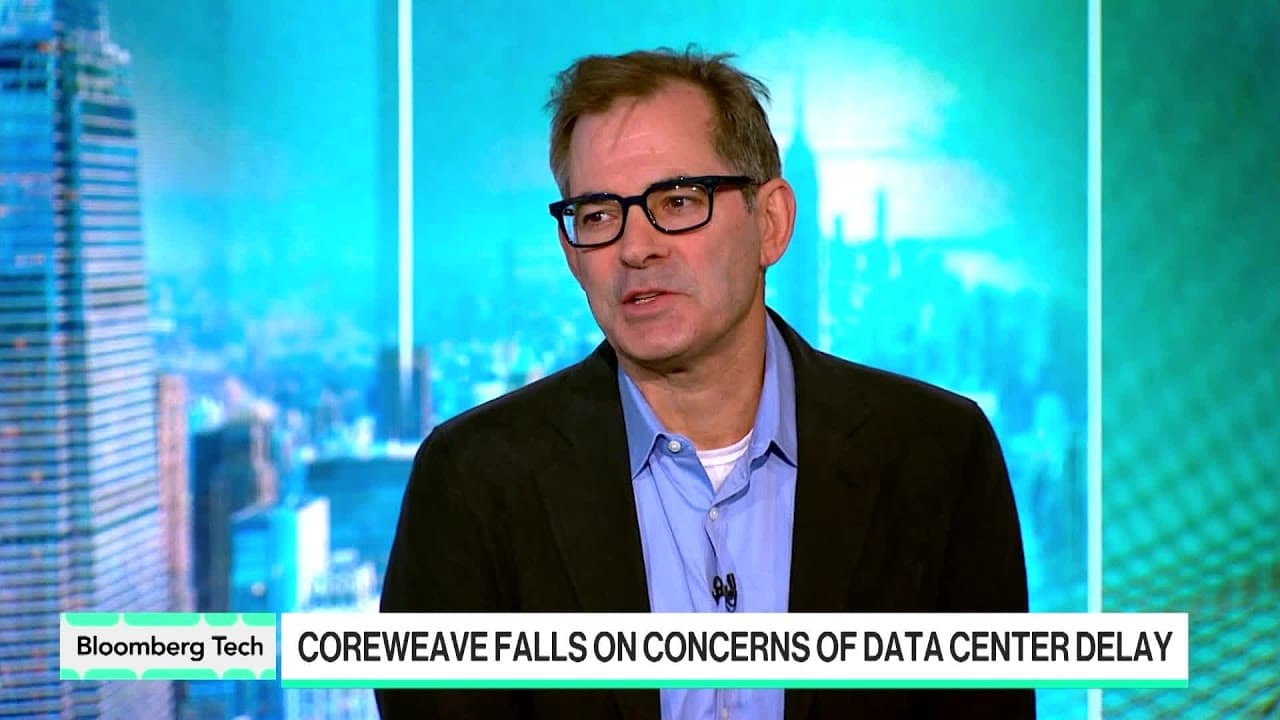
CoreWeave says its data-center setback shifts revenue by roughly one quarter rather than eliminating the contracted revenue. The company plans to reduce future disruption by building some facilities itself, assisting third-party developers, diversifying customers and data-center providers, and relying on greater operating scale to limit the impact of delays at individual sites.
Transcript
How frustrating is it that you don't own your entire supply chain? How much of an issue is the same power you have to give to third parties? Oh. So, look, look, I think it's important to understand that every single part of this ecosystem is dependent upon other parts of the ecosystem. Nobody controls the entire supply chain. And that's just the na... Read More
Key Insights
- CoreWeave views the delayed contract as deferred revenue rather than lost revenue. The company expects the affected contract to move back by roughly one quarter, while the customer shifts the agreement so CoreWeave can still capture the total value originally contemplated.
- Complete supply-chain control is impractical for infrastructure projects at CoreWeave's scale. Chip design, fabrication, data-center construction, concrete, power, and other requirements depend on specialized partners, so the company focuses on working with reliable counterparties and managing occasional execution problems.
- Customer concentration has declined substantially within CoreWeave's backlog. One client produced 85% of revenue at the beginning of the year, while no individual client represented more than 35% of backlog by year-end, down from 50% in the preceding quarter.
- Supplier diversification limits exposure to any single data-center developer. CoreWeave says no individual provider represents more than 20% of the 2.9 gigawatts of power that the company expects to deliver to the market over the following 24 months.
- Internal construction expertise is one safeguard against future delays. CoreWeave has built a team that can develop its own facilities, including projects in Kenilworth, New Jersey, and Lancaster, Pennsylvania, while also deploying skilled employees to help third-party developers solve construction problems.
- Greater scale reduces the relative effect of a delayed facility. As CoreWeave's total delivery capacity grows, disruption at one site becomes a smaller part of its overall run rate, although both the company and its broader supply chain continue to experience scaling challenges.
- Government can accelerate infrastructure deployment through permitting and grid coordination. CoreWeave argues that public authorities are positioned to help data-center projects secure approvals and connect infrastructure to the electrical grid more quickly, addressing constraints that individual companies cannot resolve alone.
- The Nvidia contract combines a six-year compute commitment with flexibility to redirect capacity. CoreWeave can interrupt compute delivery to Nvidia and repurpose that infrastructure for startups and other companies that have struggled to obtain the computing resources needed to develop and scale their ideas.
Install to Summarize YouTube Videos and Get Transcripts
Explore YouTube Video Summarizer or Get YouTube Transcript Extractor
Questions & Answers
Q: Why did CoreWeave lower its annual revenue forecast?
CoreWeave lowered its annual revenue forecast because a third-party data-center developer experienced a temporary delay that affected fulfillment of a large customer contract. CEO Michael Intrator described the financial effect as a shift in revenue timing of roughly one quarter, rather than a permanent loss. The customer understood the delay and adjusted the contract so its contemplated total value could still be captured.
Q: How is CoreWeave reducing customer concentration risk?
CoreWeave is expanding the number and mix of customers represented in its contracted backlog. At the beginning of the year, one client generated 85% of company revenue. By year-end, no single client represented more than 35% of backlog, compared with 50% in the preceding quarter. Intrator presented this change as substantial progress in diversifying the contracting side of the business.
Q: How is CoreWeave diversifying its data-center supply?
CoreWeave is distributing its planned capacity across multiple data-center providers instead of depending heavily on one developer. According to Intrator, no single provider accounts for more than 20% of the 2.9 gigawatts of power the company expects to deliver to the market during the following 24 months. This structure reduces the relative exposure created by execution problems at any one provider.
Q: How does CoreWeave plan to prevent future data-center delays?
CoreWeave is combining internal construction capabilities, direct support for third-party builders, provider diversification, and greater operating scale. Its internal team can build company facilities from the ground up and can send experienced personnel to outside projects when problems emerge. The company expects a broader provider base and larger delivery footprint to make any single-site delay less significant to its overall run rate.
Q: Where is CoreWeave building its own data centers?
CoreWeave identified Kenilworth, New Jersey, and Lancaster, Pennsylvania, as locations where its internal organization is building data centers. These projects help the company develop construction skills from the ground up. Those capabilities are also useful beyond company-built sites because CoreWeave can deploy employees with relevant expertise to third-party projects, help resolve problems, and move construction processes forward.
Q: What role does CoreWeave want government to play in data-center expansion?
CoreWeave wants government to help accelerate permitting and the connection of infrastructure to the electrical grid. Intrator said the company and others have strongly argued that public authorities have an appropriate role in facilitating these processes. Faster approvals and grid attachment could help infrastructure providers build at the required pace and address bottlenecks that extend beyond the control of individual companies.
Q: How does CoreWeave's agreement with Nvidia work?
CoreWeave's agreement commits the company to deliver compute to Nvidia for six years, but it also includes the ability to interrupt that flow. CoreWeave can then repurpose the compute for new companies, startups, and other organizations that have struggled to obtain capacity. Intrator said this flexibility creates an entry point for working with emerging companies as they integrate CoreWeave's infrastructure and scale.
Q: Why does CoreWeave expect AI computing demand to remain strong?
CoreWeave says customer buying signals exceed its own ability to deliver infrastructure and also overwhelm the broader market's delivery capacity. Clients approach the company with requirements covering cluster size, location, network design, and other infrastructure characteristics. Intrator described the market as facing a systemic shortage of GPUs and computing infrastructure for artificial-intelligence development, and said CoreWeave expects this imbalance to continue for quite a while.
Summary & Key Takeaways
-
CoreWeave attributed its lowered annual revenue forecast to a temporary delay involving a third-party data-center developer. CEO Michael Intrator characterized the setback as a one-quarter postponement of contracted revenue, not lost revenue, and said the large customer understood the situation and adjusted the contract while preserving its contemplated total value.
-
CoreWeave is addressing concentration risk on both sides of its business. A single client represented 85% of revenue at the start of the year, but no client represented more than 35% of backlog by year-end. No data-center provider accounts for more than 20% of the 2.9 gigawatts planned for delivery.
-
The company is developing internal data-center construction capabilities, supporting third-party projects when problems arise, and seeking faster government permitting and grid connections. Its six-year Nvidia agreement also permits interruptions so capacity can be redirected to startups and other companies, while customer demand for AI infrastructure continues to exceed available market supply.
Read in Other Languages (beta)
Share This Summary 📚
Summarize YouTube Videos and Get Video Transcripts with 1-Click
Try YouTube Summary with ChatGPT & Claude or YouTube Transcript Generator
Explore More Summaries from Bloomberg Television 📚






Summarize YouTube Videos and Get Video Transcripts with 1-Click
Try YouTube Summary with ChatGPT & Claude or YouTube Transcript Generator