How Does Tesla FSD Compare With BYD God's Eye?
TL;DR
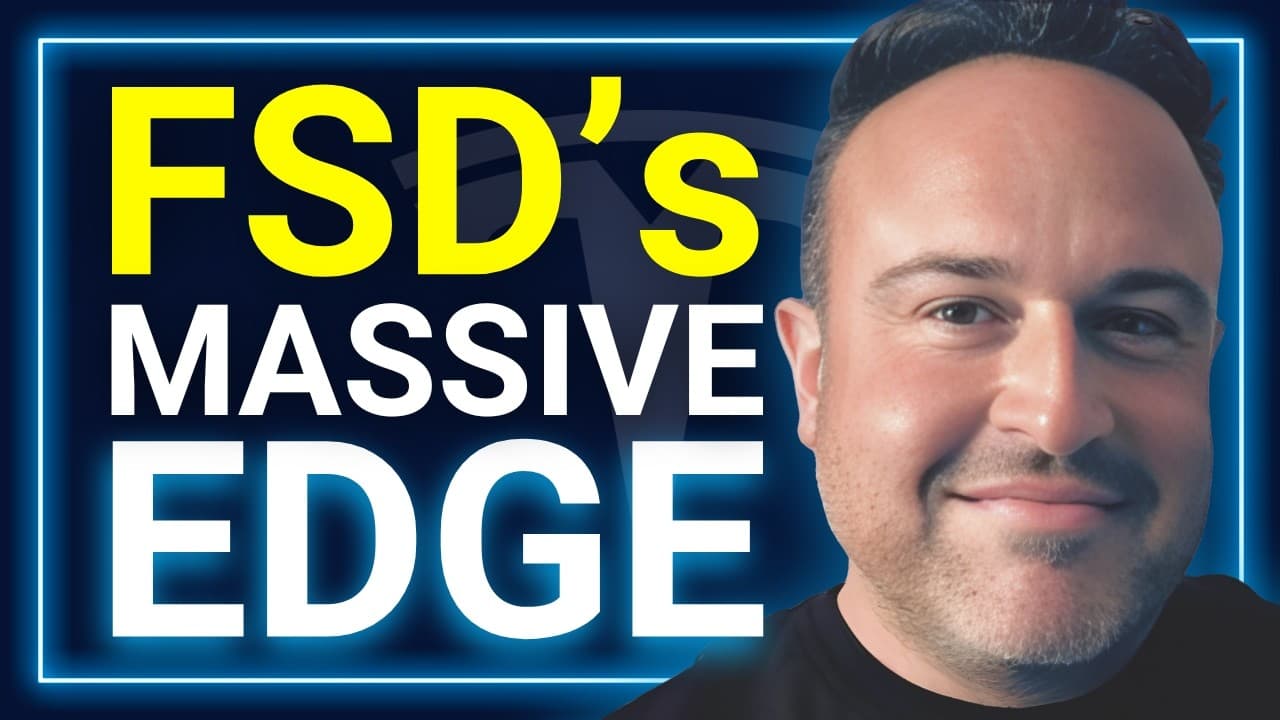
Tesla FSD is presented as a more capable and scalable system than BYD’s God’s Eye, which the discussion characterizes primarily as lane keeping, automatic lane changing, and related driver assistance. The speakers argue that Tesla’s vision-based, end-to-end approach can reach more vehicles, while treating claims about June Cybercab rides and unsupervised service later in the year as uncertain predictions.
Transcript
since we have Omar here Omar one of the news that happened a couple days ago I think was byd maybe it was just yesterday actually yeah it was just yesterday byd announced that uh you know that they are rolling out Advanced Driver assistance system called God's I it's going to have three levels of Adas offerings God's I c will be for their lowcost v... Read More
Key Insights
- BYD’s God’s Eye is divided into three driver-assistance tiers aimed at low-cost, mid-range, and luxury vehicles. The speakers say the upper tiers use lidar, while the announced functions largely concern lane keeping, automatic lane changes, and automatic takeover rather than demonstrated personal autonomy.
- Tesla FSD is characterized by one speaker as capable of completing a trip from Los Angeles to Silicon Valley without steering-wheel intervention. He argues that no other system available in the United States currently matches that stated point-to-point capability, although the transcript provides no independent test results.
- BYD’s announced system is compared with Tesla Enhanced Autopilot rather than full FSD. The discussion claims that BYD is expanding familiar assistance features into cheaper vehicles, which could make basic lane keeping increasingly expected across the market without proving that BYD has solved robotaxi operation.
- Huawei’s driver-assistance technology is presented as a stronger Chinese competitor than BYD’s system. The speakers nevertheless question whether controlled demonstrations reflect dependable everyday performance, particularly when a company representative accompanies the demonstration instead of allowing independent users to drive freely and evaluate the system themselves.
- Huawei’s system uses several sensors, including three lidars in its latest version, according to the discussion. The speakers argue that this hardware configuration tends to limit availability to selected high-end vehicles or optional packages, while Tesla seeks to make FSD operable on every vehicle it sells.
- Tesla’s approach is described as computer vision combined with end-to-end deep learning. The speakers contrast this with Huawei’s use of multiple models, lidar fusion, localization, and some mapping, arguing that Tesla’s design is potentially more scalable across its sales volume and existing vehicle hardware.
- Long-term success is described as depending on vertically integrated transportation economics, especially achieving the lowest cost per mile. The discussion expects multiple companies to develop self-driving models within five to ten years, so Tesla’s business advantage cannot rely solely on competitors failing to develop similar technology.
- Tesla’s June Cybercab participation remains speculative in the discussion. Although a Tesla designer reportedly referred to Cybercab rides in Austin beginning in June, the speakers expect the service to launch with Model Y and suggest that only a few near-production Cybercab vehicles might appear in an early fleet.
Install to Summarize YouTube Videos and Get Transcripts
Explore YouTube Video Summarizer or Get YouTube Transcript Extractor
Questions & Answers
Q: What did BYD announce with its God’s Eye system?
BYD announced an advanced driver-assistance offering called God’s Eye with three levels for different vehicle categories. God’s Eye C is intended for lower-cost vehicles, God’s Eye B for mid-range vehicles, and God’s Eye A for luxury brands. The discussion says the B and A tiers include lidar and characterizes the overall announced functions as lane keeping, automatic lane changing, and related assistance.
Q: Is BYD God’s Eye equivalent to Tesla Full Self-Driving?
The speakers argue that God’s Eye is not equivalent to Tesla FSD. They describe BYD’s announced capabilities as basic lane keeping, automatic lane changes, and automatic takeover functions that are closer to Tesla Enhanced Autopilot. Their assessment is that the announcement expands driver assistance into less expensive cars but does not demonstrate personally owned autonomy or a solved robotaxi service.
Q: Why do the speakers consider Tesla FSD more advanced?
One speaker says Tesla FSD can handle a trip from Los Angeles to Silicon Valley without requiring him to touch the steering wheel. He argues that no competing system available in the United States offers the same stated capability. The discussion also credits Tesla’s computer-vision and end-to-end learning approach with supporting dynamic driving behavior across a broader range of Tesla vehicles.
Q: How does Huawei’s driving system compare with Tesla FSD?
Huawei’s system is described as more advanced than the Enhanced Autopilot Tesla currently offers in China, but less capable than FSD available in other markets. The speakers acknowledge that Huawei has shown polished parking-to-parking demonstrations, while cautioning that a successful demonstration does not prove consistent real-world operation. They also highlight Huawei’s use of multiple models, lidar, localization, and mapping-related data.
Q: Why are polished autonomous-driving demonstrations insufficient evidence?
A polished demonstration can show that a system completes one selected route successfully, but the speakers argue that dependable autonomy must work repeatedly across real-world situations. They note that impressive self-driving demonstrations existed as early as 2009. They also consider it telling when a company representative accompanies a drive instead of allowing independent users to test the system freely on routes of their choice.
Q: What scalability advantage does Tesla’s hardware strategy offer?
Tesla is described as designing FSD so every vehicle it sells can potentially run the system using computer vision and end-to-end deep learning. The speakers contrast this with competitors whose strongest features require lidar and additional sensors found mainly on selected high-end vehicles or optional packages. They argue that broader hardware availability gives Tesla a larger deployment base than systems confined to relatively few models.
Q: What will determine whether Tesla wins the autonomous-vehicle market?
The discussion argues that Tesla must build a vertically integrated transportation service that delivers the lowest cost per mile. Technical leadership alone is not treated as a permanent defense because the speakers expect several companies to train capable self-driving models within five to ten years. Tesla’s proposed advantage therefore combines vehicle design, computing, autonomy, fleet ownership, service deployment, and operating economics.
Q: Will Tesla deploy Cybercabs in Austin in June?
The speakers treat June Cybercab deployment as possible but unconfirmed. A Tesla designer reportedly referred specifically to Cybercab rides in Austin beginning in June, yet the panel expects the initial service to use Model Y vehicles. They suggest that a few near-production Cybercabs could join an early fleet before full production, but they also acknowledge that the designer may have mixed up deployment terminology.
Summary & Key Takeaways
-
BYD announced three God’s Eye driver-assistance tiers for vehicles across low-cost, mid-range, and luxury categories. The discussion argues that the announced capabilities resemble established driver-assistance functions, including lane keeping and automatic lane changes, rather than personally owned autonomous driving or a complete robotaxi system comparable to Tesla FSD.
-
Huawei’s system is described as more advanced than Tesla’s current Enhanced Autopilot offering in China, but less capable than the FSD available elsewhere. The speakers caution that polished demonstrations do not establish consistent real-world performance and note Huawei’s continued reliance on multiple models, lidar, localization, and comparatively limited vehicle availability.
-
Tesla’s potential advantage is framed as system-wide economics rather than permanent technical exclusivity. The speakers expect competitors to improve and train capable driving models, but argue Tesla must build a vertically integrated service with the lowest cost per mile. They consider June Cybercab deployment possible but uncertain, with Model Y expected first.
Read in Other Languages (beta)
Share This Summary 📚
Summarize YouTube Videos and Get Video Transcripts with 1-Click
Try YouTube Summary with ChatGPT & Claude or YouTube Transcript Generator
Explore More Summaries from Brighter with Herbert 📚
Summarize YouTube Videos and Get Video Transcripts with 1-Click
Try YouTube Summary with ChatGPT & Claude or YouTube Transcript Generator