What Mindset Do Rich People Have Compared to Poor People?
TL;DR
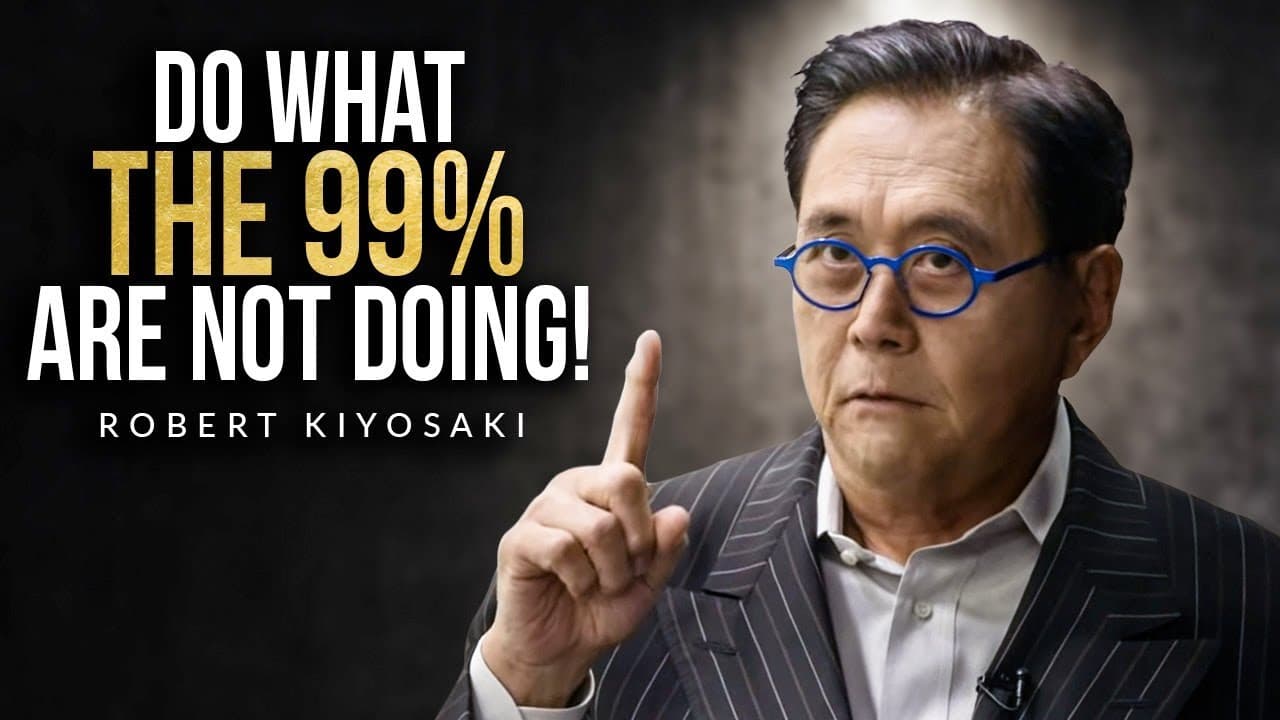
Rich people adopt a mindset focused on entrepreneurship, leveraging debt and tax strategies to build wealth, while poor and middle-class individuals cling to outdated beliefs about job security and saving. This shift in perspective is crucial as traditional financial advice no longer aligns with today's economic realities, where an entrepreneurial approach is essential for success.
Transcript
The most obsolete idea is go to school, get a job, work hard, save money, get out of debt and invest for the long-term in the stock market See, why would you save money when they're printing trillions of dollars? The gap between the 1% and 99% is massive. You see it's not just money, you have to step back and look at the bigger picture. So what do ... Read More
Key Insights
- 😀 Traditional financial wisdom, rooted in job security and saving, is now considered outdated in the face of modern economic changes.
- ⌛ An entrepreneurial mindset is essential for financial success, promoting innovation and adaptability in uncertain economic times.
- ❓ Utilizing debt strategically can create significant wealth opportunities, distinguishing successful individuals from those constrained by traditional saving habits.
- 🥺 Resilience and a positive internal mindset are critical in entrepreneurship, as failures can lead to greater strength and learning.
- 📏 Understanding the rules of debt and taxes gives entrepreneurs a competitive advantage to flourish financially.
- 🥺 The perspective of viewing the economy's state is influenced by personal outlook, as a strong internal focus can lead to better recognition of opportunities.
- ❓ Real entrepreneurship often involves navigating and leveraging complex financial landscapes rather than trusting in conventional job paths.
- 🎙️ More videos with Robert Kiyosaki:
Install to Summarize YouTube Videos and Get Transcripts
Explore YouTube Video Summarizer or Get YouTube Transcript Extractor
Questions & Answers
Q: What does the speaker identify as the main flaw in traditional financial advice?
The speaker identifies the main flaw in traditional financial advice as being rooted in outdated beliefs that prioritize saving and steady employment. They argue that such strategies ignore the reality of inflation and the changing status of money as debt, leading to a significant wealth gap where the wealthy leverage debt to their advantage, while the middle class struggles.
Q: How does the entrepreneurial mindset differ from the traditional employee mindset?
The entrepreneurial mindset, as described by the speaker, focuses on creativity, adaptability, and a willingness to take calculated risks. In contrast, the traditional employee mindset prioritizes job security and a steady paycheck, which can limit one's potential for growth and financial independence by fostering dependency on external validation and a centralized income source.
Q: Why is using debt considered beneficial in the current economic environment?
The speaker explains that using debt strategically can amplify financial opportunities, especially in an inflationary environment where money is depreciated. By refinancing debt to lower interest rates or investing borrowed money into appreciating assets like real estate, individuals can enhance their wealth rather than being enslaved by traditional advice that advocates for debt aversion.
Q: What lesson does the speaker convey about failures in entrepreneurship?
The speaker emphasizes that failure in entrepreneurship is not a definitive end but rather an essential part of growth and learning. Embracing failure fosters resilience, creativity, and a deeper understanding of one’s capabilities. The mindset of never returning to traditional employment after facing challenges reflects an unwavering commitment to entrepreneurial success.
Q: How does the concept of internal versus external economy play a role in financial success?
The speaker discusses the importance of an internal economic outlook, where one's self-assessment and attitude towards challenges are paramount. Entrepreneurs who focus on internal controls, adaptability, and confidence can navigate economic fluctuations more skillfully than those who rely on external factors, like job security, which can be unstable and unpredictable.
Q: What is the significance of understanding taxes in relation to wealth creation?
The speaker highlights that understanding tax strategies is crucial for wealth creation since taxes disproportionately impact those who earn money through regular employment. Entrepreneurs can structure their income in ways that minimize their tax burden, allowing them to retain more of their earnings and reinvest them into wealth-building ventures.
Summary & Key Takeaways
-
The notion of working hard, saving money, and investing is deemed obsolete in the current financial landscape, driven by inflation and changing economic paradigms.
-
Entrepreneurial mindset is emphasized as a key for success, contrasting with traditional job security and paycheck dependency, which is said to limit potential growth.
-
Emphasizing the importance of understanding debt and taxes, the content advocates for utilizing these financial tools to create wealth instead of relying on conventional saving strategies.
Read in Other Languages (beta)
Share This Summary 📚
Summarize YouTube Videos and Get Video Transcripts with 1-Click
Try YouTube Summary with ChatGPT & Claude or YouTube Transcript Generator
Explore More Summaries from Motiversity 📚




Summarize YouTube Videos and Get Video Transcripts with 1-Click
Try YouTube Summary with ChatGPT & Claude or YouTube Transcript Generator