How to Build a Business Beyond Your Personal Brand
TL;DR
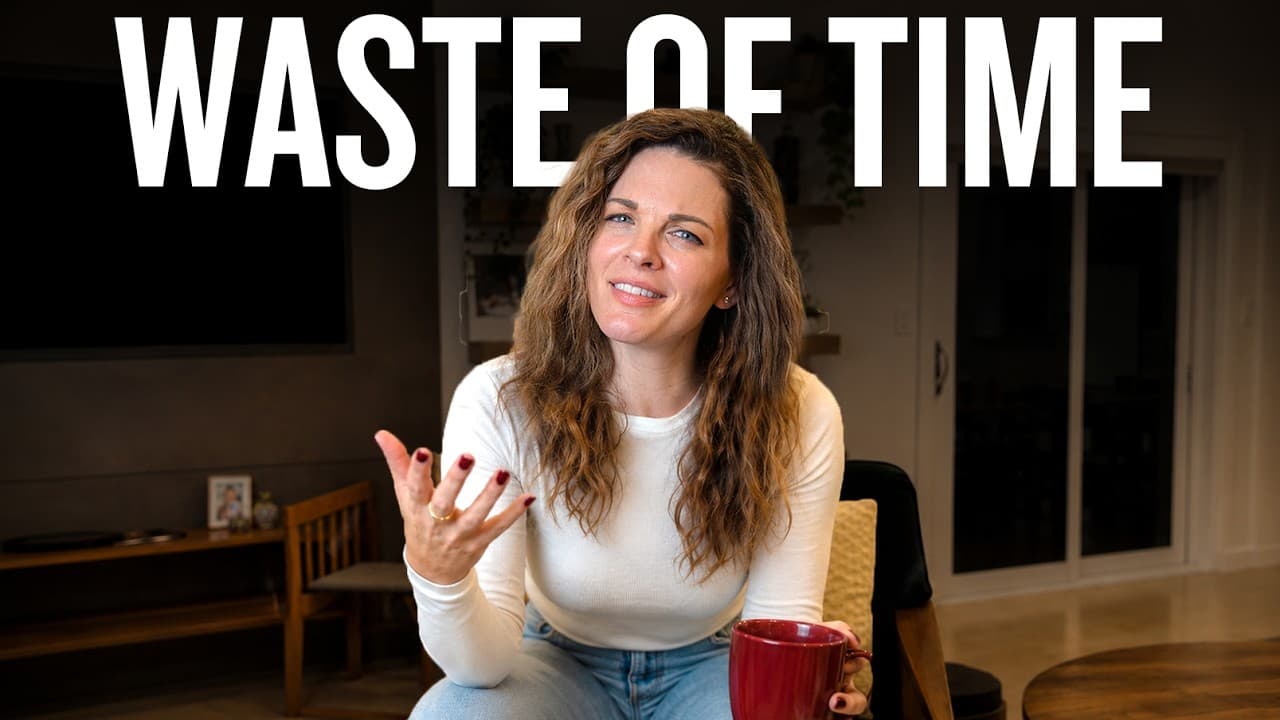
Build a business around proven expertise and a repeatable methodology, rather than making your personality the product. Personal brands become fragile when revenue depends on constant visibility, platform algorithms, and one person's presence. Durable authority comes from useful depth, documented results, and frameworks that attract suitable clients while allowing the business and its impact to grow beyond its founder.
Transcript
AI creators are flooding the internet. Faceless channels are monetizing millions of views. And somehow, in the middle of all of this, personal brands feel less effective than ever. [music] Not because visibility is a bad thing, and it's not because you shouldn't be on camera, it's because the model is fundamentally broken. The way we were told to b... Read More
Key Insights
- Personal branding originally worked because early social platforms rewarded attention and gave anyone with an internet connection access to a global audience. The basic model was to share personal experiences, build an audience, and then monetize the attention that visibility created.
- A personality-dependent company is effectively a demanding public job because its revenue and relevance require the founder's continual presence. Content, sales, and service delivery repeatedly return to the same person, creating a growth ceiling that cannot be removed simply by becoming more visible.
- Market saturation weakened personal branding because anyone with a phone and an opinion could present themselves as an expert. As feeds filled with personal stories, proprietary frameworks, and promotional claims, audiences became more skeptical and polished content increasingly appeared hollow or inauthentic.
- Algorithm dependence makes creator-led businesses fragile because platforms continually demand more posts, live sessions, short-form videos, stories, and other content to maintain reach. Slowing production can reduce impressions and leads, while an algorithm change can undermine an audience built entirely on rented platforms.
- AI reduces the defensive value of simply appearing human because faceless channels, synthetic voices, and generated personalities can publish information at scale. A founder's face or voice is therefore a weak moat when machines can imitate personality-driven presentation without possessing genuine experience or documented results.
- Proven results and a distinct methodology are harder to imitate than personality because customers can identify a framework that has worked for real people. Experience becomes commercially valuable when it is organized into a repeatable system, rather than remaining inseparable from the founder's personal performance.
- Authority grows through depth rather than constant pursuit of virality. Substantial, useful content can create gravity by making an expert a trusted destination for the right audience, while high-volume personal posting may generate visibility that produces little meaningful business value.
- A legacy business is designed so its expertise, method, and impact can outlive the founder's constant involvement. Turning personal knowledge into transferable intellectual property allows the company to serve clients, earn revenue, and expand without requiring more hours or appearances from one individual.
Install to Summarize YouTube Videos and Get Transcripts
Explore YouTube Video Summarizer or Get YouTube Transcript Extractor
Questions & Answers
Q: Why does building a personal brand feel ineffective now?
Building a personal brand feels less effective because the market is saturated, audiences are more skeptical, algorithms demand relentless production, and AI can reproduce personality-driven content at scale. Visibility still has value, but visibility alone no longer establishes credible authority. When everyone presents a story, opinion, and framework, genuine expertise becomes harder to identify and trust becomes more difficult to earn.
Q: How does a personal brand limit business growth?
A personal brand limits growth when the founder is required for content, sales conversations, client delivery, and continued relevance. Every expansion then demands more hours, appearances, and personal output from the same individual. Because one person cannot scale indefinitely, the company repeatedly encounters a ceiling. What looks like a successful business may actually function as an unusually visible and demanding job.
Q: Why is constant content creation an unsustainable strategy?
Constant content creation becomes unsustainable when platforms require daily or multiple daily posts, live appearances, short-form videos, carousels, stories, and activity across several channels merely to preserve visibility. If production slows, reach, impressions, and leads may fall. This creates a content hamster wheel that can cause burnout while leaving the business exposed to changes in algorithms it cannot control.
Q: How has AI changed personal branding?
AI has weakened the idea that human personality alone provides a durable competitive advantage. Faceless channels can attract millions of views, synthetic voices can communicate real information, and generated personalities can imitate human presentation at scale. If being a real person is the only distinction, the brand lacks a strong moat. Results, experience, and a proven methodology are more difficult to replicate.
Q: What should experts build instead of personality-based brands?
Experts should build businesses around their knowledge, documented results, and a clear methodology rather than treating their personalities as the product. The methodology should organize what they know into a framework that can be communicated, delivered, and applied beyond the founder's direct involvement. This approach supports authority, attracts more suitable clients, and creates room for revenue and impact to grow independently.
Q: How can content build authority without chasing virality?
Content can build authority by prioritizing depth, useful knowledge, and a proven point of view instead of maximizing personal exposure or short-term reach. The goal is to become a destination that draws the right people through substantive expertise. Such content creates gravity around a methodology, helping prospective clients understand what works, why it works, and why the expert's approach deserves trust.
Q: Why is a proven methodology stronger than a personality?
A proven methodology is stronger because it gives audiences and clients something concrete that can produce results beyond their interest in an individual. Personality may attract attention, but a framework demonstrates how expertise is organized and applied. When people can point to real outcomes and say the method worked for them, the business gains credibility that polished self-promotion or personal visibility cannot provide alone.
Q: What is a legacy business based on expertise?
A legacy business is structured so the founder's knowledge, methodology, and impact can continue and expand beyond that person's constant presence. It does not require the founder to be the center of every piece of content, sale, or service. By turning expertise into a transferable system, the business can compound, serve more people, and avoid being capped by one individual's available time.
Summary & Key Takeaways
-
Personal branding initially worked because social platforms rewarded attention and gave individuals inexpensive access to global audiences. Entrepreneurs could share their lives, build followings, and monetize visibility. However, businesses centered on one personality required that person to keep creating, selling, and delivering, turning apparent business ownership into a demanding public job.
-
Three developments weakened the traditional model: market saturation made expertise harder to distinguish, algorithms demanded increasingly frequent content, and AI began replicating personality-driven media at scale. Audiences also became more skeptical of polished self-promotion. Together, these changes made constant visibility less trustworthy, less defensible, and more exhausting for creators and business owners.
-
The proposed alternative is a legacy business built around expertise, results, and a proven methodology. Instead of chasing virality or sharing more personal details, experts can create substantial content that attracts appropriate clients and establishes authority. A transferable framework allows knowledge, revenue, impact, and business operations to expand beyond the founder's daily presence.
Read in Other Languages (beta)
Share This Summary 📚
Summarize YouTube Videos and Get Video Transcripts with 1-Click
Try YouTube Summary with ChatGPT & Claude or YouTube Transcript Generator
Explore More Summaries from Sunny Lenarduzzi 📚
Summarize YouTube Videos and Get Video Transcripts with 1-Click
Try YouTube Summary with ChatGPT & Claude or YouTube Transcript Generator