What Happens During a 36-Hour Fast, Hour by Hour
TL;DR
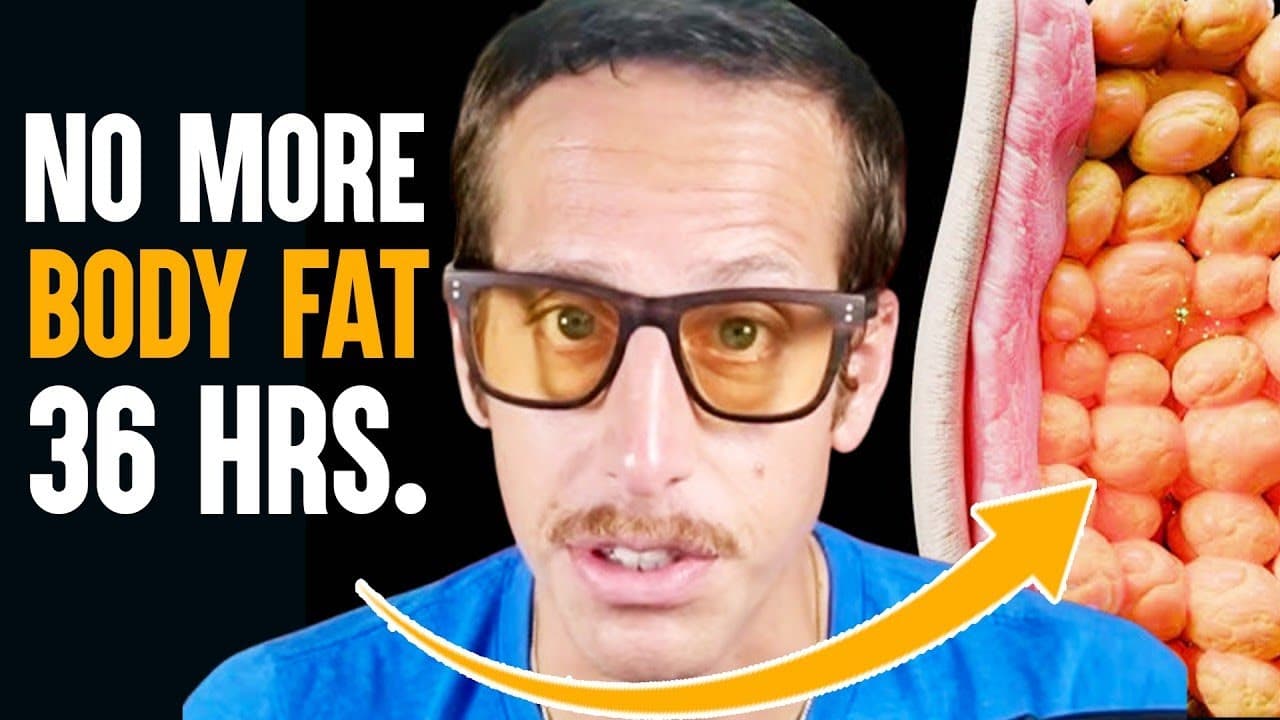
A 36-hour fast triggers a staged sequence rather than a metabolic slowdown: digestion finishes and insulin drops around 14 hours, autophagy and mitophagy start near 16 hours, intestinal stem cells and human growth hormone surge at 24 hours, BDNF rises at 30 hours, and ketone-driven fat oxidation takes over by 36 hours. The first 24 hours mostly shed water weight; real fat burning comes later.
Transcript
They told you skipping meals will slow your metabolism. Total lie. At 36 hours, your body doesn't shut down, it activates. Fat burns, cells clean house, and inflammation vanishes. Here is what really happens. This is the first 36 hours without food. And by the end of the lesson, you'll see why this is one of the most powerful things you can do for ... Read More
Key Insights
- Digestion is not complete when the stomach empties. The stomach clears within 4 to 6 hours after eating, but the small intestine continues breaking down and absorbing nutrients for roughly 14 hours, which is when the fasting benefits actually begin.
- Energy diversion is what produces the mental clarity fasters report. Digestion consumes blood flow, enzymes, and internal resources, so once it ends at 14 hours the body can redirect that energy toward the brain, heart, liver, and kidneys for healing.
- Insulin is the hormone that signals fat storage, so its decline is the gateway to burning stored fat. After the glucose spike from the last meal clears, insulin starts dropping at 14 hours and continues falling throughout the entire 36 hours.
- Glycogen depletion is what forces the metabolic switch. As backup reserves in liver and muscle cells run low around 14 hours, the body signals that it must move to body fat for energy, which is why fasting helps with insulin resistance and metabolic disorders.
- Autophagy means self-eating, and it begins around the 16-hour mark. Cells, mitochondria, and proteins have expiration dates, and eating every two to three hours prevents cleanup, allowing zombie senescent cells to accumulate and disease to develop.
- Human growth hormone surges naturally at 24 hours without food, rising 2,000% in men and 1,300% in women. Celebrities pay thousands of dollars monthly for injections, but injecting the hormone causes the body to produce less of it on its own.
- BDNF, described as miracle grow for the brain, surges at the 30-hour mark. It supports neurogenesis and improves how effective brain cells are, boosting creativity and focus while helping prevent Alzheimer's, Parkinson's, and dementia.
- Ketones are signaling molecules, not just fuel. Produced by the liver from fatty acids at the 36-hour mark, they help mitochondria produce 400% more ATP, lower inflammatory markers like CRP, homocysteine, and IL-6, and drive fat oxidation.
Install to Summarize YouTube Videos and Get Transcripts
Explore YouTube Video Summarizer or Get YouTube Transcript Extractor
Questions & Answers
Q: Does a 36-hour fast slow down your metabolism?
No. The claim that skipping meals slows metabolism is called a lie in this video. At 36 hours the body does not shut down, it activates: fat burns, cells clean house, and inflammation fades. Rather than downshifting, the body moves through a staged sequence of insulin decline, cellular cleanup, hormone surges, and finally ketone-driven fat oxidation. The metabolic switch away from glycogen toward stored body fat is presented as the central benefit, particularly for people struggling with weight loss, insulin resistance, diabetes, or other metabolic disorders.
Q: What happens in the first 14 hours of a fast?
Three things happen by the 14-hour mark: insulin drops, digestion completes, and energy diversion activates. The stomach empties within 4 to 6 hours after eating, but the small intestine keeps breaking down and absorbing nutrients for about 14 hours total. Once digestion finishes, the energy previously spent on blood flow, enzymes, and processing food gets redirected to the brain, heart, liver, and kidneys. Meanwhile the glucose spike from the last meal has cleared, so insulin begins falling and glycogen stores in the liver and muscle cells start depleting.
Q: When does autophagy start during a fast?
Autophagy activates at around the 16-hour mark, along with mitophagy. With no calories coming in, the body's survival priority leads it to look for internal fuel, and it targets cells that are not functioning well, not producing energy well, or not breaking down fat. Autophagy literally means self-eating: the body breaks down and recycles damaged cell components, dysfunctional mitochondria, and even precancerous cells. Mitophagy is specifically the cleanup of mitochondria, the energy powerhouses that produce most of the body's energy and burn fat. The video recommends a light walk and non-flavored electrolytes during this window.
Q: Why is eating every 2 to 3 hours bad for your cells?
Frequent eating prevents autophagy from ever switching on, so damaged cells never get cleared. The video uses a refrigerator analogy: if you leave expired groceries inside instead of throwing them out, buy fresh groceries, and close the door, you create a toxic environment where disease manifests. The human body works the same way, since cells, mitochondria, and proteins all have expiration dates. Without fasting, you develop disease and accumulate what are called zombie senescent cells. Autophagy is the process that removes those expired cells and replaces them with more efficient fat-burning ones.
Q: How much does human growth hormone increase during a 24-hour fast?
Studies cited in the video show a 2,000% increase in human growth hormone after 24 hours without food in men, and a 1,300% surge in women. Human growth hormone helps burn fat, is anti-aging, and is both muscle-preserving and muscle-building. Celebrities and musicians pay thousands of dollars every month for doctors to inject it, which the video calls a bad idea because taking the hormone externally causes your body to stop producing as much of it. The natural fasting surge is free with no side effects, and it addresses the common worry about losing muscle during a long fast.
Q: How does a 24-hour fast help gut health?
At the 24-hour mark, intestinal stem cells become more active. Research from MIT cited in the video shows a 24-hour fast can dramatically boost stem cell regeneration in the gut lining, meaning the digestive tract essentially repairs itself. This is described as a game changer for people dealing with GERD, acid reflux, bloating, constipation, diarrhea, SIBO (small intestinal bacterial overgrowth), leaky gut, IBS, and other serious gut conditions. A stronger gut lining leads to better nutrient absorption, improved immune function, and reduced inflammation.
Q: When do you actually start burning fat during a fast?
Real fat burning arrives at the 36-hour mark. The first 24 hours mostly shed water weight, but by 36 hours the sugar reserves stored as glycogen in the liver and muscle cells are depleted, so the body taps into belly fat and stored fat for energy. Fatty acids travel from fat cells to the liver, which uses them as an energy source and produces ketones. This process is called fat oxidation. The video describes it as the fat-burning sweet spot that many people chase with a keto diet but can reach through 36 hours of fasting.
Q: What do ketones do for inflammation and energy?
Ketones are anti-inflammatory and act as signaling molecules to the mitochondria, telling them to ramp up energy production. They help mitochondria produce 400% more energy in the form of ATP, and they drive fat burning by crushing fat cells. Ketones also lower inflammatory markers including CRP, homocysteine, and IL-6, which helps with joint pain, skin health, and recovery. Because they increase fat burning and reduce inflammation at the same time, the video frames the 36-hour ketone window as a combined metabolic and anti-inflammatory benefit.
Summary & Key Takeaways
-
The first 14 hours without food complete digestion. The stomach empties within 4 to 6 hours, but the small intestine keeps breaking down and absorbing nutrients for about 14 hours. Once that finishes, energy normally spent on digestion is diverted elsewhere, insulin falls, and glycogen stores in liver and muscle begin depleting.
-
At the 16-hour mark, autophagy and mitophagy switch on. The body, prioritizing survival with no incoming calories, begins consuming damaged cells, dysfunctional mitochondria, and even precancerous cells for fuel. The video compares this to clearing expired groceries out of a refrigerator instead of stacking fresh food on top of rot.
-
By 24 hours, intestinal stem cells become more active, with MIT research cited for a dramatic boost in gut lining regeneration, and human growth hormone surges 2,000% in men and 1,300% in women. At 30 hours BDNF rises, and by 36 hours ketone production drives fat oxidation and lowers inflammatory markers.
Read in Other Languages (beta)
Share This Summary 📚
Summarize YouTube Videos and Get Video Transcripts with 1-Click
Try YouTube Summary with ChatGPT & Claude or YouTube Transcript Generator
Explore More Summaries from Ben Azadi 📚




Summarize YouTube Videos and Get Video Transcripts with 1-Click
Try YouTube Summary with ChatGPT & Claude or YouTube Transcript Generator