What Went Wrong for Yamamoto in NLCS Game 2?
TL;DR
Yamamoto did not have his best command and struggled to finish innings, raising his pitch count. The Dodgers were unable to mount consistent offense and failed to challenge two borderline calls, which altered the inning and the game. The result highlights the need for sharper outings and better timely hitting in a tight series.
Transcript
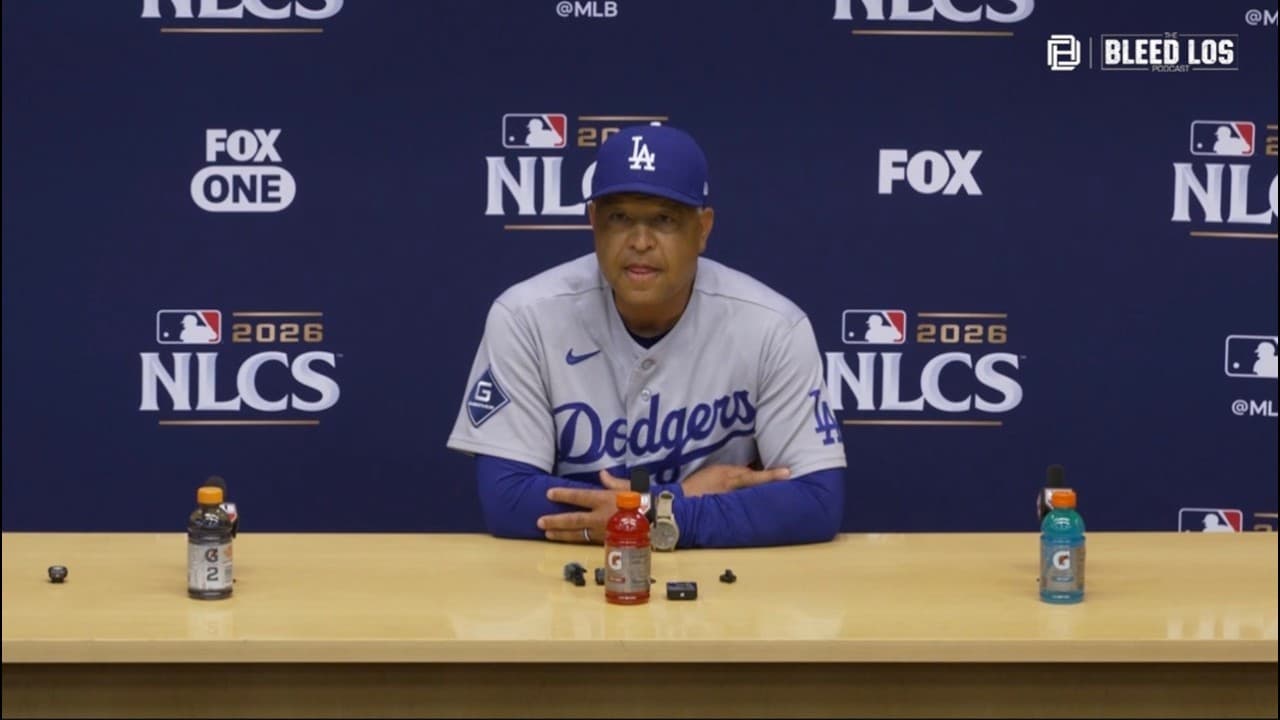
Okay, first question for Doc. Start down there in the front with Bill. >> Yeah, Dave, what did you think of Yamamoto today? How did he pitch? >> Yeah, you know, um obviously wasn't sharp. Um you know, just wasn't sharp today. And I I think that you can see from that contrary at bat in the third inning that really stressed him. Um you got to give hi... Read More
Key Insights
- Yamamoto was not sharp tonight, an unusual outcome that affected the Dodgers early.
- The pitch count increased as the third inning progressed, influencing managerial decisions.
- Two close calls in Terang’s at bats were not challenged, which could have changed the inning.
- Milwaukee executed better at bats than Los Angeles, creating more scoring opportunities.
- Doubts about challenging calls were acknowledged by the Dodgers, highlighting risk in decision making.
- The bullpen usage emphasized matching up against left handed hitters and preserving length, yet the results were not enough.
- Dodgers produced only three hits, signaling a lack of offensive production against Brewers pitchers.
- The series outlook improved with Snell and Glass now in focus for upcoming games, but execution remains critical.
Install to Summarize YouTube Videos and Get Transcripts
Explore YouTube Video Summarizer or Get YouTube Transcript Extractor
Questions & Answers
Q: What happened to Yamamoto in NLCS Game 2 and why was it unusual?
Yamamoto was not sharp and could not find his command, which led to an elevated pitch count and an early exit. This is described as very rare for him, and it changed the dynamic of the Dodgers rotation for that game. The impact was felt in how the bullpen was deployed and how the offense had to respond under pressure.
Q: Why did Roberts say the two close calls at the plate should have been challenged?
Roberts indicated that the pitches were likely strikes and that a failed challenge could have altered the inning outcome. He emphasized that Will Smith has a great view from behind the plate and trusts the hitter and catcher to know when to challenge, but that missing the call had real consequences for Yamamoto’s outing.
Q: What was the reasoning for using RoKi Sasaki for only one inning?
Roberts explained that the plan was to balance six plus innings with specific matchups, using Bubich against left handed hitters and deploying RoKi Sasaki for a single inning to optimize bullpen actions. The decision reflects strategic bullpen management in a playoff setting.
Q: How did Milwaukee's at bats compare to Los Angeles' according to Roberts?
Roberts stated that Milwaukee had much better at bats, seeing more pitches and putting the ball in play, which created havoc and pressure. In contrast, Los Angeles did not execute as well at the plate, leading to fewer scoring opportunities and offensive struggles.
Q: What did Roberts say about the bullpen and its performance?
Roberts noted that the Dodgers faced quality arms on both sides and that Milwaukee just found ways to win pitches. He highlighted the need for the offense to get a base hit and execute, while acknowledging there were not enough productive at bats against the Brewers.
Q: What did Roberts say about Blake Snell and the plan for Game 3?
Roberts indicated that Snell is expected to go out with length, delivering a typical outing, and hoped for a strong performance to give the team a chance. He also mentioned needing offensive support to back Snell and close the gap in the series.
Q: How did the Dodgers describe the outcome and what is the immediate path forward?
The description focuses on a tough loss with missed opportunities and better Brewers at bats, leaving the Dodgers with a 0-2 deficit. The path forward involves better command from Yamamoto or adjustments in the rotation, sharper focus at the plate, and stronger bullpen management to reset in Dodger Stadium.
Q: What strategic factors influenced the decision to not challenge early in the game?
The decision centered on trust in the hitters to decide on challenges and the perception that some close calls could have changed the outing if reviewed. Roberts suggested that experience and on-field judgment matter, but missed challenges can alter a pitcher’s rhythm and the course of the game.
Summary & Key Takeaways
-
Yamamoto struggled with command and was pulled after yielding to a higher pitch count in the third inning, signaling an unusual outing for him.
-
The Dodgers offense produced only three hits and failed to convert chances, while Milwaukee capitalized with better at bats and pressure.
-
The game underscored the impact of timely challenges and strategic bullpen use in a playoff setting, setting the tone for the series ahead.
Read in Other Languages (beta)
Share This Summary 📚
Summarize YouTube Videos and Get Video Transcripts with 1-Click
Try YouTube Summary with ChatGPT & Claude or YouTube Transcript Generator
Explore More Summaries from Bleed Los: Dodgers & MLB News Podcast 📚
Summarize YouTube Videos and Get Video Transcripts with 1-Click
Try YouTube Summary with ChatGPT & Claude or YouTube Transcript Generator