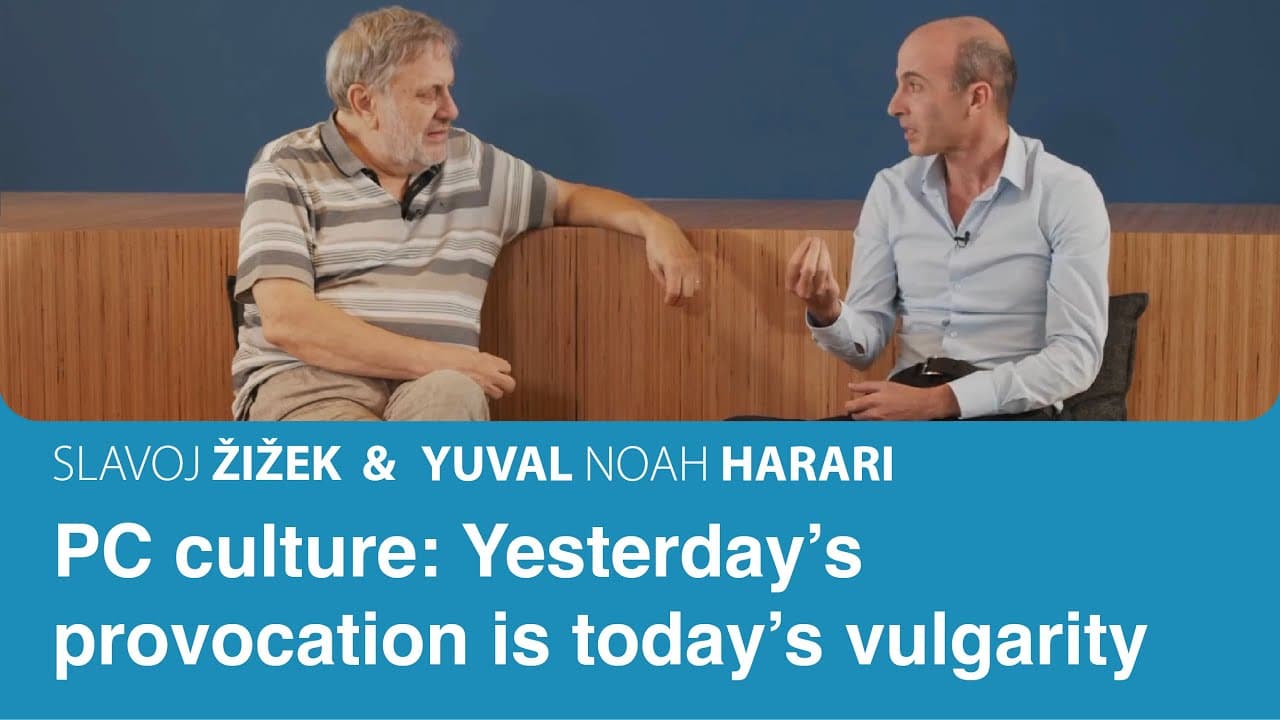
PC culture: Yesterday’s provocation is today’s vulgarity | Slavoj Zizek & Yuval Noah Harari
TL;DR
In an age of populism and political correctness, the speaker discusses the challenges of being provocative while navigating societal norms.
Transcript
like your trademark is that you're very provocative yeah I think is the way that you present things and you know if I think 20 years ago 30 years ago this was extremely effective but today in the age you know of trump and and and populism I mean they completely upstaged you so how how do you deal with that a very good question and I will answer to ... Read More
Key Insights
- 😮 The speaker highlights the effectiveness of being provocative in the past but acknowledges that it may no longer have the same impact due to the rise of populism.
- ❓ They argue that political correctness can be an obstacle to genuine conversations about important issues.
- 🗨️ The speaker suggests that the left should reclaim family values and position itself as the true protector of such values.
- 💨 They discuss the tension between being vulgar in a friendly way and the limitations of political correctness.
- 👻 They see language as a space that allows for possible freedom, where ambiguities and transgressions can occur.
- 😯 The speaker recognizes that freedom of speech has always been limited, but now, more individuals are experiencing the need for caution.
- 👥 They acknowledge the role of language in group dynamics, with the expectation of violating certain rules to belong.
Install to Summarize YouTube Videos and Get Transcripts
Explore YouTube Video Summarizer or Get YouTube Transcript Extractor
Questions & Answers
Q: How does the speaker navigate the challenge of being provocative in a world of populism?
The speaker acknowledges the changing landscape and suggests that the left should reclaim family values to counter right-wing vulgarity.
Q: What is the speaker's view on political correctness?
The speaker criticizes the false coldness of political correctness, viewing it as ineffective in the fight against racism and suggesting that language can bypass prohibitions in a metaphoric manner.
Q: How does the speaker view freedom of speech in relation to oppressed groups?
The speaker acknowledges that freedom of speech has always been limited, but now more individuals previously unaffected by restrictions are experiencing the need to carefully consider their words.
Q: How does the speaker view the transgressive nature of language and group belonging?
The speaker suggests that violating certain rules and expectations within a group is necessary for membership, and at the same time, the prohibition of certain things is itself prohibited from public announcement.
Summary & Key Takeaways
-
The speaker addresses the issue of being provocative in a world dominated by populism and political correctness.
-
They suggest that the left should reclaim family values from the right.
-
They explore the tension between being vulgar in a friendly way and the limitations of political correctness.
Read in Other Languages (beta)
Share This Summary 📚
Summarize YouTube Videos and Get Video Transcripts with 1-Click
Try YouTube Summary with ChatGPT & Claude or YouTube Transcript Generator
Explore More Summaries from Yuval Noah Harari 📚

Summarize YouTube Videos and Get Video Transcripts with 1-Click
Try YouTube Summary with ChatGPT & Claude or YouTube Transcript Generator