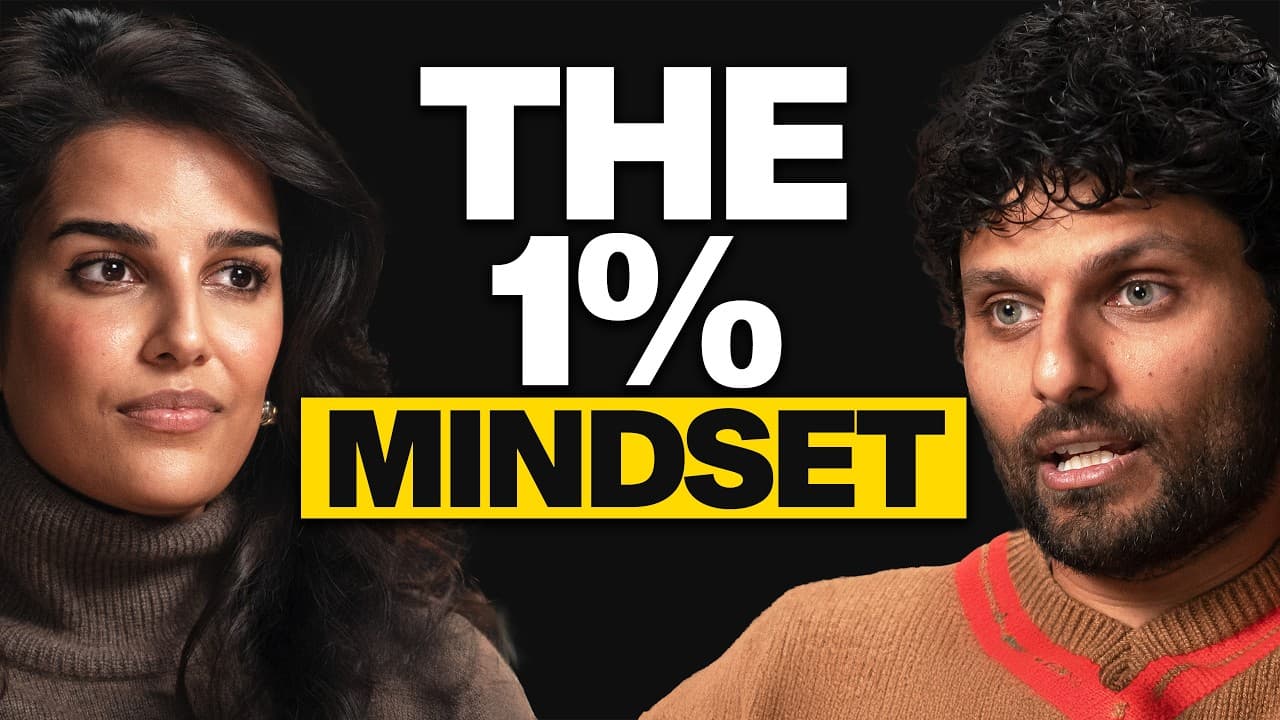
Nischa Shah on Money Anxiety and Financial Freedom
TL;DR
Financial freedom comes from how you manage what you earn, not from earning more. Former investment banker Nischa Shah recommends building a financial cushion of 3 to 6 months of living expenses before changing careers. She also advises facing your finances instead of avoiding them, and splitting income into three buckets: fundamentals, fun, and the future you.
Transcript
We often think that to reach financial freedom, you need to earn more. Earning money doesn't actually make you better with money. It's about how you manage what you make. >> What does the top 1% understand about money that most of us don't? >> The single easiest way to get rich long-term is by >> Hey everyone, welcome back to on purpose. Today I'm ... Read More
Key Insights
- Earning more money does not make a person better with money. According to Nischa Shah, financial freedom depends on how you manage what you make, so management habits matter more than the size of your income.
- A financial cushion is typically 3 to 6 months of basic living expenses. Multiply monthly costs by three for a lower cushion or six for more safety. Nischa chose 9 months because she describes herself as very calculative.
- Much of what people call courage in leaving a career is really a financial cushion. Having savings gives you the safety to walk away from situations or environments you do not enjoy.
- Keeping a salary while experimenting on the side removes survival pressure. Nischa used evenings and weekends during her banking career to try and test projects, which made her grateful for the steady income instead of resentful of it.
- When a passion project has to pay the bills, it stops feeling like a dream and becomes pressure. Jay Shetty says he stayed creative because he was not scared that every video had to make money.
- The ostrich effect is a psychological bias where people avoid information that makes them uncomfortable, hoping it will disappear. It explains why people skip checking their bank account or credit card statement after a weekend of spending.
- Avoiding your finances is the number one money mistake people make in their 20s. That decade builds the habits that compound for or against you, while the stakes are still low enough to learn.
- Leaving a high-status career often costs identity more than money. Nischa had tied her identity to her 9-year banking job and had to find validation from within, or from a bigger purpose.
Install to Summarize YouTube Videos and Get Transcripts
Explore YouTube Video Summarizer or Get YouTube Transcript Extractor
Questions & Answers
Q: How do you calculate a financial cushion before leaving a job?
Work out what your basic living expenses cost in a month, then multiply that figure by three if you are comfortable with a smaller cushion or by six if you want more safety. Nischa Shah went further and saved 9 months of expenses because she is very calculative. The right number is whatever gives you the confidence that you have a solid financial runway ahead.
Q: What is the ostrich effect in personal finance?
The ostrich effect is a psychological bias where people actively avoid information that makes them uncomfortable, hoping that ignoring it will make it disappear. In money terms, it is why people skip checking their bank account after a weekend of spending or avoid opening their credit card statement because they fear the damage. Nischa Shah calls avoiding your finances the number one thing that sets people back.
Q: What is the biggest money mistake people make in their 20s?
According to Nischa Shah, the biggest mistake is avoiding looking at your finances. Your 20s are when you create habits that will either compound for you or against you over time. Because the stakes are relatively low in that decade, it is the best time to learn small habits, spot the gaps in your finances, and fix or improve them before they compound against you.
Q: Why do people avoid looking at their bank account?
People often avoid their bank account because it reveals their real priorities and focus. Those priorities may be badly out of alignment with their core values. Seeing a record of impulse purchases can be uncomfortable when the things they wanted to do for their future self have taken a back seat. That discomfort leads people to look away instead of correcting course.
Q: Should you quit your job to follow your passion?
Nischa Shah suggests you do not need to go all or nothing. First build a financial cushion, which gives more peace of mind than anything else. Then keep your salary and run small experiments on evenings and weekends. Doing it this way lets you appreciate your job for funding the side work, instead of falling into survival mode trying to make a passion pay the bills.
Q: Why does a passion project feel like pressure when it must pay the bills?
When you take a big leap and the dream has to cover your living costs, every effort becomes a financial necessity, so the dream turns into a chore. Jay Shetty notes he stayed creative while making videos on evenings and weekends because his day job covered his bills. Nischa recommends letting a job serve your financial needs while a passion project serves your creativity.
Q: What did Nischa Shah sacrifice when she left investment banking?
Nischa says the biggest sacrifice was the identity she had built around herself. For about 9 years in banking, her sense of who she was rested on what she did for a living, and she knew leaving would strip that away. She had to find fulfilment and validation from within, or from a purpose bigger than the role that had defined her until then.
Q: How do you know if your career is out of alignment with your values?
Nischa Shah suggests asking difficult questions: am I living the life I want or the one others expect of me, and am I buying things for myself or to show other people? The question that changed everything for her was whether she would still be happy living the same life in five or ten years. If that prospect scares you more than change does, your career may be misaligned.
Summary & Key Takeaways
-
Nischa Shah, a former investment banker and accountant, left a high-status corporate career after a dark phase in which she felt a growing disconnect between what she wanted and what she did. One question changed her direction: would she still be happy living the same life five or ten years from now?
-
Nischa argues you do not have to go all or nothing. Build a financial cushion of 3 to 6 months of living expenses first, then use a steady salary to run small experiments on evenings and weekends so the new path never has to pay the bills right away.
-
The biggest money mistake in your 20s is avoiding your finances, a behaviour explained by the ostrich effect. Looking at your spending can show where your priorities have drifted from your core values. Nischa also shares a three-bucket method that divides income between fundamentals, fun, and the future you.
Read in Other Languages (beta)
Share This Summary 📚
Summarize YouTube Videos and Get Video Transcripts with 1-Click
Try YouTube Summary with ChatGPT & Claude or YouTube Transcript Generator
Explore More Summaries from Jay Shetty Podcast 📚





Summarize YouTube Videos and Get Video Transcripts with 1-Click
Try YouTube Summary with ChatGPT & Claude or YouTube Transcript Generator