Why Focus on Theories of Everything May Mislead You?
TL;DR
Focusing on grand theories like geometric unity or Wolfram's physics project can be misleading, as true understanding remains elusive for most. Instead, exploring accessible scientific phenomena fosters deeper insights into concepts like quantum mechanics, encouraging a rewarding journey of knowledge.
Transcript
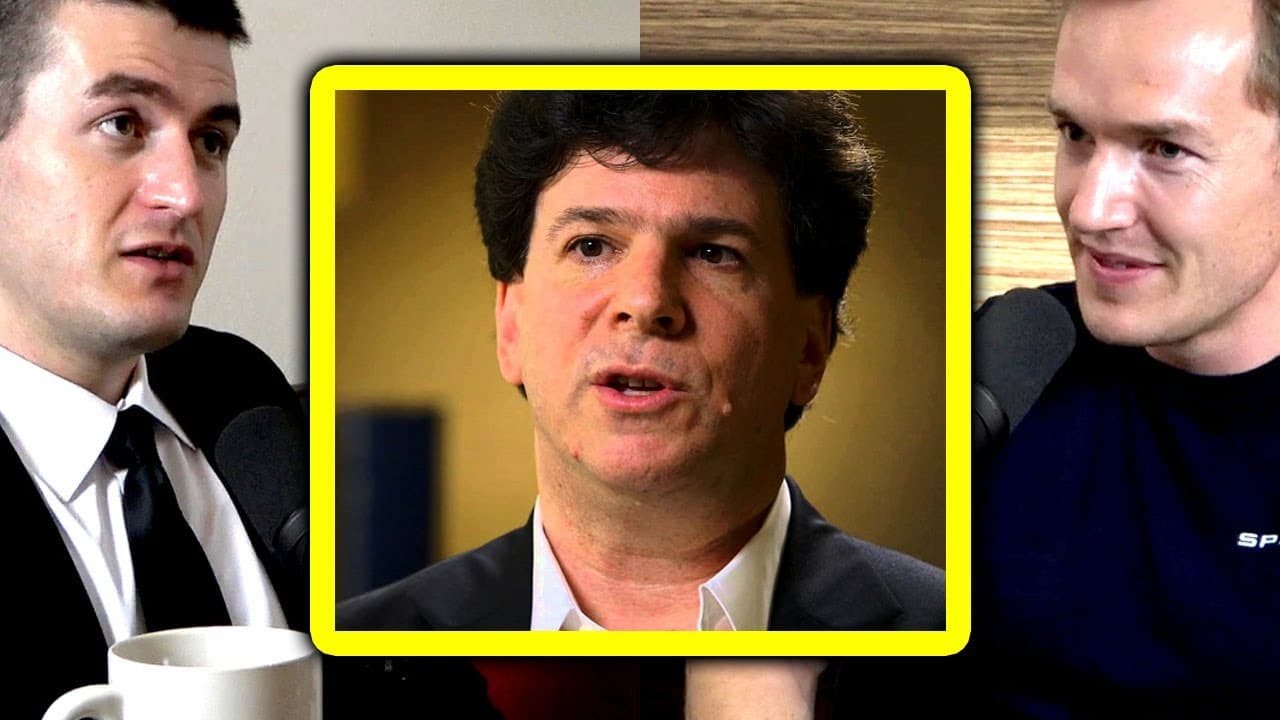
2020 brought us uh a couple of in the physics world uh theories of everything uh eric weinstein kind of i mean he's been working for probably decades but he put out this idea of geometric unity or started sort of publicly thinking and talking about it more stephen wolfram put out his physics project which is kind of this hypograph view of the theor... Read More
Key Insights
- 🥺 The fascination with theories of everything often leads to a lack of true understanding among the general audience.
- ❓ Exploring accessible concepts can provide a more fulfilling and rewarding learning experience.
- 🔬 Popularizers have a role in promoting a deep understanding of science by focusing on concepts that can be comprehended by a broader audience.
- 🧠 Instead of spending brain cycles on unsolved problems, it is more productive to engage with questions that have a chance of being resolved.
- 🤗 Accessible concepts, like those in mathematics, can lead to insights into broader topics and open up doors for further exploration.
- 🥡 Understanding the concepts behind fundamental questions takes time and effort, but the process can be rewarding and expand one's knowledge.
- 👯 Popularization of physics and mathematics should aim to help people experience the satisfaction of understanding and coming to a resolution.
- 🎙️ More videos with Eric Weinstein / Stephen Wolfram:
Install to Summarize YouTube Videos and Get Transcripts
Explore YouTube Video Summarizer or Get YouTube Transcript Extractor
Questions & Answers
Q: Why are theories of everything and unsolved problems not the best focus for popularizing science?
The theories of everything and unsolved problems often involve complex concepts and are difficult for non-physicists to understand. Therefore, it is more productive to focus on accessible concepts for a deeper understanding.
Q: What are some examples of accessible concepts that can lead to a better understanding of physics and mathematics?
Exploring phenomena like the polarization of light or lattice arithmetic can provide insights into topics such as quantum systems and number theory. These concepts are within reach and can be understood with in-depth exploration.
Q: Should we be interested in fundamental questions in physics and mathematics?
It is beneficial to be interested in fundamental questions, but it is important to start with concepts that we can comprehend. By building a solid foundation of understanding, we can gradually tackle more complex ideas.
Q: What is the role of popularizers in science communication?
Popularizers should encourage the exploration of accessible concepts and focus on providing a deep understanding rather than merely showcasing the latest theories or unsolved problems.
Summary & Key Takeaways
-
The physics world has seen new theories of everything, such as Eric Weinstein's geometric unity and Stephen Wolfram's physics project.
-
The fascination with theories of everything may be misguided, as understanding the substance of these theories is difficult for non-physicists.
-
Instead, it is more productive to explore deep phenomena that are within reach and allow for a deeper understanding of concepts like quantum mechanics and general relativity.
Read in Other Languages (beta)
Share This Summary 📚
Summarize YouTube Videos and Get Video Transcripts with 1-Click
Try YouTube Summary with ChatGPT & Claude or YouTube Transcript Generator
Explore More Summaries from Lex Clips 📚



Summarize YouTube Videos and Get Video Transcripts with 1-Click
Try YouTube Summary with ChatGPT & Claude or YouTube Transcript Generator