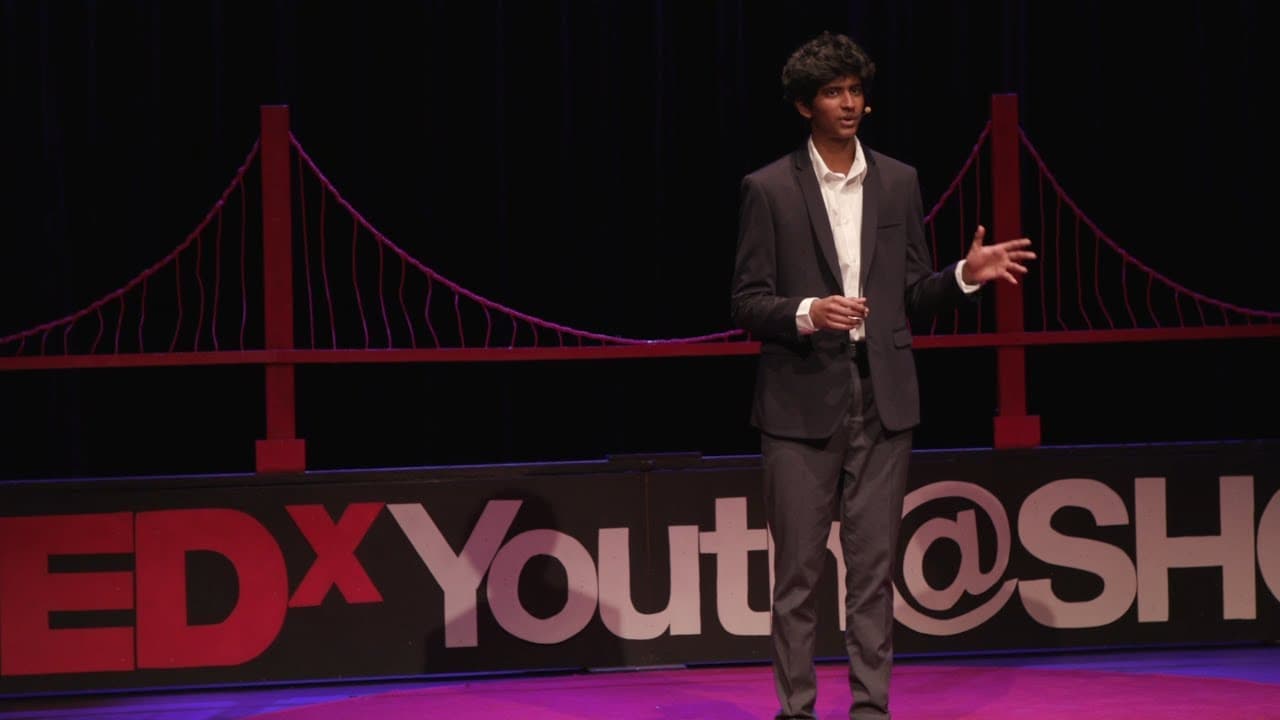
Running to Nowhere | Harrshwin Sivakumaran Thangaraj | TEDxYouth@SHC
TL;DR
Slowing down helps people make intentional choices instead of sacrificing quality and future consequences for speed. Harrshwin Sivakumaran Thangaraj connects this “speed-first” mentality to timed schoolwork, quarantine purchasing, Napoleon’s campaign in Russia, and Congress passing the Patriot Act by a 357–66 vote. Read on to understand why the urge to rush is so powerful and what these examples reveal about its risks.
Transcript
tell your story change the conversation organized by students tedex youth at shc my dad had an adage and he used to tell it to me all the time like whenever he had a chance life is a race run run he would say and for a while I thought my dad was just incredibly enlightened having come up with something so profound but it turns out that he just stol... Read More
Key Insights
- 😍 Prioritizing speed over quality leads to rushed decisions and actions, resulting in regrets and missed opportunities.
- 😍 The brain's preference for speed and rewards contributes to the urge to rush through tasks without reflection.
- 🐎 The education system's emphasis on speed reinforces the speed-first mentality in students, impacting decision-making in adulthood.
- 🐎 Society's haste in making purchases and panic buying during emergencies reflects the speed-first mentality.
- 😍 Historical examples like Napoleon's defeat and rushed legislations like the Patriot Act underscore the consequences of prioritizing speed over quality.
- 👻 Slowing down allows for intentional decision-making and reflection, preventing regret and promoting personal growth.
- 🥡 Examples of successful individuals who found their path later in life emphasize the value of taking time to discover one's true calling.
Install to Summarize YouTube Videos and Get Transcripts
Explore YouTube Video Summarizer or Get YouTube Transcript Extractor
Questions & Answers
Q: What is the main message of “Running to Nowhere” by Harrshwin Sivakumaran Thangaraj?
The main message is that people often prioritize speed for its own sake at the cost of quality. Harrshwin Sivakumaran Thangaraj argues that slowing down gives people time to understand where they are going and make more intentional decisions.
Q: Why do people feel compelled to rush through tasks?
The speaker says the desire to rush is a natural part of being human and is hardwired into the brain. Because completing tasks and checking them off a list produces dopamine, people are inclined to hurry toward that reward.
Q: How does prioritizing speed affect decision-making?
Prioritizing speed can prevent people from considering future consequences and whether they are moving in the right direction. The talk argues that when speed takes priority over quality, people may ultimately achieve neither.
Q: How does the education system encourage a speed-first mentality?
Schools require students to complete timed tests, essays, and projects. According to the speaker, this environment teaches students to prioritize speed, and that mentality can follow them into adulthood.
Q: How did quarantine shopping illustrate the urge to rush?
During quarantine, people rushed into stores and fought over toilet paper. The speaker says some bought far more than they needed, using this behavior to show how haste can override reflection and moderation.
Q: What does Napoleon’s campaign in Russia show about rushing?
Napoleon pursued retreating Russian troops into the heart of Russia while concentrating on defeating them rather than carefully considering where he was going. The Russian winter then set in, illustrating the speaker’s argument that slowing down could have exposed the danger ahead.
Q: Why does the talk describe the Patriot Act as a rushed decision?
The Act was presented to Congress on October 23rd, one month after 9/11, and passed that same day by a vote of 357 to 66. The speaker says Congress had only two copies to share and that a majority had not read it, while its surveillance powers later infringed on ordinary people’s privacy.
Q: How did pressure to choose a career affect the speaker personally?
The speaker says his parents encouraged him from age eight to decide on a future career because they believed choosing early would improve his chances of success. He presents that pressure as part of the speed-first mentality that caused him to run toward major decisions.
Summary
The speaker explores the societal emphasis on speed and rushing through life, highlighting the negative consequences of prioritizing speed over quality. They discuss how this speed-first mentality affects various aspects of life, including education, decision-making, and even buying behavior. The speaker shares personal experiences and examples from history to underscore the importance of slowing down and taking the time to reflect and understand before rushing to a solution or decision.
Questions & Answers
Q: What is the societal emphasis on speed and rushing through life?
The societal emphasis on speed and rushing through life is evident in various aspects, such as the prioritization of speed over quality and the glorification of success at a young age. People are constantly rushing to complete tasks and check things off their to-do lists, driven by the natural desire to receive dopamine, also known as the happiness chemical.
Q: How does the education system contribute to this speed-first mentality?
The education system plays a significant role in fostering a speed-first mentality. Schools often require students to complete timed tests, essays, and projects, teaching them to prioritize speed. This mentality follows students into adulthood, leading them to feel rushed in their daily lives.
Q: How does rushing behavior manifest in people's buying behavior?
Rushing behavior is evident in people's buying behavior, with many individuals admitting to rushing to buy things they don't necessarily need. An example of this is observed during the quarantine when people rushed into stores and fought over toilet paper. People bought more toilet paper than necessary, wasting thousands of dollars each year.
Q: Can you provide an example from history that illustrates the negative consequences of rushing?
An example from history is Napoleon Bonaparte, who, in his pursuit of defeating Russia, failed to slow down and consider his actions. He led his troops to chase the retreating Russian troops into Russia without realizing that he was entering one of the coldest and most desolate places on Earth. Ultimately, it was the Russian winter that caused his downfall.
Q: How does prioritizing speed over quality lead to negative outcomes?
Prioritizing speed over quality leads to negative outcomes because when speed becomes the primary focus, quality is often compromised. Rushing can result in hasty decisions with unforeseen future consequences, as exemplified by the passing of the controversial Patriot Act shortly after 9/11. The act infringed upon people's privacy by allowing the government to search private messages and monitor private calls.
Q: Have you personally experienced the negative effects of rushing?
Yes, the speaker shares their personal experience of being a victim of the speed-first mentality. They recount how their parents pushed them to make career decisions at a young age, leading them to rush towards a career path without truly understanding it. However, they realized the importance of slowing down and reflecting on their decisions to avoid regret.
Q: How can one slow down and live more intentionally?
Slowing down and living more intentionally requires stopping and understanding the problem at hand. Albert Einstein once said that if given an hour to solve a problem, he would spend 55 minutes thinking about the problem and only 5 minutes on the solution. By focusing on the problem before rushing to a solution, individuals can naturally slow down and make more meaningful decisions.
Q: Can success be achieved without rushing or starting early?
Success can indeed be achieved without rushing or starting early. The speaker provides examples of individuals like Gordon Ramsay, a famous chef, and Ian Fleming, the author of James Bond, who didn't find success until later in life. These people understood the value of slowing down and finding their true path, emphasizing the importance of not knowing exactly where one is going but taking the time to figure it out.
Q: What is the message of the speaker's father about life being a race?
The speaker's father used to tell them that life is a race, but it was later revealed that he stole this line from a famous Indian movie. The speaker reflects on this saying and questions their father about the finish line of this race. While the father didn't provide a direct answer, the speaker understands that people tend to prioritize speed without considering the long-term consequences or their true goals.
Q: What is the speaker's ultimate message about rushing through life?
The speaker's ultimate message is that while life may be seen as a race, it is essential to slow down and figure out where one is going. Rushing without taking the time to reflect and understand can lead to running in circles or towards nowhere. The value of slowing down lies in making intentional decisions and finding one's true path in life.
Takeaways
The speaker highlights the societal pressure to rush through life and the detrimental consequences of prioritizing speed over quality. They emphasize the importance of slowing down, reflecting on problems, and making intentional decisions. Success is not dependent on starting early or rushing but on finding one's path with careful consideration. Take the time to understand and figure out the true goals in life rather than running aimlessly.
Summary & Key Takeaways
-
Speed is often prioritized over quality, leading to rushed decisions and actions.
-
The urge to rush is innate due to the brain's preference for speed and reward.
-
Slowing down allows for reflection and intentional decision-making, preventing regret and missed opportunities.
Read in Other Languages (beta)
Share This Summary 📚
Summarize YouTube Videos and Get Video Transcripts with 1-Click
Try YouTube Summary with ChatGPT & Claude or YouTube Transcript Generator
Explore More Summaries from TEDx Talks 📚

Summarize YouTube Videos and Get Video Transcripts with 1-Click
Try YouTube Summary with ChatGPT & Claude or YouTube Transcript Generator