Did Tyler Robinson Kill Charlie Kirk? Debate Analysis
TL;DR
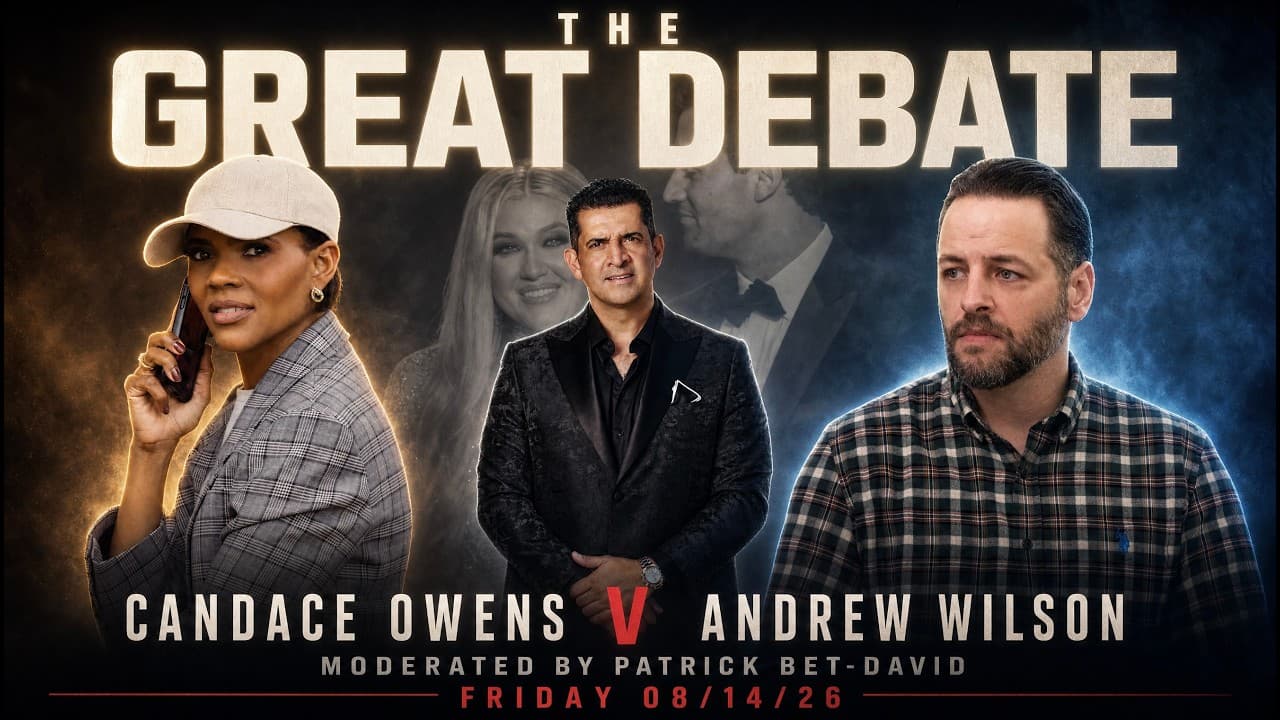
The debate centers around whether Tyler Robinson is guilty of killing Charlie Kirk or if he is being set up as a patsy. Andrew Wilson argues there is overwhelming evidence of Robinson's guilt, citing confessions and physical evidence. Candace Owens challenges this, questioning the validity of the evidence and suggesting alternative theories. The discussion highlights discrepancies in the evidence and the legal process, leaving the audience to form their own conclusions.
Transcript
see that too. >> Are we live? Okay, so we're officially live. Uh Candace Andrew, you know, good to sit down here with you talking to you guys about uh the conversation that I think started with you being on Joe Rogan when you said, "Hey, I'm offering $300,000." And for the audience watching this, you have to know when you see this final product, th... Read More
Key Insights
- Andrew Wilson believes there is overwhelming evidence that Tyler Robinson killed Charlie Kirk, citing confessions and text messages.
- Candace Owens argues that the evidence against Tyler Robinson is not convincing and suggests he may be set up as a patsy.
- The debate highlights discrepancies in the evidence presented, including the validity of text messages and physical evidence.
- Both parties discuss the legal process and the use of hearsay in the preliminary hearing.
- The role of intuition versus logic and evidence is debated, with Owens emphasizing intuition and Wilson focusing on logical inferences.
- The involvement of Tyler Robinson's parents and their potential statements are discussed, with differing views on their role in the case.
- The debate underscores the importance of cross-examination and the need for a fair trial to resolve the case.
- The audience is encouraged to consider the evidence and form their own conclusions about Robinson's guilt or innocence.
Install to Summarize YouTube Videos and Get Transcripts
Explore YouTube Video Summarizer or Get YouTube Transcript Extractor
Questions & Answers
Q: What evidence does Andrew Wilson present against Tyler Robinson?
Andrew Wilson argues there is overwhelming evidence against Tyler Robinson, citing confessions, text messages, and physical evidence. He believes the totality of this evidence, including messages where Robinson allegedly admits to being on surveillance footage, supports the claim of Robinson's guilt in the murder of Charlie Kirk.
Q: How does Candace Owens challenge the evidence against Tyler Robinson?
Candace Owens challenges the evidence by questioning the validity of the text messages and the physical evidence presented. She argues that the messages could have been sent by someone else using Robinson's account and points out that the legal process has relied heavily on hearsay, which she believes undermines the state's case.
Q: What role do Tyler Robinson's parents play in the debate?
The role of Tyler Robinson's parents is debated, with Andrew Wilson suggesting they confronted Robinson about his involvement, while Candace Owens argues there is no concrete evidence of this. Owens suggests that statements attributed to the parents in the charging documents may have been based on hearsay or external pressure, rather than direct testimony.
Q: What is the significance of hearsay in the legal process discussed in the debate?
Hearsay plays a significant role in the legal process discussed, as much of the preliminary hearing relied on it. Candace Owens argues that this reliance on hearsay undermines the validity of the evidence, while Andrew Wilson contends that the evidence remains convincing despite this, as it is standard in preliminary hearings to use hearsay to establish a case.
Q: How does the debate address the issue of intuition versus logic and evidence?
The debate addresses intuition versus logic by highlighting Owens' reliance on intuition and questioning the evidence's validity, while Wilson emphasizes logical inferences and the totality of evidence. This contrast underscores differing approaches to interpreting the evidence and forming conclusions about Robinson's guilt or innocence.
Q: What are the main points of contention between Andrew Wilson and Candace Owens?
The main points of contention include the validity of the evidence against Tyler Robinson, the role of hearsay in the legal process, the involvement of Robinson's parents, and the interpretation of text messages and physical evidence. Owens questions the state's case, while Wilson finds the evidence convincing and argues for Robinson's guilt.
Q: Why does Candace Owens suggest Tyler Robinson might be set up as a patsy?
Candace Owens suggests Tyler Robinson might be set up as a patsy due to perceived discrepancies in the evidence, such as the degradation of his fingerprints on the weapon and the nature of the text messages. She argues that these factors could indicate manipulation or framing by external parties, rather than Robinson's direct involvement.
Q: What conclusion does the debate leave for the audience?
The debate leaves the audience to consider the evidence and form their own conclusions about Tyler Robinson's guilt or innocence. It highlights the complexities of the case, the differing interpretations of the evidence, and the importance of a fair trial to resolve the issues presented, encouraging viewers to weigh the arguments and evidence presented.
Summary & Key Takeaways
-
The debate examines whether Tyler Robinson is guilty of killing Charlie Kirk or if he is a patsy. Andrew Wilson presents evidence he finds overwhelming, including confessions and text messages, while Candace Owens questions the validity of this evidence and suggests alternative theories.
-
Key points include discrepancies in the evidence, the legal process involving hearsay, and the role of intuition versus logic. Both sides discuss the involvement of Robinson's parents and the importance of a fair trial.
-
The discussion leaves the audience to consider the evidence and form their own conclusions, highlighting the complexities of the case and the differing interpretations of the available evidence.
Read in Other Languages (beta)
Share This Summary 📚
Summarize YouTube Videos and Get Video Transcripts with 1-Click
Try YouTube Summary with ChatGPT & Claude or YouTube Transcript Generator
Explore More Summaries from Candace Owens 📚

Summarize YouTube Videos and Get Video Transcripts with 1-Click
Try YouTube Summary with ChatGPT & Claude or YouTube Transcript Generator