How to Draw Hair for Beginners: Essential Techniques
TL;DR
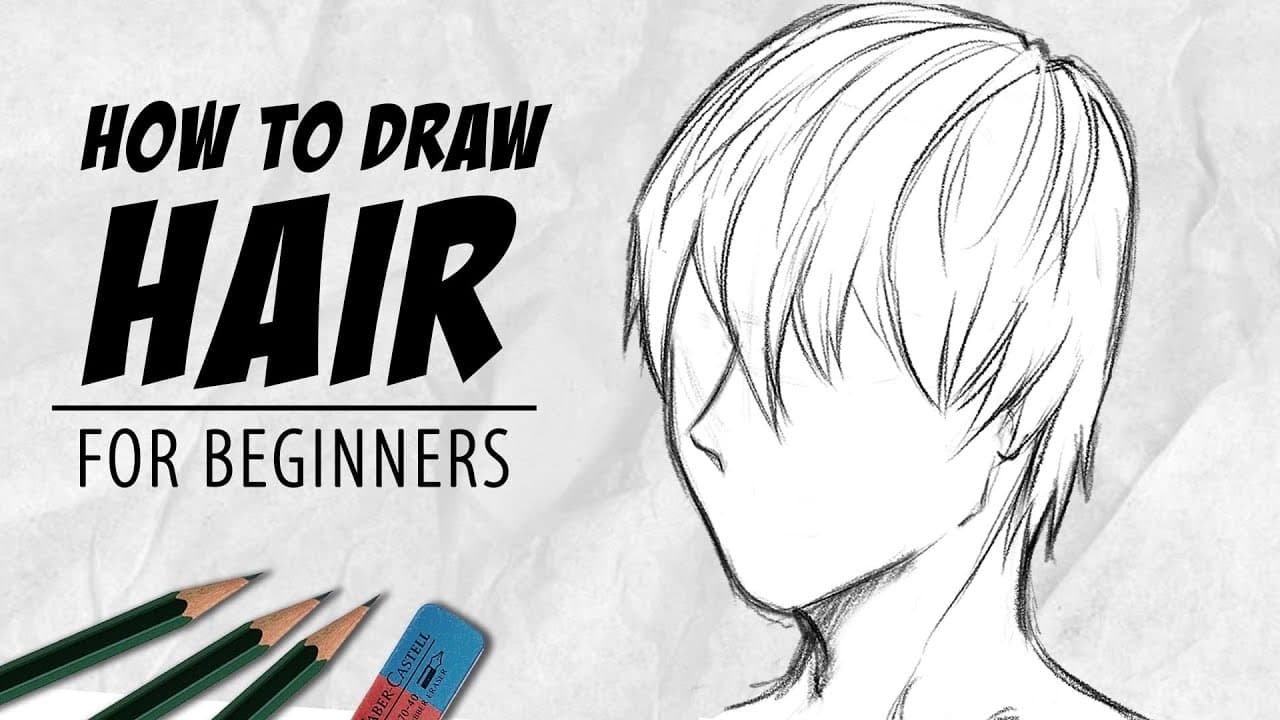
To draw hair effectively, start by establishing the baseline and understanding the hair's growth direction from the scalp vortex. Group hair into strands for a natural appearance, and vary thickness for detail. Embrace personal style and randomness to create realistic hairstyles, whether tidy or untidy.
Transcript
[music] Hi guys. My name is Marcel and today, you're gonna learn how to draw like a Sir. You know, I was thinking of what kind of video I should upload next to my English channel. So I decided to translate my video on how to draw hair for beginners. I was thinking about translating my big special video on how to draw in general, but I want an Engl... Read More
Key Insights
- 👱 The vortex at the scalp determines the direction of hair growth, which is essential for accurate portrayal.
- 👱 Hair should be grouped into strands for a tidy look, mimicking natural bonding among hair sections.
- 🤩 Personal style and preference play a key role in how artists choose to represent hair and hairstyles.
- 👱 Adding details and varied thickness can enhance the realism of hair drawings significantly.
- 👀 Tidy styles have more defined structure, while untidy looks embrace randomness.
- 🫥 Hairlines should be represented with zigzag patterns instead of straight lines for a natural appearance.
- 👱 Understanding different hair mechanics enhances skill in diverse styles, from braids to dynamic flowing hair.
Install to Summarize YouTube Videos and Get Transcripts
Explore YouTube Video Summarizer or Get YouTube Transcript Extractor
Questions & Answers
Q: Why is it important to understand the hair's growing direction from the vortex?
Understanding the hair's growing direction from the vortex is crucial because it establishes the foundation for accurate hair rendering. This ensures that the hair flows naturally and realistically, allowing artists to create lifelike hairstyles that reflect how hair behaves in real life. Knowing this aspect helps prevent common mistakes in hair placement and style.
Q: What are the benefits of drawing hair in groups rather than individually?
Drawing hair in groups rather than individually helps to create a more realistic and tidy appearance. Hair strands naturally bond together, forming larger sections; thus, depicting them in this way mimics reality. This technique also saves time, as it allows artists to focus on the overall shape and volume of the hair instead of getting bogged down by minute details.
Q: How can artists make their hair drawings look more realistic?
To enhance realism in hair drawings, artists should focus on adding more detail and incorporating elements like volume and movement. This can involve shading to create depth or varying the thickness of strands. Experimenting with textures and incorporating the natural randomness of hair can produce a more believable and aesthetically pleasing result.
Q: What advice does the tutorial give for drawing different hair styles?
The tutorial advises that various hairstyles can be portrayed by adjusting the techniques used when drawing. Artists are encouraged to experiment with the volume, detail, and style of hair, as well as to embrace their personal preferences. Key techniques include using zigzag patterns for hairlines and understanding the difference between tidy and untidy hairstyles.
Q: Why does Marcel emphasize no objective good or bad in art?
Marcel emphasizes that there is no objective good or bad in art to liberate artists from restrictive norms and encourage individuality. This perspective fosters artistic exploration, allowing creators to develop their unique styles without fear of judgment. It recognizes the subjective nature of art and its appreciation based on personal opinion and preference.
Q: What is the significance of wrinkles in hair drawing, according to the tutorial?
The significance of wrinkles in hair drawing lies in their ability to affect the perceived thickness and flow of the hair. More wrinkles generally create an impression of thinner hair, while fewer wrinkles can suggest a smoother look. This concept mirrors principles used in clothing design and is essential for achieving a realistic representation of hair.
Summary & Key Takeaways
-
The tutorial emphasizes the importance of starting with the hair's baseline and understanding the direction it grows from the vortex at the scalp.
-
Key techniques include grouping hair into strands, creating volume with thick and thin styles, and the importance of randomness for a natural look.
-
The video touches upon various hairstyling concepts while suggesting that personal style and preference play a significant role in artistic expression.
Read in Other Languages (beta)
Share This Summary 📚
Summarize YouTube Videos and Get Video Transcripts with 1-Click
Try YouTube Summary with ChatGPT & Claude or YouTube Transcript Generator
Explore More Summaries from Draw like a Sir 📚
Summarize YouTube Videos and Get Video Transcripts with 1-Click
Try YouTube Summary with ChatGPT & Claude or YouTube Transcript Generator