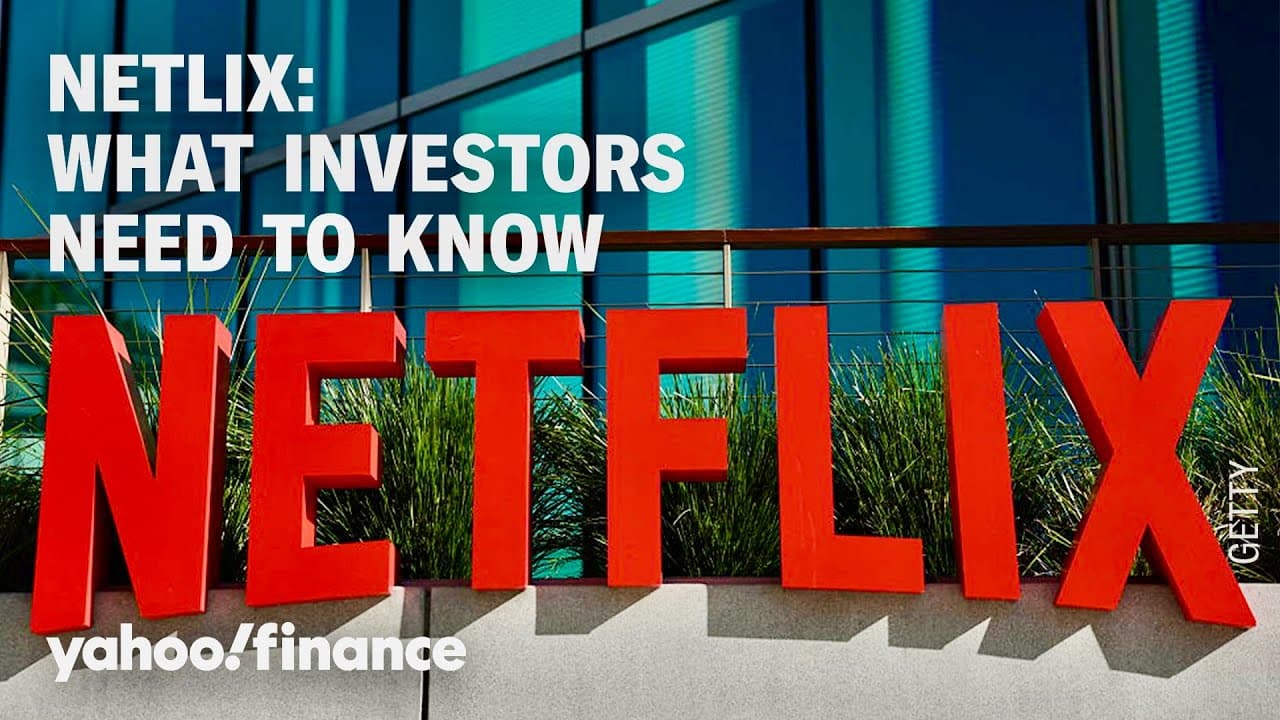
Netflix's All-Cash Warner Bros. Bid: Will It Win?
TL;DR
Netflix is reportedly shifting to an all-cash offer for Warner Bros. Discovery, a move analyst Rich Greenfield says is about timing rather than money. Going all-cash could trigger a March shareholder vote instead of June, pressuring Paramount Skydance to raise its rival bid sooner or lose its perceived regulatory-speed advantage.
Transcript
Netflix is upping the ante. According to the Wall Street Journal, the streaming giant is pivoting to an allcash offer for Warner Brothers Discovery Studios and streaming assets. It's another power play meant to clear the air as Paramount Skyance's hostile bid for WBD continues to cast a shadow over the deal. Joining me now with his take on the pote... Read More
Key Insights
- Netflix's pivot to an all-cash bid for Warner Bros. Discovery is primarily about timing, according to Rich Greenfield, because it enables a shareholder vote as early as March versus June, removing Paramount's perceived regulatory-speed advantage.
- Paramount's core need is stopping the split of Warner Brothers and Discovery Global, because if the split happens the cash flow Paramount needs to finance the transaction disappears too.
- The Warner Bros. board views the Discovery Global spin-off as critical because it wants cable networks off its books to auction assets, including selling CNN, Food Network, and HGTV separately.
- Paramount would need to meaningfully raise its bid by four, five, or even six dollars to win, and the fact it hasn't suggests it lacks the additional cash required, says Greenfield.
- Greenfield's year-start prediction stands: the spin happens, Netflix ultimately wins, but the deal won't close this year because regulatory approval won't come that fast.
- Movie theater attendance, measured as butts in seats, is down 50% from before the pandemic, reflecting a fundamental shift in human behavior rather than a Netflix-specific effect.
- Ted Sarandos committed to keeping a 45-day window between theatrical and streaming releases, though Greenfield doubts any part of Hollywood can sustain 45-day windows given box office declines.
- The Ben Affleck and Matt Damon film 'The Rip' uses a different economic model where cast and crew earn additional financial benefits once certain Netflix viewership thresholds are reached.
Install to Summarize YouTube Videos and Get Transcripts
Explore YouTube Video Summarizer or Get YouTube Transcript Extractor
Questions & Answers
Q: Why is Netflix moving to an all-cash bid for Warner Bros. Discovery?
According to Rich Greenfield, Netflix's shift to an all-cash bid is primarily about timing rather than money. An all-cash offer allows a shareholder vote as early as March instead of the June vote a cash-and-stock structure would likely require. Since no one can obtain regulatory approval by March anyway, moving up the vote removes Paramount's perceived advantage of faster regulatory approval and puts pressure on Paramount to raise its bid sooner rather than later.
Q: What does Paramount need to happen to win the Warner Bros. deal?
Paramount critically needs to stop the split of Warner Brothers and Discovery Global. If the split happens, all the cash flow Paramount needs to finance the transaction disappears. Greenfield says Paramount would also have to meaningfully raise its bid, not by a couple of dollars but by four, five, or even six dollars, which requires far more cash than it currently appears to have. He notes that if Paramount had more cash, it would have already raised its bid.
Q: Why does the Warner Bros. board want the Discovery Global split to happen?
The Warner Bros. board views the Discovery Global spin-off as a critical transaction because it wants to get the cable networks off its books. Once the split is accomplished, the company can start chopping up and selling the portfolio, including selling CNN to someone and selling Food Network and HGTV. The board essentially wants to run an auction for the entire portfolio of assets, which is only possible if the split goes through.
Q: What is Rich Greenfield's prediction for how the bidding war ends?
Greenfield's view, unchanged from his start-of-year predictions, is that the spin-off will happen, Netflix will ultimately win, but the deal will not close this year because it won't get regulatory approval that fast. He acknowledges an outside possibility that Larry Ellison could inject 40, 50, or 60 billion dollars of cash to delever Paramount and enable a higher bid, but says there have been no signs the Ellison family is willing to commit far more capital.
Q: Why is Hollywood worried about the Netflix and Paramount deals?
Greenfield says Hollywood is scared of change and worried about both transactions. A Warner Brothers and Paramount merger would collapse two studios into one, similar to how Fox and Disney merged and eventually collapsed despite talk of keeping both. Hollywood worries about Netflix because of what happens to theatrical distribution and Netflix's commitment to theaters, while it worries about Paramount because it combines two studios into one.
Q: What did Ted Sarandos say about Netflix and theatrical releases?
In a New York Times interview, Ted Sarandos said that when the deal closes, Netflix will own a phenomenal theatrical distribution engine producing billions of dollars in theatrical revenue. He committed to keeping a 45-day window between theatrical and streaming release and said he wants to win box office. Greenfield thinks Sarandos would love to win weekend box office but doubts he aims to be the year-round global box office champion, and questions whether 45-day windows can hold.
Q: How much has movie theater attendance declined?
Greenfield notes that box office, or more precisely attendance meaning butts in seats, is down 50% from before the pandemic. He frames this as a fundamental shift in human behavior rather than something caused by Netflix, saying the theatrical experience is becoming less and less appealing to Americans. Host Julie Hyman adds that convincing her 16-year-old to see a movie in a theater is futile, as he would rather watch from the couch, a trend that in theory benefits Netflix.
Q: What is different about Netflix's deal with Ben Affleck and Matt Damon for 'The Rip'?
The film 'The Rip,' from Ben Affleck and Matt Damon's production company Artist Equity, uses a different economic model where additional financial benefits accrue to the entire cast and crew once viewership reaches certain thresholds on Netflix. Greenfield says Netflix has not applied this model to anything else, framing it as part of Netflix's flexible, test-and-learn approach. He notes buying Warner Brothers would shift Netflix toward back-end talent payouts rather than upfront guarantees.
Summary & Key Takeaways
-
Netflix is reportedly moving to an all-cash offer for Warner Bros. Discovery amid Paramount Skydance's competing hostile bid. Analyst Rich Greenfield argues the shift is about timing, since all-cash allows a March shareholder vote instead of June, neutralizing Paramount's claimed regulatory-speed edge and pressuring it to raise its bid quickly.
-
Paramount faces a tough position because it must stop the Warner-Discovery split to preserve the cash flow financing its deal. The board wants the split to auction assets like CNN, Food Network, and HGTV. Greenfield believes Paramount needs to raise its bid by four to six dollars, cash it apparently lacks.
-
Ted Sarandos committed to winning box office and keeping a 45-day theatrical window, though Greenfield is skeptical it will hold as attendance sits 50% below pre-pandemic levels. Netflix's flexible models, seen in 'The Rip' deal with Affleck and Damon, reflect a broader test-and-learn approach to content and economics.
Read in Other Languages (beta)
Share This Summary 📚
Summarize YouTube Videos and Get Video Transcripts with 1-Click
Try YouTube Summary with ChatGPT & Claude or YouTube Transcript Generator
Explore More Summaries from Yahoo Finance 📚





Summarize YouTube Videos and Get Video Transcripts with 1-Click
Try YouTube Summary with ChatGPT & Claude or YouTube Transcript Generator