How to Scale a Startup to $100M in Revenue
TL;DR
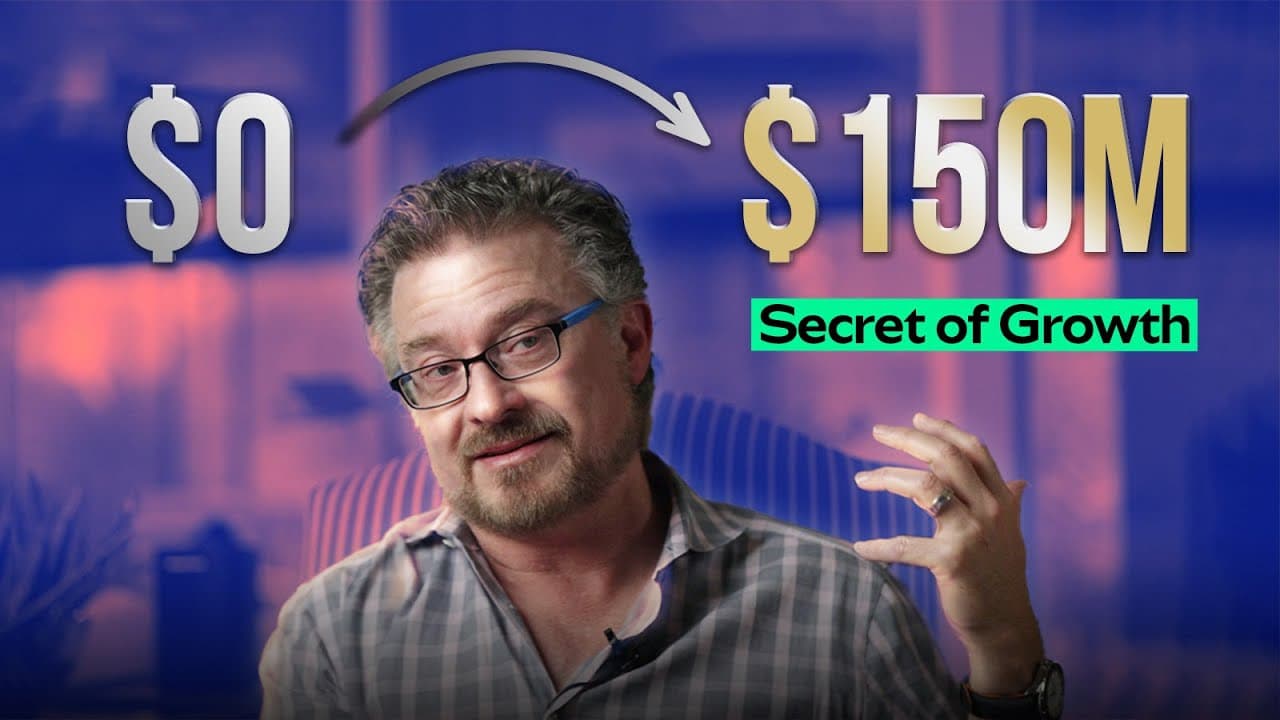
Achieving $100M in revenue requires a transition from Product-Market-Fit to Go-to-Market Fit, which involves creating a scalable and repeatable sales process. This process allows companies to grow beyond initial customers by hiring non-founder sales teams and using a well-defined Go-to-Market playbook.
Transcript
So this is sort of an embarrassing story after Product-Market-Fit. There's a missing link that didn't even really have a name. Heroic selling doesn't work. You need a simple, repeatable process that you can hire ordinary people, not founders, not clone founders. That's what we said, is that Product-Market-Fit is not enough. You need this repeatable... Read More
Key Insights
- Product-Market-Fit is not enough to scale a business; Go-to-Market Fit is essential.
- A Go-to-Market playbook is a repeatable process for engaging and converting customers.
- Heroic selling by founders is not sustainable for large-scale growth.
- Understanding customer pains and future challenges is key to product development.
- Building a prototype helps validate ideas and attract early customers.
- Identifying urgent customer pains can unlock significant growth opportunities.
- Hiring the right sales and marketing team is crucial for executing the Go-to-Market strategy.
- Momentum in sales and customer acquisition is a strong indicator of successful Go-to-Market Fit.
Install to Summarize YouTube Videos and Get Transcripts
Explore YouTube Video Summarizer or Get YouTube Transcript Extractor
Questions & Answers
Q: How to transition from Product-Market-Fit to Go-to-Market Fit?
Transitioning from Product-Market-Fit to Go-to-Market Fit involves creating a scalable and repeatable sales process. This process should enable ordinary salespeople, not just founders, to engage and convert customers effectively. It requires a Go-to-Market playbook that outlines the customer journey and the steps needed to move customers through the sales funnel.
Q: What is a Go-to-Market playbook?
A Go-to-Market playbook is a structured plan that outlines the stages of the customer journey from initial contact to purchase. It includes identifying urgent customer pains, defining 'wow' moments that engage customers, and detailing the actions and tools needed at each stage to convert prospects into paying customers. It serves as a guide for sales and marketing teams to execute a repeatable sales process.
Q: Why is heroic selling not sustainable for growth?
Heroic selling, where founders personally close deals, is not sustainable for large-scale growth because it relies on the unique skills and passion of the founders. To scale, companies need a repeatable sales process that can be executed by ordinary salespeople, allowing for consistent customer acquisition and growth beyond the initial customer base.
Q: How can understanding customer pains lead to growth?
Understanding customer pains allows companies to tailor their products and solutions to address real market needs. By identifying urgent pains and future challenges, companies can develop offerings that resonate with customers, leading to higher engagement, adoption, and eventually, growth. This customer-centric approach is crucial for developing a successful Go-to-Market strategy.
Q: What role do prototypes play in customer acquisition?
Prototypes play a crucial role in customer acquisition by providing a tangible demonstration of a product's potential. They help validate ideas, attract early adopters, and gather feedback for product refinement. By showcasing a prototype, companies can engage potential customers, demonstrate value, and build trust, which are essential for converting prospects into paying customers.
Q: How can a company identify urgent customer pains?
A company can identify urgent customer pains by engaging directly with customers through interviews and surveys, asking about their current challenges and anticipated future issues. This dialogue helps uncover pressing problems that customers are eager to solve, providing insights into where the company's product or service can offer significant value and drive growth.
Q: What are the indicators of successful Go-to-Market Fit?
Indicators of successful Go-to-Market Fit include increased sales efficiency, growing ARR (Annual Recurring Revenue), a consistent flow of new deals in the pipeline, higher conversion rates, and overall positive momentum in customer acquisition. These metrics, along with a cohesive and motivated sales team, signal that the company is effectively executing its Go-to-Market strategy.
Q: Why is hiring the right sales team important for growth?
Hiring the right sales team is crucial for growth because they are responsible for executing the Go-to-Market strategy and driving customer acquisition. A skilled and motivated sales team can effectively engage prospects, convert them into customers, and ensure customer success, which are essential for scaling the business and achieving revenue targets.
Summary & Key Takeaways
-
Achieving scalable growth requires more than just Product-Market-Fit; it needs a Go-to-Market Fit, which is a repeatable and scalable sales process. This allows ordinary salespeople to drive growth beyond the initial customers by following a well-defined playbook.
-
Understanding customer needs and future challenges is crucial for product development. Engaging with customers, building prototypes, and identifying urgent pains can lead to significant growth opportunities.
-
Hiring and structuring the right sales and marketing teams is vital for executing the Go-to-Market strategy. A well-defined playbook ensures that all company functions align towards achieving growth and customer success.
Read in Other Languages (beta)
Share This Summary 📚
Summarize YouTube Videos and Get Video Transcripts with 1-Click
Try YouTube Summary with ChatGPT & Claude or YouTube Transcript Generator
Explore More Summaries from EO 📚


Summarize YouTube Videos and Get Video Transcripts with 1-Click
Try YouTube Summary with ChatGPT & Claude or YouTube Transcript Generator