What Did We Miss About FNAF Lore from the Books?
TL;DR
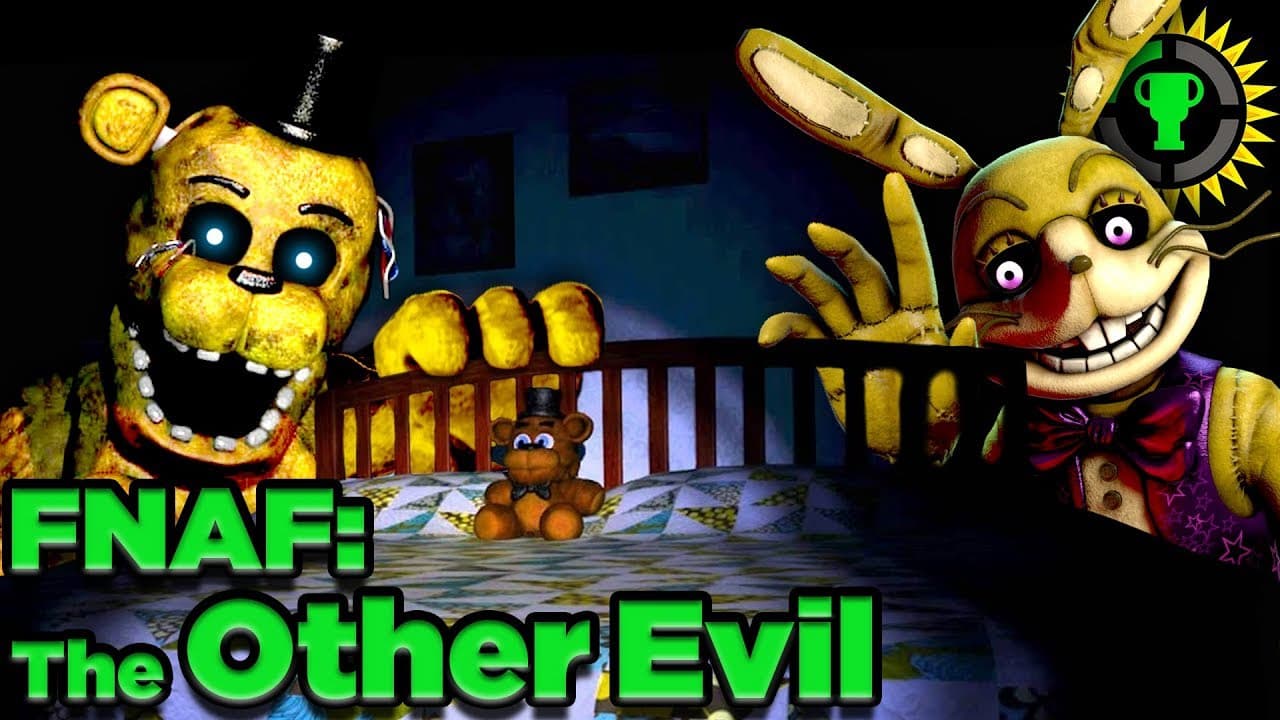
The FNAF novels reveal that Charlie, the trilogy's main character, is actually an animatronic recreation of Henry's daughter Charlotte, who was kidnapped and killed by his partner William Afton at age three. Game Theory argues the books are not a walled-off alternate universe but 'a vantage point that isn't entirely what it appears to be,' since they revealed William Afton's name and Baby's sound-illusion-disc design before the games did. Read on to see how this reframes FNAF 4.
Transcript
"The books offer a closer peek at Henry and William Afton how their partnership flourished early on and how their view of the animatronics evolved over time." "Thoughtful fans might want to give these sections a closer look to determine how they impact the story of the games as well." Right there. Clear as crystal. For years, I've been trying to pi... Read More
Key Insights
- 📔 FNAF books offer critical insights into character backgrounds and motivations.
- 🇨🇫 The theory proposes Henry as a central figure influencing the FNAF universe.
- 👾 Connections between FNAF games and novels reshape the understanding of the lore.
- 🏃 Themes of grief, loss, and manipulation run deep in the FNAF storyline.
- ❓ The theory challenges established assumptions about the series' characters and events.
- 🤖 Henry's emotional investment in robots contrasts with Afton's quest for immortality.
- 🔉 FNAF lore intricately weaves together story elements from different mediums.
Install to Summarize YouTube Videos and Get Transcripts
Explore YouTube Video Summarizer or Get YouTube Transcript Extractor
Questions & Answers
Q: What did we miss about FNAF lore from the books?
The novels give a closer look at how Henry and William Afton's partnership began and how their view of the animatronics changed over time. Their grand finale, 'The Fourth Closet,' reveals that the main character Charlie is not human but an animatronic, which recontextualizes events across the games. The theory treats these sections as important to piecing together the games' story.
Q: Who is Charlie really, according to the books?
Charlie is revealed to be an animatronic re-creation of a dead girl. Henry, co-founder of Freddy's, had a daughter named Charlotte who was kidnapped and killed by William Afton at age three, and out of grief he rebuilt her as a robot. The character followed through all three books grows older over time but is not actually a human being.
Q: What does 'The Fourth Closet' title refer to?
It refers to Henry building four versions of the Charlotte robot, each meant to simulate a life stage she would never get to experience: toddler, tween, teen, and adult. This lets the robot child 'grow up' over time. Henry infused each version with fabricated childhood memories he created using a camera and tripod.
Q: How is the animatronic Baby connected to Charlie in the books?
In the books, Baby, the clown girl, is the perfect fourth adult version of Charlotte. She is also the robot that devours William Afton's daughter Elizabeth and then gets possessed by her, so she is simultaneously Elizabeth's soul inside Charlie's adult body. She can switch between a passable human appearance and a giant clown-shaped robot.
Q: Why does the theory say the books can't be dismissed as a separate universe?
Many hardcore fans want to wall the books off from the games, but the theory argues you can't. Baby's in-game design shows exactly what the book describes, including the needles with little balls on the end and the sound illusion discs. Scott only ever listed 'a separate universe' as one possibility, not a confirmed fact.
Q: What did Scott Cawthon say about why the books exist?
Scott said that after a while lore can become so dense that there isn't any room for a story anymore, and that what makes a good game doesn't necessarily make a good book. He said sometimes a timeline gets so full that the only way to tell a real story is to set it in a different timeline, location, or 'a vantage point that isn't entirely what it appears to be.'
Q: Why is FNAF 4 such a sticking point for the lore?
FNAF 4 released a few months before the first book and, to this day, serves as the single biggest point of frustration for anyone trying to piece together the lore. It played with dreams, dates, bites, balloon boys, new characters, and kids who look like established characters, leaving fans unsure what was real. FNAF World entering shortly after only added to how sensitive a time it was for the series.
Q: What game details did the books confirm before the games did?
'The Silver Eyes' let the theorist know Purple Guy's name would be revealed as William Afton before Sister Location confirmed it. The books also confirmed that Susie and Fritz were Missing Children's Incident victims, and 'The Fourth Closet' explained certain details before they appeared in FNAF 6.
Summary & Key Takeaways
-
FNAF books delve into the backstory of Henry and Afton, impacting game lore.
-
Connection between FNAF 4 confusion, FNAF World, and the Silver Eyes novels.
-
Speculation on Henry as the central character shaping FNAF story.
Read in Other Languages (beta)
Share This Summary 📚
Summarize YouTube Videos and Get Video Transcripts with 1-Click
Try YouTube Summary with ChatGPT & Claude or YouTube Transcript Generator
Explore More Summaries from The Game Theorists 📚


Summarize YouTube Videos and Get Video Transcripts with 1-Click
Try YouTube Summary with ChatGPT & Claude or YouTube Transcript Generator