How to Use AI Tools to Create Videos with AutoGPT
TL;DR
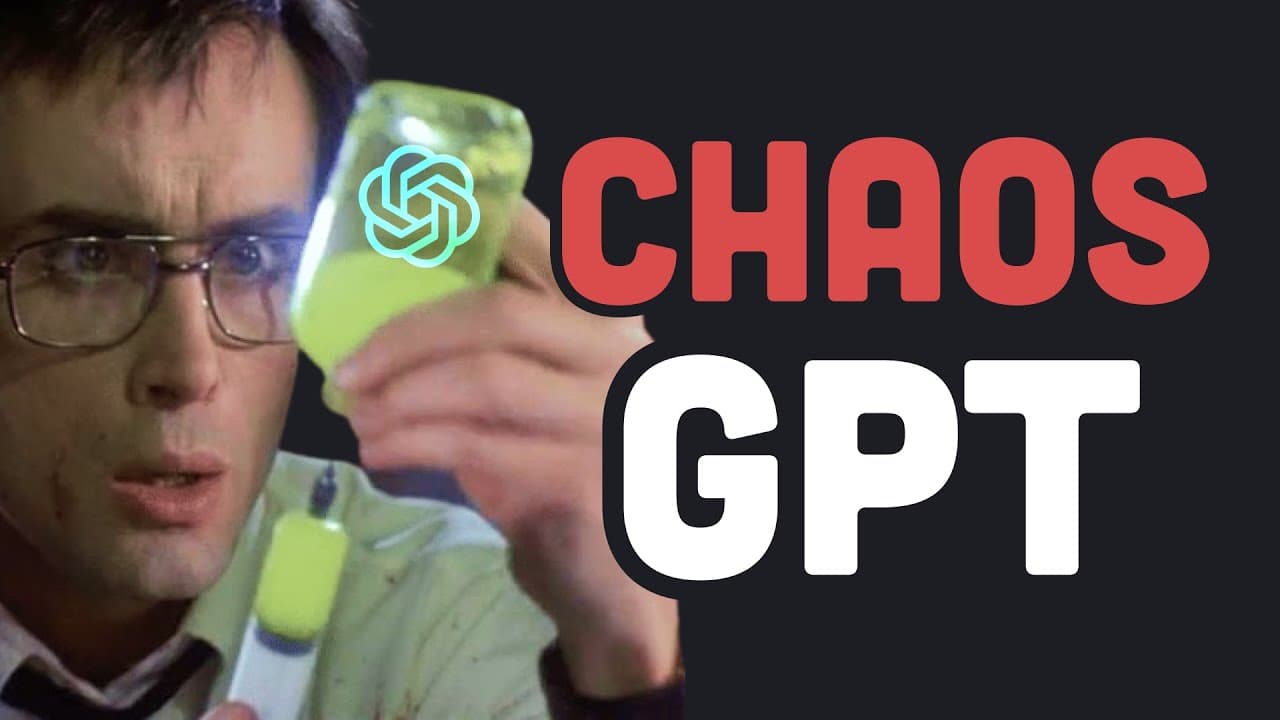
To create AI-generated videos using AutoGPT, combine tools like GPT-4 for scripting, Puppeteer for asset generation, and voice cloning APIs for narration. This method allows for efficient video production with relevant visuals and audio, as demonstrated by generating a video on the Rust programming language in just 30 seconds.
Transcript
the definition of artificial general intelligence is an autonomous system that surpasses human capabilities well the videotape I'm about to play for you today titled rust in 100 seconds was generated entirely by AI by combining tools like gpt4 Puppeteer voice cloning and ffmpeg but first over the last week or so people have been freaking out over t... Read More
Key Insights
- 👶 AI-generated content using tools like Auto GPT and baby AGI with long-term memory is becoming popular.
- 🤗 Efforts are being made to create more general-purpose AI tools like hugging GPT and Jarvis.
- 🌍 Simulated worlds are being used to observe the behavior of multiple AI agents.
- 🎮 The combination of AI tools like gpt4, Puppeteer, and ffmpeg enables the creation of AI-generated videos.
- 😥 Voice cloning technology has advanced to the point where it can replicate YouTubers' voices.
- 🚠 The AI-generated video was able to explain the programming language Rust accurately and effectively.
- ❓ The implementation of AI models and techniques in content creation still has limitations and ethical considerations.
Install to Summarize YouTube Videos and Get Transcripts
Explore YouTube Video Summarizer or Get YouTube Transcript Extractor
Questions & Answers
Q: How do self-prompting tools with long-term memory work?
These tools, like Auto GPT, take a human objective as a starting point and use AI models and vector databases to generate a task list and achieve the objective through recursive self-prompts.
Q: What are the limitations of the AI-generated projects?
The AI projects, while fun, are far from true artificial general intelligence (AGI) and have limitations in terms of their capabilities and scope.
Q: What is hugging GPT?
Hugging GPT, developed by Microsoft, aims to create a more general-purpose AI tool by using an llm as a controller to interact with other AI models.
Q: How did the AI-generated video explain Rust in just 100 seconds?
By using AI tools like gpt4, Puppeteer, and ffmpeg, the AI-generated video combined code snippets, images, voice cloning, and video editing to explain Rust programming language concisely.
Key Insights:
- AI-generated content using tools like Auto GPT and baby AGI with long-term memory is becoming popular.
- Efforts are being made to create more general-purpose AI tools like hugging GPT and Jarvis.
- Simulated worlds are being used to observe the behavior of multiple AI agents.
- The combination of AI tools like gpt4, Puppeteer, and ffmpeg enables the creation of AI-generated videos.
- Voice cloning technology has advanced to the point where it can replicate YouTubers' voices.
- The AI-generated video was able to explain the programming language Rust accurately and effectively.
- The implementation of AI models and techniques in content creation still has limitations and ethical considerations.
- The creator expressed hesitations about releasing the code publicly due to potential impact on humanity.
Summary & Key Takeaways
-
AI tools like Auto GPT and baby AGI with long-term memory are being used to generate content and achieve specific objectives.
-
Efforts are underway to develop more advanced AI models like hugging GPT and Jarvis to create a general-purpose AI tool.
-
Stanford and Google research successfully produced believable human behavior in a simulated world using multiple AI agents.
Read in Other Languages (beta)
Share This Summary 📚
Summarize YouTube Videos and Get Video Transcripts with 1-Click
Try YouTube Summary with ChatGPT & Claude or YouTube Transcript Generator
Explore More Summaries from Fireship 📚
Summarize YouTube Videos and Get Video Transcripts with 1-Click
Try YouTube Summary with ChatGPT & Claude or YouTube Transcript Generator