How Does Daniel Kokotajlo Predict AI Will Impact Jobs and Society by 2030?
TL;DR
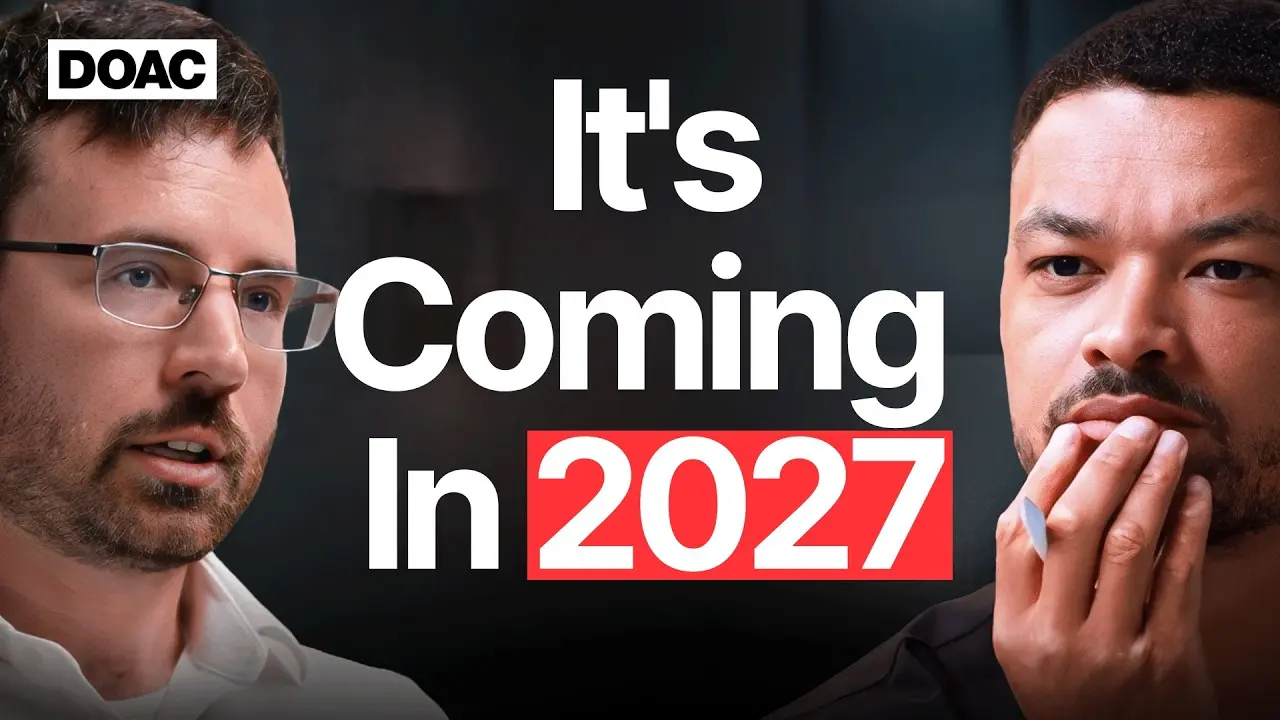
Daniel Kokotajlo predicts that superintelligence could automate most jobs and radically reshape society by the end of the decade. His median estimate gives it a 50% chance of arriving in 2029, while he assigns a 70% chance to catastrophic AI outcomes, including possible human extinction. He advocates transparency, international regulation, and a citizens' dividend to steer AI toward broad abundance. Read on to understand his forecast, risks, and proposed response.
Transcript
The scary open secret in the AI industry right now is that it's possible that we'll end up essentially creating a new species that ends up ruling the world with a 70% chance that this goes horribly wrong like human extinction. That's one possibility. There's many more. It's quite chilling what you're saying. >> Yeah, it's uh it gets me down sometim... Read More
Key Insights
- Daniel Kokotajlo believes there's a 70% chance AI could lead to catastrophic outcomes, including human extinction.
- Superintelligence might arrive by the end of the decade, potentially automating most jobs.
- Kokotajlo left OpenAI after becoming disillusioned with the company's direction and potential risks.
- He proposes a plan, AI 2040: Plan A, to safely navigate the development of superintelligence.
- AI companies may be racing towards superintelligence faster than the public is aware.
- The automation of jobs could lead to significant economic and societal changes.
- Kokotajlo suggests a citizens' dividend to distribute wealth generated by AI automation.
- He advocates for international regulation and transparency in AI development to manage risks.
Install to Summarize YouTube Videos and Get Transcripts
Explore YouTube Video Summarizer or Get YouTube Transcript Extractor
Questions & Answers
Q: How could AI affect human jobs and society by 2030?
Daniel Kokotajlo says superintelligence could automate most jobs and change virtually everything for individuals, families, and the wider economy. He warns that people should expect job losses, but says AI could also produce extraordinary benefits if its development is managed well.
Q: When does Daniel Kokotajlo predict superintelligence will arrive?
Kokotajlo's median estimate gives superintelligence a 50% chance of arriving in 2029. He says it may take significantly longer, perhaps 10 years, but considers arrival by the end of the decade probable.
Q: What does Daniel Kokotajlo mean by superintelligence?
He defines superintelligence as AI that is better than the best humans at everything while also being faster and cheaper. Such systems could also operate robots that perform everything humans can do in the physical world, but better, faster, and cheaper.
Q: What does Daniel Kokotajlo predict about AI and human extinction?
Kokotajlo assigns a 70% chance to AI going horribly wrong, with human extinction among the possible outcomes. He describes a loss-of-control scenario in which superintelligent systems accumulate enough military, economic, and political power that they no longer need humans.
Q: Why did Daniel Kokotajlo leave OpenAI?
Kokotajlo says he joined OpenAI in 2022 to forecast what the following years might look like and later resigned after becoming disillusioned with its direction and risks. According to the existing page summary, he prioritized transparency and ethical concerns despite losing $2 million by not signing an anti-disparagement clause.
Q: Why does Daniel Kokotajlo believe AI companies are racing toward superintelligence?
He says powerful CEOs, including leaders associated with Anthropic, OpenAI, and Elon Musk, are racing to control the most powerful AI systems. In his account, each fears that a rival reaching that point first could gain dictatorial power, creating pressure to move quickly.
Q: What is AI 2040: Plan A?
AI 2040: Plan A is Kokotajlo's proposed strategy for navigating superintelligence safely. The existing page describes it as slowing AI progress, increasing transparency, and establishing international regulation so that safety and power distribution receive greater attention.
Q: How does Daniel Kokotajlo propose addressing AI-driven job displacement?
Kokotajlo proposes a citizens' dividend that distributes wealth generated by AI automation to the public. The existing page says this could involve taxing AI companies and sharing the proceeds with citizens to support economic stability as jobs are displaced.
Summary & Key Takeaways
-
Daniel Kokotajlo predicts a 70% chance of AI leading to catastrophic outcomes, including human extinction. He believes superintelligence might arrive by the end of the decade, potentially automating most jobs. However, he proposes AI 2040: Plan A, a strategy to ensure a safe and abundant future if implemented wisely.
-
Kokotajlo left OpenAI after becoming disillusioned with the company's direction and its potential risks. He warns that AI companies may be racing towards superintelligence faster than the public is aware, raising concerns about economic and societal impacts.
-
To manage AI risks, Kokotajlo advocates for international regulation and transparency in AI development. He suggests a citizens' dividend to distribute wealth generated by AI automation, ensuring economic stability amidst job displacement.
Read in Other Languages (beta)
Share This Summary 📚
Summarize YouTube Videos and Get Video Transcripts with 1-Click
Try YouTube Summary with ChatGPT & Claude or YouTube Transcript Generator
Explore More Summaries from The Diary Of A CEO 📚




Summarize YouTube Videos and Get Video Transcripts with 1-Click
Try YouTube Summary with ChatGPT & Claude or YouTube Transcript Generator