Why the Fed May Have More Room to Cut Rates
TL;DR
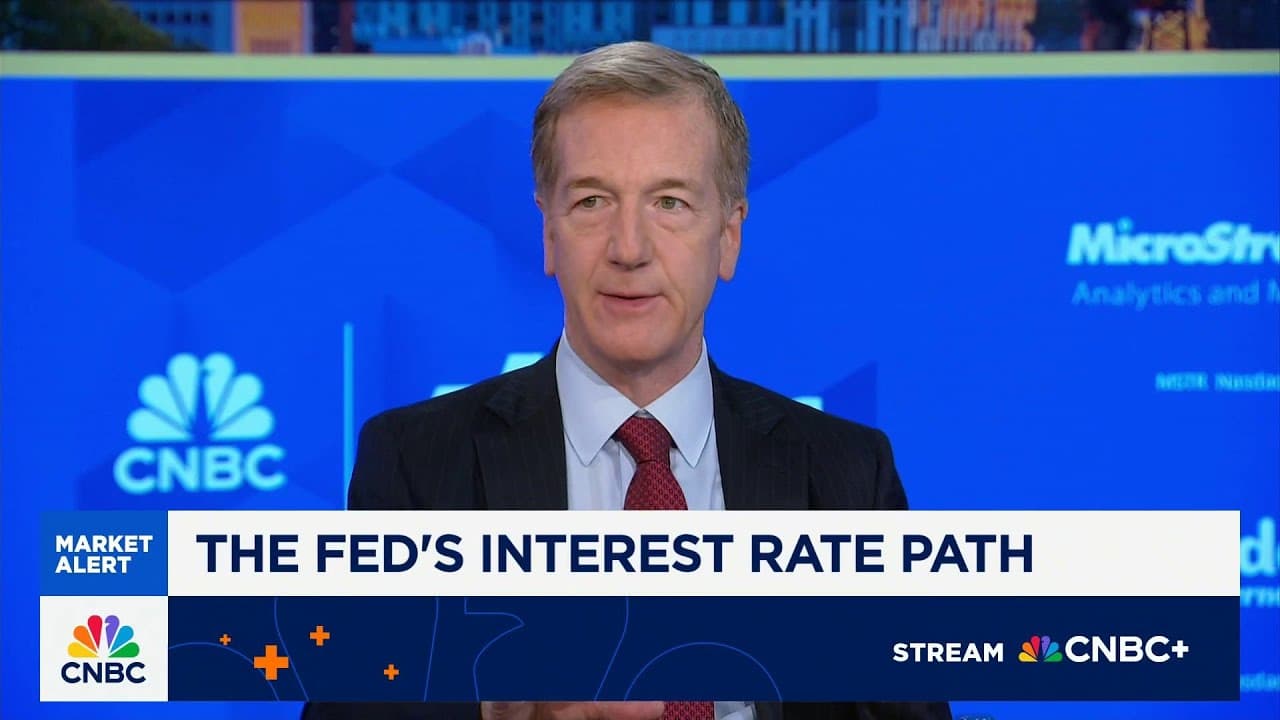
The Federal Reserve may have more room to cut rates because revised data suggest the labor downturn has already passed, while financially leveraged areas such as housing and consumer goods still need support. Mike Wilson expects improving earnings, possible balance-sheet liquidity, and accelerating inflation to favor equities, but inflation strong enough to force rate increases remains the central risk.
Transcript
WELCOME BACK FOR MORE ON THE MARKETS. LET'S GET TO OUR NEXT GUEST, MIKE WILSON, MORGAN STANLEY CIO AND CHIEF U.S. EQUITY STRATEGIST. YOU'VE COME ON, AND YOU ALWAYS HAVE SOME SOME THINGS THAT MAKE ME SCRATCH MY HEAD OR THAT I HAVEN'T THOUGHT. AND ONE OF THE THINGS YOU SAID NOT TOO LONG AGO WAS THAT THE LABOR MARKET MAY HAVE ALREADY BOTTOMED, AND ... Read More
Key Insights
- The economy has experienced a rolling recession in which private-sector industries went through separate downturns rather than one synchronized collapse. This post-COVID pattern masked the labor cycle and made the overall economy appear more resilient than several underlying sectors actually were.
- The labor cycle may have bottomed in April because the rates of change in both payrolls and layoffs turned around at that time. Wilson links this shift to the market bottom and treats revised labor data as clearer evidence than the initial reports available to policymakers.
- The Federal Reserve may have more room to cut because employment data are lagged and later revisions reveal a significant labor downturn that has already passed. Wilson also suggests the central bank could support the economy through changes to its balance sheet rather than relying exclusively on rate cuts.
- Median-company earnings growth in the S&P is close to 10%, which Wilson describes as the strongest growth in four years. He presents this broad improvement as confirmation that the private economy and labor cycle have moved beyond their weakest stage.
- Rate cuts are still needed for financially leveraged areas of the private economy, including housing, consumer goods, and lower-income consumers. Wilson argues that supporting these segments could reduce the economy's bifurcation, even if headline data no longer look weak enough to make cuts appear immediately necessary.
- Accelerating inflation is part of Wilson's bullish earnings thesis because it can improve revenue and profit growth among companies that previously lagged. The favorable equity setup depends on the Fed avoiding rate increases and potentially adding balance-sheet liquidity while corporate earnings strengthen.
- Affordability can improve when wage growth exceeds inflation and productivity rises, rather than requiring broad price declines. Wilson says fiscal policies intended to reduce consumption and increase investment could change the composition of economic growth and potentially produce stronger productivity.
- The equity forecast assumes 17% earnings growth without requiring an expansion in the price-to-earnings multiple. Wilson says investors would price stocks using 2027 earnings, which could grow another 10% to 12% if the economy avoids a slowdown, while renewed rate increases remain the primary risk.
Install to Summarize YouTube Videos and Get Transcripts
Explore YouTube Video Summarizer or Get YouTube Transcript Extractor
Questions & Answers
Q: Why could the Federal Reserve have more room to cut rates?
The Federal Reserve could have more room to cut because revised employment figures suggest a significant labor downturn occurred and may already be over. Initial data did not appear weak enough to justify substantial easing, but revisions provide a clearer view of the cycle. Cuts or balance-sheet support could therefore help rate-sensitive parts of the private economy without responding only to current headline employment readings.
Q: What is a rolling recession in the private economy?
A rolling recession is a sequence in which different industries experience their own downturns at different times instead of the entire economy contracting simultaneously. Wilson says post-COVID distortions produced this pattern across the private economy. Because weakness rotated from one sector to another, the labor cycle was partly masked and did not resemble the single broad collapse typically associated with a recession.
Q: Why does Mike Wilson think the labor market already bottomed?
Wilson points to April, when the rates of change in payrolls and layoffs reached turning points, with one peaking and the other bottoming depending on the measure. The stock market also bottomed around that time. He argues that subsequent data revisions make the labor-cycle downturn much clearer and indicate that the economy has since started moving out of that weak phase.
Q: How do corporate earnings support the economic recovery thesis?
Earnings for the median company in the S&P are growing again at close to 10%, which Wilson calls the strongest growth recorded in four years. He views this broad earnings acceleration as confirmation that the private economy has emerged from its labor downturn. The evidence is important because it extends beyond the largest companies and supports a potential rotation toward previously lagging market segments.
Q: Which parts of the economy still need lower interest rates?
Wilson identifies financially leveraged areas such as housing, consumer goods, and lower-income consumers as parts of the economy that still need rate cuts. These groups remain sensitive to financing conditions even if revised data suggest the broader labor cycle has improved. Lower rates could support a more balanced private-sector recovery instead of leaving the economy divided between strong and weak segments.
Q: How could accelerating inflation affect stocks and earnings?
Accelerating inflation could improve earnings growth for many companies that have lagged, making it a necessary part of Wilson's market thesis. The combination becomes favorable for equities if the Federal Reserve does not respond by raising rates and instead cuts or adds balance-sheet liquidity. The danger is that inflation accelerates far enough to require monetary tightening, which would undermine the expected stock-market setup.
Q: How could wage growth and productivity improve affordability?
Affordability can improve if wages rise faster than inflation and productivity increases, even when the general price level does not decline. Wilson says fiscal policy is attempting to reduce consumption and increase investment, which could reconfigure economic growth and support productivity. He also argues that immigration and artificial intelligence could rebalance wage growth across lower-income, middle-income, and upper-income workers, although success is not guaranteed.
Q: What earnings outlook supports the bullish S&P forecast?
Wilson's outlook assumes 17% earnings growth, allowing stocks to advance even if the price-to-earnings multiple stays unchanged. He says the market would be valued using expected 2027 results, when earnings could grow another 10% to 12% if the economy avoids a slowdown. The forecast's key vulnerability is inflation becoming strong enough that the Federal Reserve must raise interest rates.
Summary & Key Takeaways
-
Mike Wilson describes the post-COVID economy as a rolling recession, with individual private-sector industries contracting at different times instead of collapsing together. He says payroll and layoff trends changed direction in April, when the stock market also bottomed, suggesting that the labor cycle may already have reached its weakest point.
-
Wilson argues that revised labor data could give the Federal Reserve more flexibility to cut rates or adjust its balance sheet. Although the private economy is recovering, rate-sensitive areas including housing, consumer goods, and lower-income households still need support. Easier policy could also inflate financial assets as corporate earnings improve.
-
The equity outlook rests on accelerating earnings, inflation, productivity, and investment. Wilson cites nearly 10% earnings growth for the median S&P company and projects 17% earnings growth, followed by another 10% to 12% in 2027 if no slowdown occurs. The main risk is inflation forcing the Fed to raise rates.
Read in Other Languages (beta)
Share This Summary 📚
Summarize YouTube Videos and Get Video Transcripts with 1-Click
Try YouTube Summary with ChatGPT & Claude or YouTube Transcript Generator
Explore More Summaries from CNBC Television 📚



Summarize YouTube Videos and Get Video Transcripts with 1-Click
Try YouTube Summary with ChatGPT & Claude or YouTube Transcript Generator