Why Is Richard Schmo's Sundial Revolutionary?
TL;DR
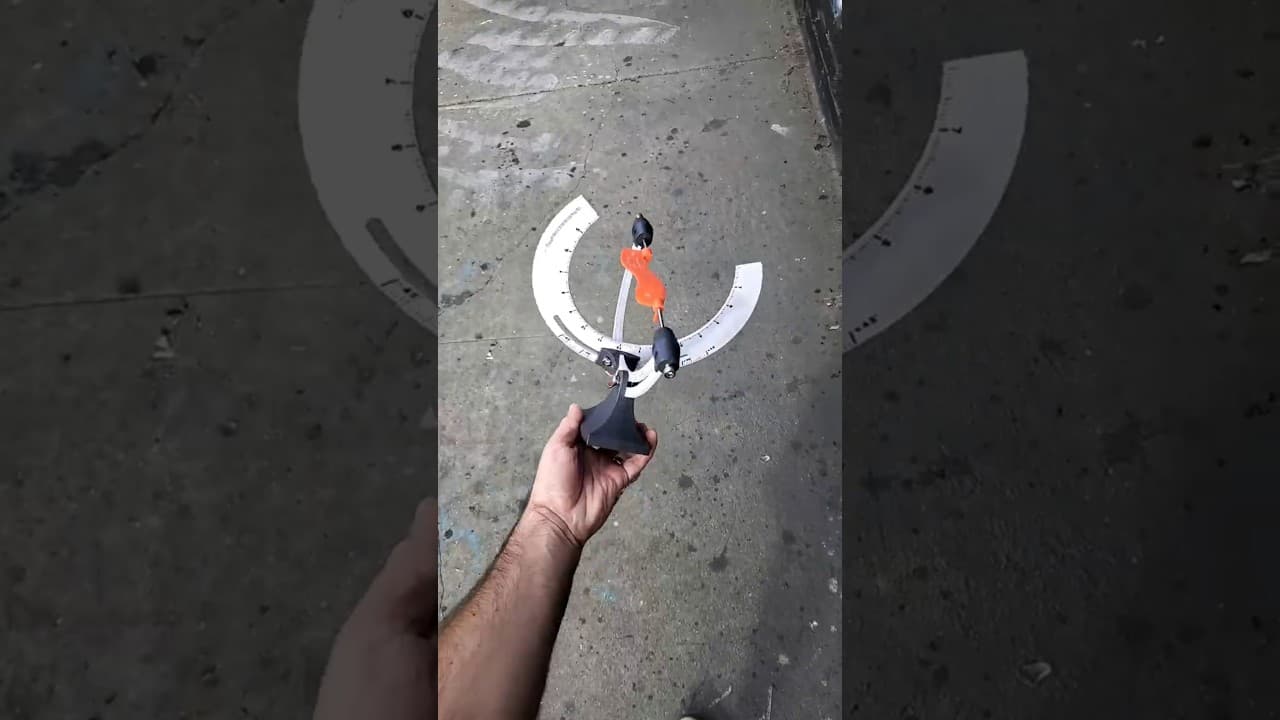
Richard Schmo's sundial revolutionises timekeeping by merging civil and solar time, adapting to modern scheduling needs without manual adjustments for daylight savings or time zones. Unlike traditional sundials that track solar time, this innovative design reflects the dynamic nature of time, encouraging users to engage meaningfully with its complexities.
Transcript
time used to breathe but then we turned it into sand into a commodity something that can be spent wasted served we shackle our wrists with it and that is why I think this is the best most useful Sund dial ever invented it was designed by Richard schmoyer in the 1950s and with the cooperation of his family there is a new and updated model in the nex... Read More
Key Insights
- 🪡 Schmo's sundial is an innovative fusion of natural and civil timekeeping, addressing modern needs.
- 🧑🏭 Traditional sundials measure solar time influenced by ever-changing factors like Earth's orbit and axial tilt.
- 👾 The simplification of timekeeping in society arose from the demanding pace of travel and communication.
- ⌛ Understanding the differences between solar and civil time can deepen appreciation for temporal changes throughout the year.
- 👤 The sundial requires user engagement, fostering a personal investment in understanding time’s evolution.
- 🛟 The integration of time zones and daylight savings into this sundial reflects the complexities of modern life.
- 🎨 This design highlights how historical and natural elements continue to influence contemporary timekeeping devices.
Install to Summarize YouTube Videos and Get Transcripts
Explore YouTube Video Summarizer or Get YouTube Transcript Extractor
Questions & Answers
Q: How does the new sundial design differ from traditional models?
The new sundial designed by Richard Schmo differs significantly from traditional sundials by measuring civil time instead of solar time. Traditional sundials indicate solar time based on the position of the sun, but Schmo’s design automatically adjusts for time zones and daylight savings, making it much more practical for modern users. It serves as a convenient bridge between natural solar cycles and our societal time constraints.
Q: What are the reasons behind the fluctuations in solar time?
Fluctuations in solar time are primarily caused by two factors: the Earth's elliptical orbit around the sun and its axial tilt. As the Earth orbits the sun, the speed of this orbit changes, particularly at different times of the year. When the Earth is closer to the sun in January, it moves faster, extending solar time compared to the slower orbit in July. The axial tilt further complicates this by changing the angle of sunlight, affecting how we perceive the end of the day through sundials.
Q: Why did society gradually move away from solar time?
Society moved away from solar time primarily due to the demands of railroads and fast travel, which required a standardized time system for scheduling. As communication and transportation improved, the natural fluctuations of solar time were found to be inconvenient. This led to the adoption of mechanical clocks, which standardized time across regions and allowed for precise scheduling essential for modern society.
Q: What makes this sundial a "bridge between what we are and what we think we are"?
The sundial serves as a "bridge between what we are and what we think we are" because it connects the natural measurement of time, inherent in the Earth's movements, to the structured, regulated time society imposes upon itself. It prompts users to rethink their relationship with time, away from mechanical constraints towards a more grounded understanding of natural cycles.
Summary & Key Takeaways
-
Richard Schmo's sundial, created in the 1950s, uniquely integrates civil time with solar time, reflecting changes in day length.
-
Unlike traditional sundials, which measure solar days influenced by Earth's orbit and tilt, this design accounts for time zones and daylight savings, providing practical timekeeping for everyday use.
-
The sundial's complexity encourages users to engage deeply with the concept of time, fostering appreciation for its evolution and the technology that has shaped modern life.
Read in Other Languages (beta)
Share This Summary 📚
Summarize YouTube Videos and Get Video Transcripts with 1-Click
Try YouTube Summary with ChatGPT & Claude or YouTube Transcript Generator
Explore More Summaries from Vsauce 📚

Summarize YouTube Videos and Get Video Transcripts with 1-Click
Try YouTube Summary with ChatGPT & Claude or YouTube Transcript Generator