What's Next in Consumer Startups?
TL;DR
The next consumer-startup opportunities lie where a technology shift meets an enduring human motivation and a strong growth insight. Andrew Chen contrasts the telephone’s five-decade adoption with mobile phones reaching well into 90% of US households, then uses the Michelin Guide to show how companies can create demand indirectly. Read on for a practical framework for recognizing breakthrough consumer products.
Transcript
hey everyone I'm Andrew Chen general partner at Andreessen Horowitz and today I'm gonna talk about what's next in consumer startups there are a ton of new technologies and new companies right around the corner I'm super excited to be you know looking at the market the ecosystem and so what I want to do is to walk through some of the ways that I am ... Read More
Key Insights
- 🏛️ Adoption of technologies is influenced by consumer motivations and the ability to build upon previous technologies.
- 👤 Content marketing, viral user acquisition, and coupons have all been successful strategies in driving consumer adoption.
- 👾 Video native products and offline to online experiences show potential for success in the consumer startup space.
Install to Summarize YouTube Videos and Get Transcripts
Explore YouTube Video Summarizer or Get YouTube Transcript Extractor
Questions & Answers
Q: What's next in consumer startups?
Andrew Chen argues that promising consumer startups emerge at the intersection of a technology shift, a growth insight, and a fundamental consumer motivation. New technologies can produce breakthrough products when they build on behaviors and motivations people already have.
Q: What framework does Andrew Chen use to identify breakthrough consumer products?
He looks for three elements working together: a technology shift, a growth insight, and a fundamental consumer motivation. Investors and entrepreneurs can use these intersections to spot important moments for new consumer companies.
Q: Why did telephone adoption take five decades?
Although people already wanted to communicate with friends and family, using a telephone required an entirely new consumer behavior. Early Bell telephone manuals had to explain which part of the headset went by the ear or mouth, how to hold it, and how to answer a call.
Q: Why were mobile phones adopted faster than telephones?
Mobile phones built on earlier technology and familiar communication behavior instead of requiring consumers to start from scratch. Chen says they reached well into 90% of US households within the last two decades and are now used by billions of people worldwide.
Q: What does “technology changes, but people stay the same” mean?
Technology continually advances, but underlying motivations such as communication, creativity, entertainment, self-expression, and mobility remain consistent. Chen connects cave painting with creativity, Greek theaters with entertainment, and later technologies with selfies and scooters.
Q: How did Michelin use the Michelin Guide to increase tire demand?
Michelin needed people to drive more and wanted to create more drivers and reasons for longer trips. The free Michelin Guide highlighted restaurants and points of interest, encouraging travel that could lead to more car and tire purchases.
Q: What market problem did Michelin face in 1900?
In 1900, France had 3,000 automobiles, and the handmade vehicles frequently broke down. Michelin’s growth depended on increasing how much people drove or expanding the number of drivers, so it needed an indirect way to stimulate automobile use.
Q: How can established consumer motivations accelerate technology adoption?
A new product can spread faster when it serves a motivation consumers already understand and builds upon earlier technologies. Chen contrasts the slow adoption of the original telephone with the rapid rise of mobile phones, television, the Internet, Instagram, and YouTube.
Summary
In this video, Andrew Chen discusses the intersection of new technologies and consumer motivations in the world of startups. He explains how breakthrough products can be successful by combining a growth insight, a technology shift, and an existing consumer motivation. Chen provides historical examples of companies that have successfully utilized these principles, such as Michelin using content marketing, the US Postal Service using chain letters for adoption, and toothpaste companies using coupons. He then highlights two categories of products he is excited about: video native products and offline to online experiences.
Questions & Answers
Q: What is the main idea of Andrew Chen's video?
Andrew Chen's video explores the intersection of new technologies and consumer motivations in the world of startups. He discusses how products can be successful by combining a growth insight, a technology shift, and an existing consumer motivation.
Q: How does Chen explain the adoption of new technologies?
Chen explains that the adoption of new technologies can vary in speed, and it is often influenced by factors such as consumer behavior, teaching consumers to use the technology, and building upon previous technologies. He gives examples like the telephone taking five decades to be adopted, while the mobile phone quickly gained widespread adoption due to underlying motivations and building upon previous technology.
Q: What is the concept of content marketing that Chen discusses?
Chen discusses content marketing as a way to indirectly solve the problem of customer adoption. He gives the example of Michelin releasing the Michelin Guide, which gave consumers a reason to drive more and explore new places. By stimulating demand for driving, Michelin indirectly increased tire sales.
Q: What is the growth insight behind viral user acquisition?
The growth insight behind viral user acquisition is making it easy for users to invite their friends and family to use a product. By leveraging social connections and encouraging users to share the product with others, companies can bootstrap their user base and achieve rapid growth. Chen gives examples such as Airbnb and their referral system.
Q: How did coupons help solve the bootstrapping problem for consumer packaged goods?
Coupons helped solve the bootstrapping problem for consumer packaged goods by stimulating demand for the product. Companies would buy advertisements in newspapers and magazines, encouraging consumers to try their products with the incentive of saving money. This increased demand persuaded grocery stores to stock the products, leading to further adoption.
Q: What are two categories of products that Chen is excited about?
Chen is excited about video native products and offline to online experiences. Video native products are those that generate video content whenever users engage with the product, tapping into the growing popularity of video. Offline to online experiences leverage technologies like mapping apps, GPS, and augmented reality to create engaging physical experiences that drive users to engage with an online platform.
Q: What are some examples of video native products?
Examples of video native products include those that generate video content whenever users engage with the product. Chen mentions popular short-form video platforms like TikTok and YouTube, as well as esports games like League of Legends and Dota that attract millions of viewers. He also discusses sandbox VR, a location-based VR company that creates video content of users' virtual reality experiences to share on social media.
Q: How does offline to online growth work?
Offline to online growth occurs when a physical, real-life experience prompts users to engage with an online platform or app. Chen gives examples such as Pokémon Go, where players explore the real world to capture virtual creatures, and ride-sharing services like Lyft and Uber, where users engage with the app to request a ride. These offline experiences create a natural segue for users to download and use the corresponding app.
Q: What is the growth insight behind offline to online experiences?
The growth insight behind offline to online experiences is that highly visible offline experiences can generate organic growth through word-of-mouth and social sharing. When users have an engaging real-life experience, they are more likely to talk about and mention the corresponding app or platform, driving adoption and usage.
Q: What other platforms and technologies does Chen find intriguing?
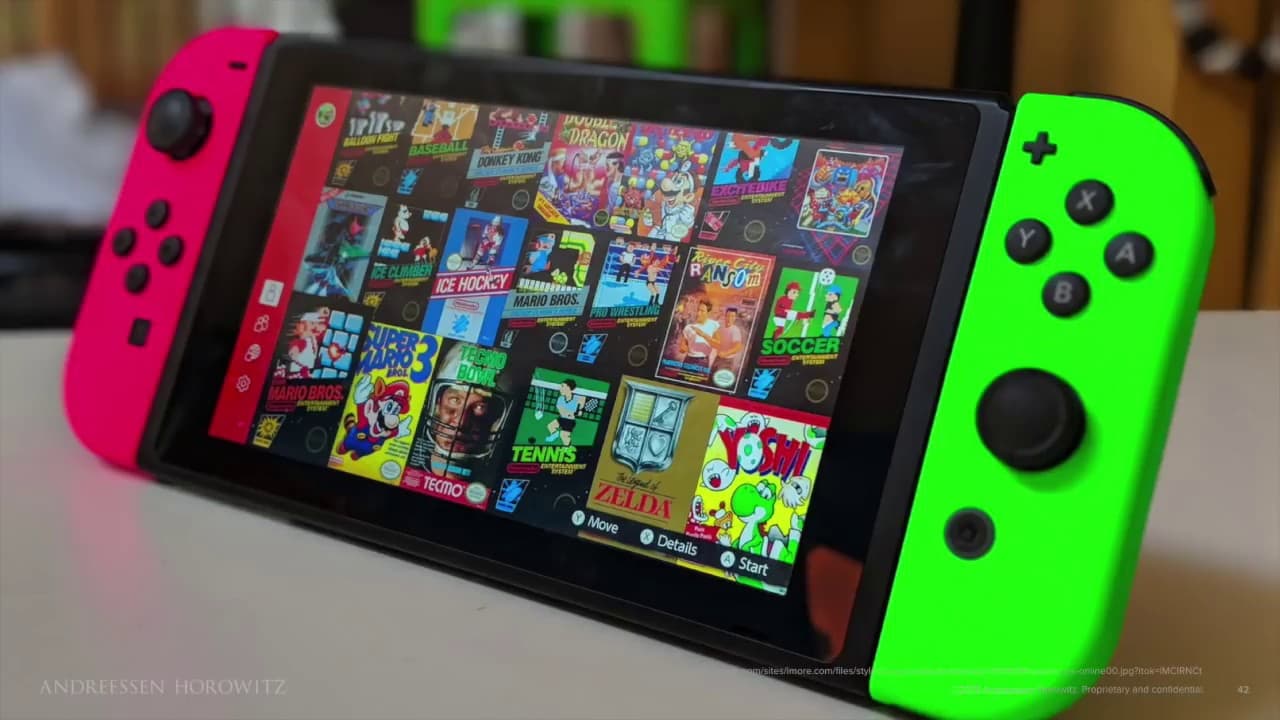
Chen mentions other platforms and technologies that he finds intriguing, including the Google suite of products, voice-activated devices like Google Home and Amazon Echo, smart TVs, wearable devices, virtual worlds like Minecraft and Roblox, and emerging hardware and software platforms like the Nintendo Switch, smart appliances, smart glasses, and the future of in-car experiences. He highlights the importance of tracking these platforms and technologies in the market.
Takeaways
Andrew Chen's video emphasizes the importance of recognizing the intersection of new technologies, consumer motivations, and growth insights in the world of startups. He provides historical examples and discusses categories of products he finds exciting, such as video native products and offline to online experiences. By understanding these principles, entrepreneurs and investors can identify breakthrough opportunities and build successful consumer startups.
Summary & Key Takeaways
-
The speaker talks about the adoption of new technologies over time, highlighting the importance of consumer motivations in driving their success.
-
Examples from the past, such as Michelin using content marketing and the US Postal Service leveraging chain letters, demonstrate how growth insights can drive adoption.
-
The speaker highlights two categories of products that show potential for success: video native products and offline to online experiences.
Read in Other Languages (beta)
Share This Summary 📚
Summarize YouTube Videos and Get Video Transcripts with 1-Click
Try YouTube Summary with ChatGPT & Claude or YouTube Transcript Generator
Explore More Summaries from a16z 📚




Summarize YouTube Videos and Get Video Transcripts with 1-Click
Try YouTube Summary with ChatGPT & Claude or YouTube Transcript Generator