Desktop Monument Highlights | The Art Assignment | PBS Digital Studios
TL;DR
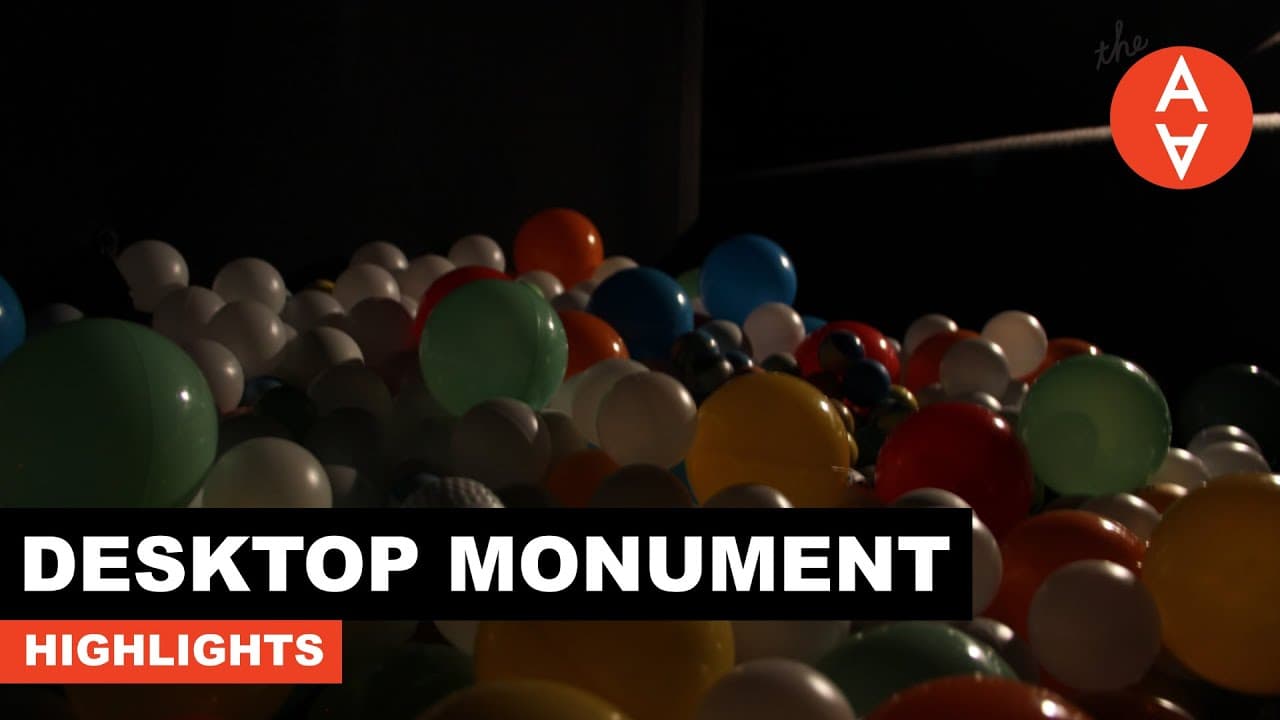
The strongest desktop monuments capture how an imagined natural setting feels, rather than simply copying how it looks. Highlights from Lee Boros’s Art Assignment include Grand Canyon sculptures made from paper cutouts, books, and notebooks; Tessa’s tactile mangrove forest made with outward-facing sticky tape; and Kylie’s Northern Lights model lit with candles and flashlights. Read on to see how specific materials conveyed color, time, texture, mystery, and wonder.
Transcript
[MUSIC PLAYING] Hey, everybody. Today, I'm going to share with you my favorite responses to Lee Boroson's assignment, which is to create a desktop monument. He explained it this way. Go on the internet and find images of a natural setting, tourist destination, some place that you've never been to, perhaps that you'd like to go to, that you know som... Read More
Key Insights
- 🥇 Creating a monument should focus on capturing the feeling and experience of a place rather than a direct visual representation.
- 📌 Different materials and techniques can be used to convey the essence and emotions associated with a specific location.
- ❓ Prioritizing tactility in sculptures can enhance the overall experience and evoke a deeper connection with the artwork.
- 🙂 Lighting effects and attention to detail can contribute to a sense of wonder and mystery in sculptures.
- 🤗 The scale of miniatures can create a feeling of containment and safety while opening up possibilities for imaginative play.
- 🌂 Reflecting endlessness and vastness in artwork can evoke the awe and magnitude of the subject being represented.
- 💁 Monuments are not limited to visual impressions and can convey deeper meanings and emotions through their form and concept.
Install to Summarize YouTube Videos and Get Transcripts
Explore YouTube Video Summarizer or Get YouTube Transcript Extractor
Questions & Answers
Q: What was Lee Boros’s desktop monument assignment?
The assignment was to find online images of a natural setting or tourist destination the artist had never visited and use them as the basis for a desktop monument. The central idea was to represent what that place might feel like instead of merely reproducing its appearance.
Q: How did Yes For Po represent the Grand Canyon in “Canyon”?
Yes For Po created “Canyon” as a photo collage assembled from paper cutouts and described it as Matisse-influenced. Its intense use of color suggests that visiting the Grand Canyon could be an overwhelming sensory experience.
Q: How did Aaron Carlson connect the Grand Canyon with writing?
In “Canyon of Influence,” Aaron Carlson used a stack of books to evoke the geological history visible in the Grand Canyon’s walls. The artist compared writing to water and sediment, explaining that it reveals personal history while carrying pieces of everything that came before it.
Q: How did Lyric Laureli use notebooks to show the passage of time?
Lyric Laureli stacked all the notebooks used while earning a master’s degree, placing the oldest at the bottom and the final semester at the top. The growing stack recalled sedimentary rock layers and expressed a hope that the Grand Canyon would evoke an overwhelming sense of elapsed time.
Q: How did Tessa create a tactile monument to an Australian mangrove forest?
Tessa used several kinds of tape with their sticky sides facing outward to imagine the feel of swampland near Cape Tribulation in Australia. Although the final appearance differed from the artist’s original intention, the sculpture deliberately prioritized tactility over visuals.
Q: How did everyday objects evoke the mystery of the Moon’s surface?
Unnested Matrka imagined the uncertainty of stepping onto the Moon by comparing it to a child hesitating at the edge of a ball pit. Careful lighting made everyday objects appear strange and wondrous, while a related video captured the crunch of the balls as the camera moved across the surface.
Q: How did Kylie recreate the atmosphere of the Northern Lights?
Kylie built a tiny desktop model based on an image of the Northern Lights and used candles and flashlights to produce its lighting effects. The result was less dramatic than the source image but created a magical, intimate atmosphere with an aura of mystery.
Q: Why can small desktop sculptures still feel monumental?
Relative scale can give table-sized objects an expansive sense of space and presence. Aaron Carlson’s book stack and Lyric Laureli’s notebook stack felt monumental because they connected ordinary desk objects with the Grand Canyon’s scale, accumulated layers, and passage of time.
Summary & Key Takeaways
-
Artists were assigned to create desktop monuments based on natural settings they've never been to, focusing on the feeling rather than the appearance.
-
Responses included paper cut-outs, book stacks, tape sculptures, and miniature models, each expressing the essence and emotions associated with the chosen location.
-
The artists utilized different materials and techniques to capture the tactile experience and evoke a sense of wonder and mystery.
Read in Other Languages (beta)
Share This Summary 📚
Summarize YouTube Videos and Get Video Transcripts with 1-Click
Try YouTube Summary with ChatGPT & Claude or YouTube Transcript Generator
Explore More Summaries from The Art Assignment 📚
Summarize YouTube Videos and Get Video Transcripts with 1-Click
Try YouTube Summary with ChatGPT & Claude or YouTube Transcript Generator