How to Build Calm and Clarity Through Meditation
TL;DR
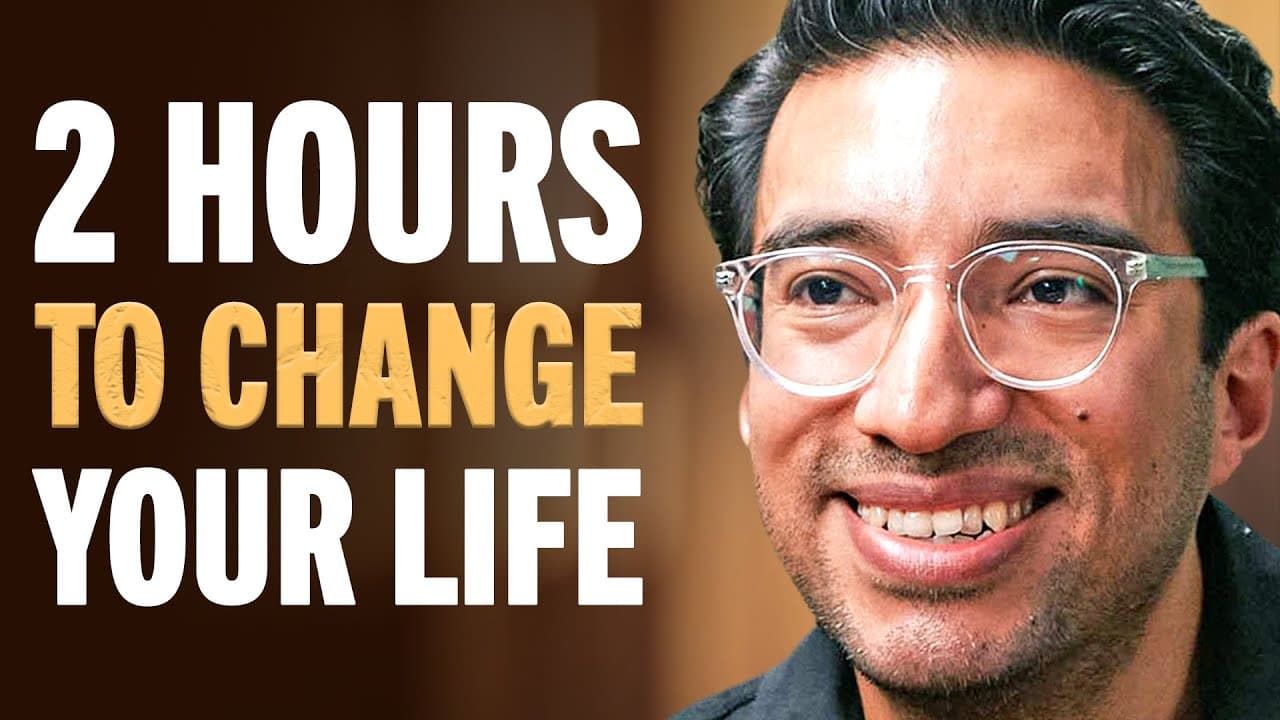
Meditation develops self-awareness, non-reactivity, and compassion by training the mind to observe changing thoughts, emotions, and bodily sensations without impulsively clinging to them. Start with whatever time is realistic, replace low-value habits when possible, and treat consistent practice as daily nourishment rather than an optional task.
Transcript
there'll be some people who have stumbled across this conversation who I believe will be thinking Diego listen two hours a day you don't get my life I'm busy I've got kids I've got work presses I've got ABC that I have to do each day you know what would you say to someone like that who feels that 2 hours of meditation is unrealistic for them I thin... Read More
Key Insights
- Meditation is a form of mental training that strengthens self-awareness, non-reactivity, and compassion. These qualities already exist within the mind, but they require deliberate cultivation, much as physical capacity must be developed before someone can run a marathon.
- The purpose of meditation is not to stop every thought. Different meditation traditions pursue different goals, while the Vipassana practice described here focuses on observing bodily sensations and developing awareness, balance, compassion, and the ability to avoid automatic reactions.
- A realistic meditation habit can begin with whatever time is currently available. Perez found more space by starting immediately after waking, replacing an hour of evening television, and meditating during a train journey before later opening his laptop.
- Non-reactivity reduces the mental tension created by clinging to events, emotions, and expectations. Recognizing that everything changes makes it easier to observe an experience without holding tightly to it or allowing an old defensive pattern to determine the next response.
- Repeated emotional reactions create subconscious imprints that shape present perception and behavior. Anger used for self-defense in the past, for example, can reappear automatically when a current situation resembles an earlier threat, even when the reaction feels like part of one's natural identity.
- A clear mind is naturally capable of awareness, compassion, creativity, and sound decision-making. Accumulated conditioning from experiences, information, and surrounding people can obscure those qualities while shaping personality and behavioral patterns that later produce difficulty.
- Silent meditation can expose emotions that a person has spent years avoiding. Perez found his first 10-day silent course extremely difficult, yet facing sensations and emotions as they arose and passed gave him a powerful opportunity for learning and personal growth.
- External disruptions do not automatically determine a person's internal response. The discussion of canceled trains illustrates how people may generate stress in response to an uncontrollable event, while cultivated non-reactivity can support calm observation instead of automatic agitation.
Install to Summarize YouTube Videos and Get Transcripts
Explore YouTube Video Summarizer or Get YouTube Transcript Extractor
Questions & Answers
Q: How can a busy person start a meditation practice?
A busy person can begin with whatever amount of time is realistically available instead of treating two hours as the minimum requirement. Perez suggests examining ordinary routines for unused time, such as lingering after waking, watching television before bed, or sitting during a train journey. Consistency matters because meditation is framed as daily nourishment and a gift that supports awareness, learning, and growth.
Q: What is the purpose of meditation according to Yung Pueblo?
The purpose is not to stop all thoughts. Perez explains that meditation traditions have different objectives, and his Vipassana practice is directed toward equanimity, balance, and non-reactivity. It develops self-awareness, compassion, and the capacity to observe bodily sensations, emotions, and changing experiences without immediately clinging to them or responding through an established impulse.
Q: What qualities can meditation help a person develop?
Meditation can help cultivate self-awareness, non-reactivity, and compassion. Perez describes these qualities as mental capacities that already exist but need strengthening through repeated practice. Greater awareness helps a person notice internal patterns, non-reactivity creates space before an impulsive response, and compassion supports a clearer and kinder way of relating to oneself and other people.
Q: Why does meditation take time to produce meaningful change?
Self-awareness, non-reactivity, and compassion require cultivation rather than appearing fully developed overnight. Perez compares this process with physical training for a marathon. The mind has these capacities, but repeated practice strengthens them. Meditation may therefore feel less immediately measurable than physical movement, yet regular observation of thoughts, emotions, and sensations gradually supports calmness, clarity, and balanced decision-making.
Q: How do past reactions influence present behavior?
Every reaction can create an imprint in the subconscious that helps shape how the mind perceives and responds to later situations. If someone repeatedly defended themselves with anger, a present event resembling an earlier threat may trigger anger automatically. The resulting impulse can feel like a natural identity, even though it is better understood as a conditioned pattern from the past reappearing.
Q: How can meditation improve decision-making?
Meditation can calm the mind and increase awareness before choices are made. Perez describes meditating for an hour during a train journey, then working on a laptop afterward with his partner. He felt that the practice supported decisions that were clearer and more aligned. Reduced attachment and impulsiveness can make it easier to respond to current conditions instead of repeating old reactions.
Q: What did Yung Pueblo gain from a 10-day silent meditation course?
Perez found the silent 10-day course extremely difficult because he had to remain with emotions he had previously spent his life avoiding. By allowing himself to feel sensations and emotions as they arose and passed through the body, he discovered an opportunity for growth and learning. He says those 10 days taught him more than four years of university.
Q: How does non-reactivity help during stressful events?
Non-reactivity helps a person distinguish between an external event and the internal stress generated in response to it. The discussion uses canceled trains as an example: the disruption is outside an individual's control, but automatic agitation is an internal reaction. Greater awareness can create enough space to observe the situation calmly rather than intensifying tension through frustration, attachment, or impulsive behavior.
Summary & Key Takeaways
-
Diego Perez describes meditation as a daily investment in mental clarity, comparing its value to the nourishment provided by water. Although he practices for two hours each day, he recommends starting wherever possible and finding unused time in morning routines, evening entertainment, commutes, or other parts of daily life.
-
The Vipassana practice Perez follows is designed to strengthen self-awareness, non-reaction, and compassion. Meditation is not intended to eliminate every thought. Instead, it trains people to observe emotions and bodily sensations as they arise and pass, reducing attachment, mental tension, impulsive reactions, and decisions shaped by old behavioral patterns.
-
Past reactions can create subconscious imprints that influence present perception and behavior. Meditation helps reveal this conditioning, allowing a person to respond with greater calm and clarity. Perez says a difficult 10-day silent course taught him to face emotions he had avoided and showed him the practice's potential for growth.
Read in Other Languages (beta)
Share This Summary 📚
Summarize YouTube Videos and Get Video Transcripts with 1-Click
Try YouTube Summary with ChatGPT & Claude or YouTube Transcript Generator
Explore More Summaries from Dr Rangan Chatterjee 📚
Summarize YouTube Videos and Get Video Transcripts with 1-Click
Try YouTube Summary with ChatGPT & Claude or YouTube Transcript Generator