Why Are Asian Markets Struggling for Momentum?
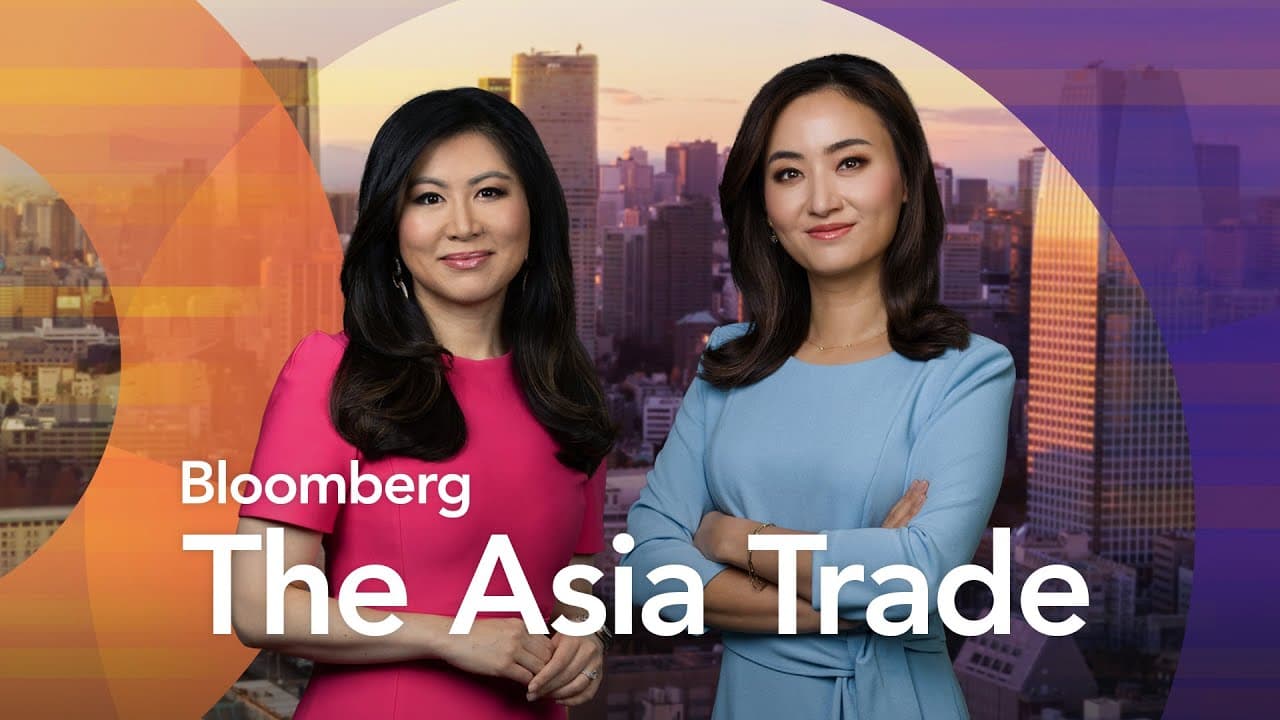
TL;DR
Asian markets lacked a strong catalyst as investors waited for key US data and clarity on Federal Reserve leadership, tariffs, inflation, and geopolitical risks. South Korea reported better-than-expected third-quarter growth, while Bitcoin recovered above $90,000, but analysts saw few signs that equities were ready for a sustained surge and expected volatility to continue.
Transcript
THIS IS BLOOMBERG. ♪PAUL: THIS IS "THE ASIA TRADE." AVRIL: ASIAN STOCKS SET FOR GAINS AFTER A CAUTIOUS REBOUND ON WALL STREET, WITH CRYPTOCURRENCIES RECOVERING SOME GROUND. TREASURY STEADY AS PRESIDENT TRUMP SAYS HE WILL NAME THE NEXT FED CHAIR EARLY IN THE NEW YEAR. VLADIMIR PUTIN WRAPS UP FIVE HOURS OF TALKS WITH U.S. ENVOYS IN MOSCOW, BUT RUSSIA... Read More
Key Insights
- Asian equities were positioned for modest gains after a cautious Wall Street recovery, with Australian shares rising and Nikkei futures pointing higher. The restrained moves indicated that markets were stabilizing but still lacked the conviction or obvious catalyst needed to generate stronger momentum.
- South Korea’s third-quarter GDP grew 1.8% from a year earlier, modestly exceeding the 1.7% expectation and matching the second quarter’s reading. Construction expanded 0.7% from the previous quarter, offering a potential reversal after a 7.5% annual decline.
- South Korea’s approved budget was designed to support investment in artificial intelligence and other strategic sectors. Parliament approved an 8% increase from the initial budget plan, bringing planned spending to almost half a trillion dollars and reinforcing the government’s effort to stimulate targeted investment.
- Bitcoin’s recovery above $90,000 improved risk sentiment after an unexplained decline, but it remained well below its previous high. The market analyst found few signs that equities were preparing for a major advance and warned that unresolved issues meant volatility remained ahead.
- Federal Reserve policy after Jerome Powell’s term ends remained difficult to predict because the next chair’s influence would depend on the board, the economy, inflation, and President Trump’s political strength. Futures suggested faster easing, but the analyst said no firm market consensus existed.
- Treasury investors showed a preference for shorter maturities amid uncertainty about rate cuts, inflation, government issuance, and term premiums. These pressures contributed to a bear steepening of the yield curve, even though expectations for lower rates during the current year were not considered certain.
- Russia and US negotiators failed to agree on Ukraine’s territorial issues after nearly five hours of talks. A central obstacle was that Russia and Ukraine disputed both the desired territorial settlement and the factual location of control, leaving them without a shared negotiating baseline.
- Taiwan and Europe share security and supply-chain interests, according to Taiwan’s foreign minister. He called China a decisive enabler of Russia’s war, linked European and Taiwanese security concerns, and identified resilient supply chains and semiconductor cooperation as potential areas for deeper partnership.
Install to Summarize YouTube Videos and Get Transcripts
Explore YouTube Video Summarizer or Get YouTube Transcript Extractor
Questions & Answers
Q: Why were Asian stocks struggling to build momentum?
Asian stocks lacked momentum because investors were waiting for stronger catalysts and clarity on several unresolved risks. These included upcoming US data, the next Federal Reserve chair, the future path of interest rates, President Trump’s tariffs, inflation, Treasury issuance, and geopolitical tensions. Bitcoin’s rebound improved sentiment, but analysts saw few signs that equities were ready for a sustained surge.
Q: What did South Korea’s third-quarter GDP report show?
South Korea’s third-quarter GDP increased 1.8% from a year earlier, slightly better than the 1.7% expectation and equal to the second quarter’s reading. Construction also grew 0.7% from the previous quarter, offering some improvement after a 7.5% annual decline. The figures were described as a healthy set of results with a modest upside surprise.
Q: Why did Bitcoin’s rebound fail to trigger a broader equity rally?
Bitcoin recovered above $90,000 and helped improve risk sentiment, but the preceding decline lacked a straightforward explanation and the rebound did not provide a durable catalyst for stocks. Bitcoin also remained far from its previous high. With major uncertainties unresolved, investors had limited reason to aggressively add risk, and some were tempted to lock in existing equity gains.
Q: How could the next Federal Reserve chair affect interest rates?
The next Federal Reserve chair may arrive with a preference for lower rates, but the chair’s ability to accelerate easing would depend on support from the Federal Reserve board and prevailing economic conditions. Rapid cuts would be more likely if the economy weakened seriously. Renewed inflation concerns, however, could lead officials to resist faster easing or consider another pause.
Q: Why were Treasury investors favoring shorter maturities?
Treasury investors favored shorter maturities because near-term rate reductions appeared more plausible than confident forecasts about longer-term yields. Longer maturities faced uncertainty from inflation, government debt issuance, and term premiums. Combined with disagreement about future Federal Reserve policy, those risks contributed to yield-curve steepening and encouraged investors seeking Treasury exposure to concentrate on the shorter end.
Q: Why did US and Russian talks fail to produce an agreement on Ukraine?
The talks failed to resolve the central territorial dispute between Russia and Ukraine. The two sides disagreed not only about where a revised territorial line should be placed, but also about the existing line of control. Russia claimed authority over some locations that Ukraine said it still held, meaning negotiators lacked both a shared factual baseline and an acceptable compromise.
Q: Could the Trump administration walk away from Ukraine negotiations?
The risk depended on how President Trump and US officials interpreted Russia’s conduct after the talks. Previous conversations had sometimes led them to conclude that Russia was not serious, producing escalation, while other discussions resulted in blame being directed toward Ukraine. Even if negotiators moved toward an outcome, Ukraine and European leaders would still need to consider whether they could accept it.
Q: Why does Taiwan see stronger cooperation with Europe as possible?
Taiwan’s foreign minister identified shared security concerns, connected trade, and supply-chain resilience as reasons for deeper cooperation with Europe. He described China as a decisive enabler of Russia’s war in Ukraine and argued that Taiwan and European countries therefore have common strategic interests. He also pointed to semiconductor cooperation and the restructuring of resilient supply chains as partnership opportunities.
Summary & Key Takeaways
-
Asian trading began with modest gains after a cautious Wall Street rebound. South Korea’s third-quarter GDP increased 1.8% from a year earlier, slightly exceeding expectations, while construction returned to quarterly growth. Australian shares advanced modestly, Japanese futures pointed higher, and investors awaited Japan’s upcoming 30-year government bond auction.
-
US equities remained in a tight range even as technology stocks, industrial companies, Boeing, and cryptocurrencies advanced. Bitcoin climbed back above $90,000, but the recovery did not establish a clear catalyst for broader risk assets. Strong annual gains in markets such as South Korea also gave investors reasons to realize profits.
-
Uncertainty about the next Federal Reserve chair, inflation, tariffs, Treasury issuance, and geopolitical conflicts complicated the market outlook. Russia and US envoys made no progress on central territorial disputes involving Ukraine. Taiwan’s foreign minister argued that China enables Russia’s war and emphasized shared Taiwanese and European security and supply-chain interests.
Read in Other Languages (beta)
Share This Summary 📚
Summarize YouTube Videos and Get Video Transcripts with 1-Click
Try YouTube Summary with ChatGPT & Claude or YouTube Transcript Generator
Explore More Summaries from Bloomberg Television 📚




Summarize YouTube Videos and Get Video Transcripts with 1-Click
Try YouTube Summary with ChatGPT & Claude or YouTube Transcript Generator