How to Progress Safely Through Longer Fasts
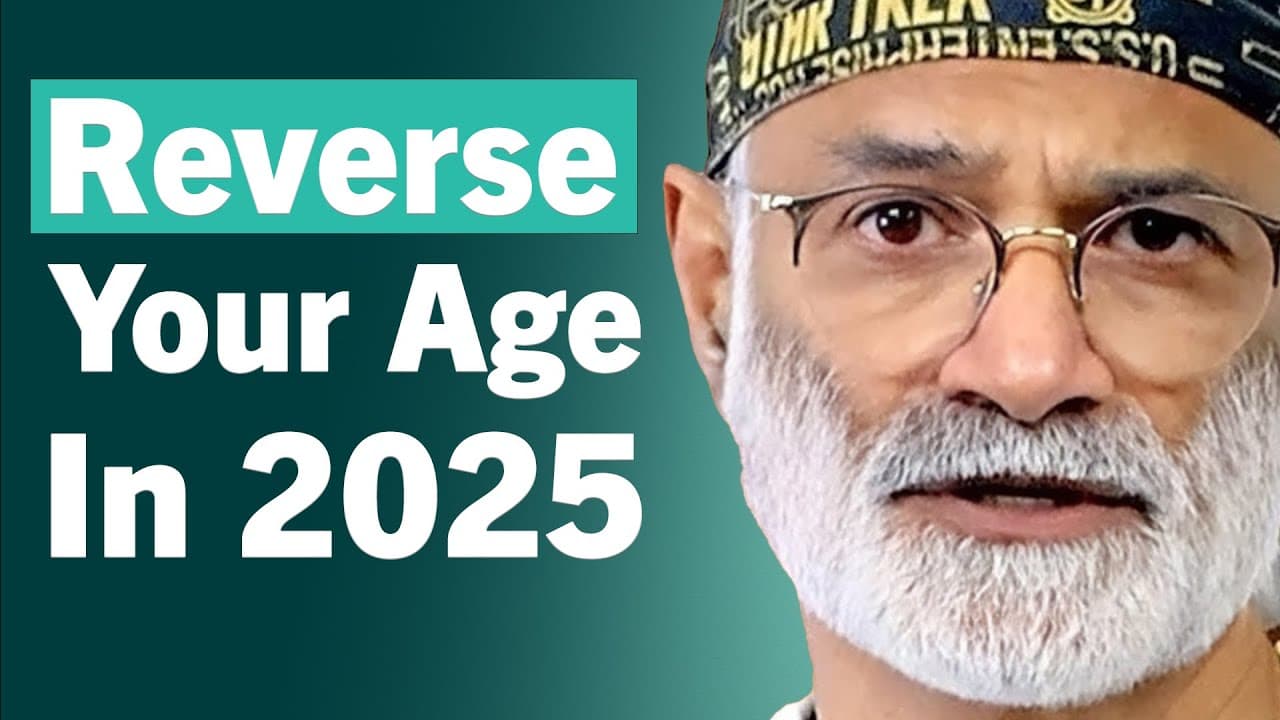
TL;DR
Begin with two meals inside a six-hour window, progress to one meal a day, and attempt longer fasts only after adapting gradually. Blood pressure, blood sugar, and medication require close monitoring, especially with insulin, while people with eating disorders or addictive behaviors need specialized support rather than an unsupervised fasting program.
Transcript
so you do this kind of 3E program where they unprocess their diet then you put them on this kind of 18 hour fast so they're having two meals a day over 6 hours and then for 18 hours they not consuming anything uh we must talk about any Contra indications like insulin or blood sugar medications at some point just to make sure that you know people wh... Read More
Key Insights
- The initial fasting pattern is two meals within a six-hour eating window, followed by 18 hours without food. Dr. Jamnadas presents this alongside removing processed foods from the diet, allowing patients to adapt before attempting one-meal days or longer fasting periods.
- The progression to one meal a day is typically practiced five days per week for two weeks, while weekends retain two meals. After this adaptation period, Dr. Jamnadas introduces one 36-hour fast per week by having the patient skip the usual evening meal.
- A 36-hour fast can run from one evening meal opportunity to breakfast the following day. Because patients are already accustomed to one meal a day, Dr. Jamnadas says many experience the transition simply as missing dinner, watching a movie, and going to bed.
- Ketone production begins at different times for different people, according to Dr. Jamnadas. He says nearly all adapted patients produce measurable urinary ketones after a 24-hour fast, while repeated dietary and fasting practice may allow ketogenesis to begin around 16 hours.
- Urine ketone strips provide motivated patients with a practical way to observe when they begin producing ketones. Dr. Jamnadas interprets measurable ketones as evidence of physiological changes associated with ketogenesis and benefits involving autophagy, growth hormone, BDNF production, and mitophagy.
- A three-day water fast becomes manageable for more than 95 percent of Dr. Jamnadas's patients who complete the gradual progression he describes. He uses this longer fast for metabolically unhealthy patients and for patients whose weight loss has plateaued after following the program for about a month.
- Rapidly beginning a three-day water fast can cause cramps and symptoms described as keto flu, including feeling achy and generally unwell. Dr. Jamnadas reduces these problems through gradual adaptation and suggests water with a pinch of salt when cramps occur.
- Fasting is not appropriate as unsupervised advice for people with eating disorders or addictive behaviors. Dr. Jamnadas refers such patients to a psychologist specializing in addiction because food behavior may coexist with sugar, digital device, gambling, or other behavioral addictions.
Install to Summarize YouTube Videos and Get Transcripts
Explore YouTube Video Summarizer or Get YouTube Transcript Extractor
Questions & Answers
Q: How should someone progress from intermittent fasting to longer fasts?
Dr. Jamnadas describes beginning with two meals inside a six-hour window and fasting for the remaining 18 hours. The next stage is one meal a day on five weekdays, with two meals on weekends, for two weeks. Patients then try one 36-hour fast weekly for two consecutive weeks before considering a three-day water fast, depending on motivation, adaptation, and how they feel.
Q: How is a 36-hour fast scheduled in this fasting program?
The patient first becomes accustomed to eating one meal a day, usually an evening meal because dinner is often social. On the selected fasting day, the patient skips that evening meal and waits until breakfast the next morning. This creates approximately 36 hours without food. Dr. Jamnadas uses the step once weekly to prepare patients for longer fasting periods and assess their response.
Q: Why does Dr. Jamnadas use a 36-hour fast before longer fasting?
Dr. Jamnadas uses a 36-hour fast as a bridge between one meal a day and more prolonged fasting, especially for people who are substantially overweight or metabolically unhealthy. He says ketone production starts at different times among individuals, but by 36 hours nearly everyone should have entered some degree of ketogenesis. The gradual step also reduces difficulty when patients later attempt a three-day water fast.
Q: How are blood pressure and blood sugar monitored during fasting?
Dr. Jamnadas asks patients to measure blood pressure twice daily because readings may fall while fasting, and he adjusts blood pressure medication according to those readings rather than stopping it immediately. He also asks patients taking blood sugar medication to monitor glucose. Continuous glucose monitors are specifically recommended in his program for patients using insulin, whose risk of low blood sugar requires close attention.
Q: How does Dr. Jamnadas manage insulin during longer fasts?
For a 24-hour fast, Dr. Jamnadas says he initially reduces a patient's insulin dosage by half and closely monitors blood sugar. When fasting continues beyond 24 hours, he says he stops insulin completely to avoid hypoglycemia. He distinguishes insulin from oral blood sugar agents, which he generally continues during 18-hour and 24-hour fasts while still requiring glucose monitoring and clinical supervision.
Q: What signs does Dr. Jamnadas use to identify ketogenesis?
Dr. Jamnadas gives interested patients urine ketone strips and asks them to check when they begin spilling ketones. He says the timing varies, potentially occurring at 18, 24, 30, or 32 hours, although adapted patients may begin around 16 hours. He reports that nearly all patients show urinary ketones after a 24-hour fast and uses that result to interpret their physiological state.
Q: When does Dr. Jamnadas recommend a three-day water fast?
Dr. Jamnadas introduces a three-day water fast only after patients gradually adapt through shorter fasting periods, including 18-hour, 24-hour, and 36-hour stages. He also uses a three-day fast when a patient has followed the program for about a month but reaches a weight-loss plateau. He reports that more than 95 percent of patients who complete the progression can manage it without difficulty.
Q: Who should avoid following prolonged fasting advice without specialist support?
People with eating disorders, existing health conditions, or medication use should not undertake prolonged fasting without appropriate professional guidance. Dr. Jamnadas also identifies patients with addictive eating patterns, such as nighttime chocolate consumption, as needing more than fasting instructions. He refers them to psychologists specializing in addiction because food behavior may be connected with sugar, smartphones, digital gratification, gambling, or other behavioral problems.
Summary & Key Takeaways
-
Dr. Jamnadas describes a gradual fasting progression that starts with two meals across six hours and 18 hours without food. Patients may then move to one meal a day for five weekdays, retain two meals on weekends, and later test a weekly 36-hour fast after becoming comfortable with the earlier stages.
-
A 36-hour fast is introduced by skipping the usual evening meal and eating breakfast the following morning. Dr. Jamnadas uses this step to prepare metabolically unhealthy or substantially overweight patients for longer fasting, observe how they feel, and increase the likelihood that they enter ketogenesis before attempting a three-day water fast.
-
Medication safety and behavioral health require individual supervision. Dr. Jamnadas monitors blood pressure and blood sugar, adjusts insulin during fasting, and warns against hypoglycemia. He also recognizes that fasting can become excessive or inappropriate, particularly for people with eating disorders, food addiction, or interconnected behavioral addictions requiring specialist psychological support.
Read in Other Languages (beta)
Share This Summary 📚
Summarize YouTube Videos and Get Video Transcripts with 1-Click
Try YouTube Summary with ChatGPT & Claude or YouTube Transcript Generator
Explore More Summaries from Dr Rangan Chatterjee 📚


Summarize YouTube Videos and Get Video Transcripts with 1-Click
Try YouTube Summary with ChatGPT & Claude or YouTube Transcript Generator