What Is The Tragedy of Freedom in Sartre's Philosophy?
TL;DR
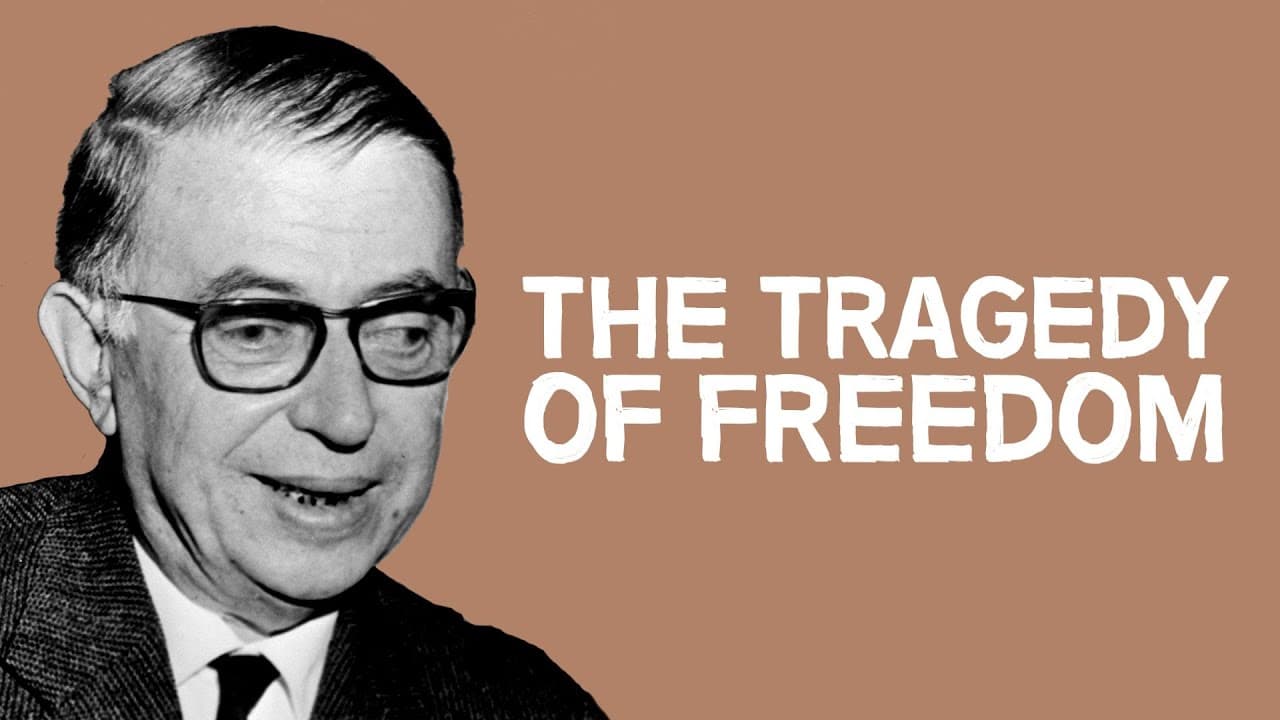
In Sartre's novel 'Les Jeux Sont Faits,' the tragedy of freedom is portrayed through two ghosts, Ève and Pierre, who discover that despite having a chance to start anew, they are trapped by their past choices and responsibilities. Their struggle emphasizes that true freedom involves both the ability to choose and the weight of the consequences that follow.
Transcript
What if we’d get a chance to start a new life? In his short novel Les Jeux Sont Faits, philosopher Jean-Paul Sartre plays with the idea of ‘starting all over’ in the same lifetime, despite the decisions we have made in the past. Even though we have free will, are we capable of deviating from the path that we have laid out for ourselves, including t... Read More
Key Insights
- 🥶 Free will vs. consequences: Sartre explores the conflict between free will and the consequences that bind individuals to their choices.
- ❓ The illusion of freedom: Despite the apparent freedom to choose, individuals may struggle to detach from the repercussions of their decisions.
- ❓ Responsibility and choice: Sartre emphasizes the inseparable connection between freedom of choice and the responsibility that follows.
- ♻️ Enmeshed in the environment: Individuals may find themselves trapped by the environment they have created through their choices.
- 🎁 The complexity of freedom: Sartre presents different facets of freedom, including the ability to choose and the burden of responsibility.
- 🍝 The entanglement of past and present: Ève and Pierre's struggle to move on highlights how past decisions can define and restrict future choices.
- 🥶 The role of relationships: Relationships and personal affairs can complicate the pursuit of freedom and the exercise of free will.
Install to Summarize YouTube Videos and Get Transcripts
Explore YouTube Video Summarizer or Get YouTube Transcript Extractor
Questions & Answers
Q: How does Sartre explore the concept of free will in his novel?
Sartre delves into the idea of whether individuals can truly deviate from the path dictated by past choices despite possessing free will.
Q: What challenges do Ève and Pierre face as ghosts seeking a second chance?
Ève and Pierre struggle to prioritize their love amidst the complexities of their past lives, showcasing the entanglement of freedom and responsibility.
Q: What does Sartre suggest about the consequences of our actions?
Sartre implies that while we have the freedom to choose, the consequences of our choices inevitably shape our paths, highlighting the inescapable burden of responsibility.
Q: How does Sartre depict the limitations of freedom in the novel?
Sartre illustrates the limitations of freedom by showing how Ève and Pierre, despite being invisible and free to roam, are ultimately powerless to alter their circumstances.
Summary & Key Takeaways
-
Sartre's novel questions the extent of free will in deviating from past choices and the burden of responsibility.
-
The protagonists, Ève and Pierre, as ghosts, try to prove their love in order to start a new life.
-
Despite their attraction, they fail to disentangle themselves from their past lives, emphasizing the complexity of freedom.
Read in Other Languages (beta)
Share This Summary 📚
Summarize YouTube Videos and Get Video Transcripts with 1-Click
Try YouTube Summary with ChatGPT & Claude or YouTube Transcript Generator
Explore More Summaries from Einzelgänger 📚

Summarize YouTube Videos and Get Video Transcripts with 1-Click
Try YouTube Summary with ChatGPT & Claude or YouTube Transcript Generator